
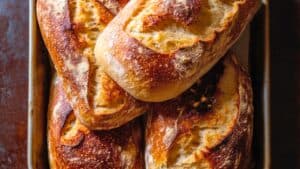
Pain au levain stands out among bread recipes for its complex, slow-fermented flavor and its beautifully chewy texture.
While many classic loaves can feel rushed or overly commercial, this sourdough-style recipe brings back the charm of patience, technique, and a deep appreciation for time-tested methods.
It’s the bread that rewards attention to detail and invites home bakers to master the subtle art of fermentation and shaping.
Why Pain Au Levain Is Worth the Effort
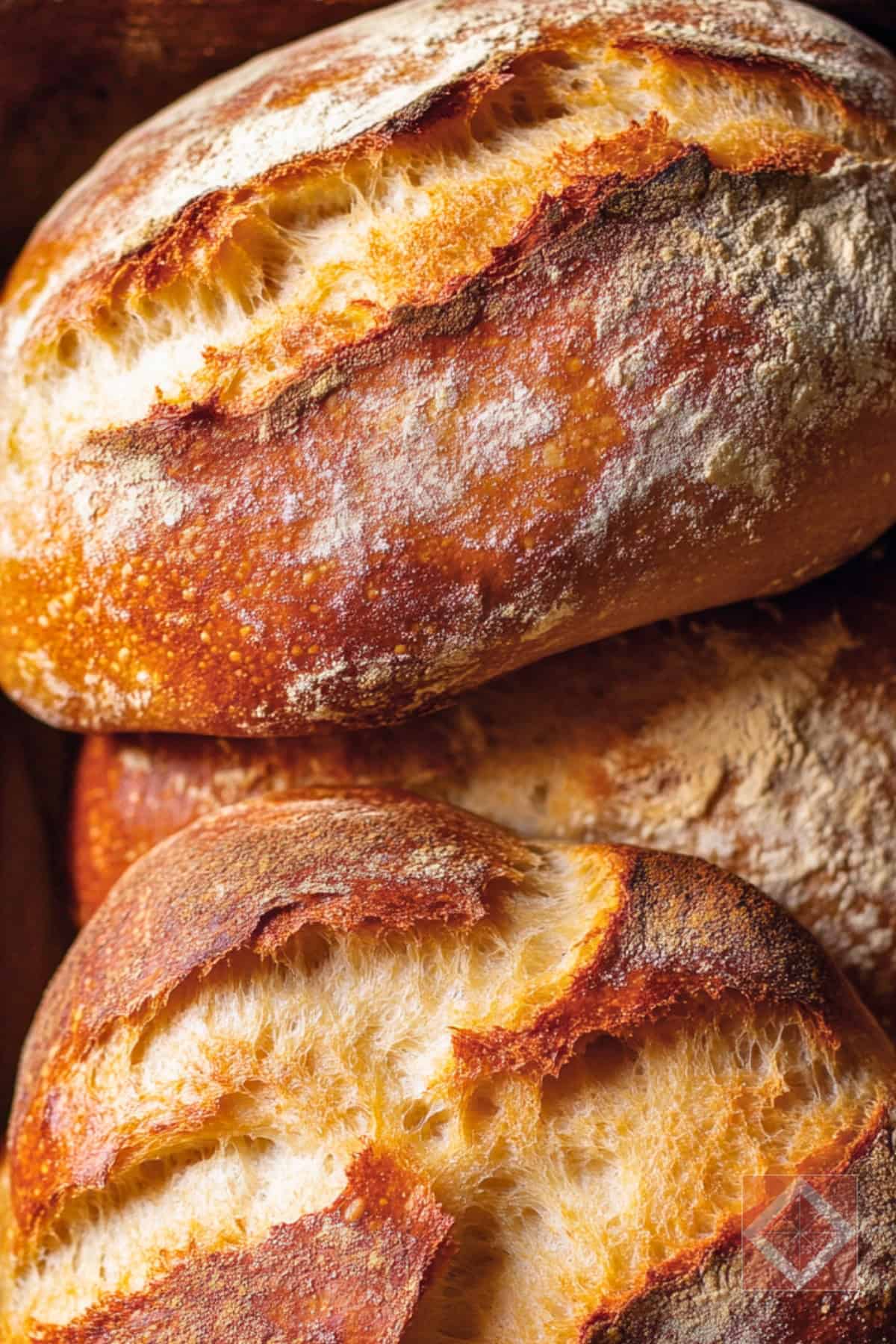
There’s something profoundly satisfying about creating a loaf that spans days rather than hours. Unlike quick recipes that prioritize speed, this one emphasizes structure, flavor development, and that elusive tang that makes sourdough so desirable.
What sets this apart from other bread recipes is how each stage—preferment, bulk fermentation, shaping, and baking—builds on the previous one to develop flavor and improve texture.
The use of both all-purpose flour and a small amount of rye gives the final result a nutty complexity that’s hard to replicate with a single flour.
The slow fermentation allows natural yeast to do the work, leading to a loaf that is not only aromatic but has a crisp crust and an open, springy crumb.
How This Recipe Fits Into Modern Kitchen Life
Despite its traditional roots, this is a recipe that can be surprisingly flexible. While it does span about 22 hours from start to finish, much of that time is hands-off.
Tasks like mixing, folding, and shaping only require a few minutes here and there, making it manageable even for those with a busy schedule. It’s a solid choice for weekend baking or meal-prep enthusiasts looking to elevate their weekly bread routine.
One of the best aspects of this recipe is how well it accommodates personal timing. The option to refrigerate the shaped loaves overnight and bake them the following day gives home bakers the freedom to adjust the schedule without compromising quality.
This simple feature turns what might seem like a rigid timeline into a more approachable and forgiving process.
Tools & Tips for Success
To get the most out of this recipe, a few tools can make a big difference. A bench scraper is essential when transferring sticky dough, while a digital scale ensures ingredient accuracy, especially for recipes that rely on ratios and hydration levels.
Proofing baskets, a sharp lame or razor, and a covered Dutch oven or baking stone help mimic bakery conditions right in a home oven.
Steam is crucial for achieving a professional-quality crust. Bakers who use this trick consistently see better oven spring and that iconic crackly exterior.
When & How to Serve Pain Au Levain
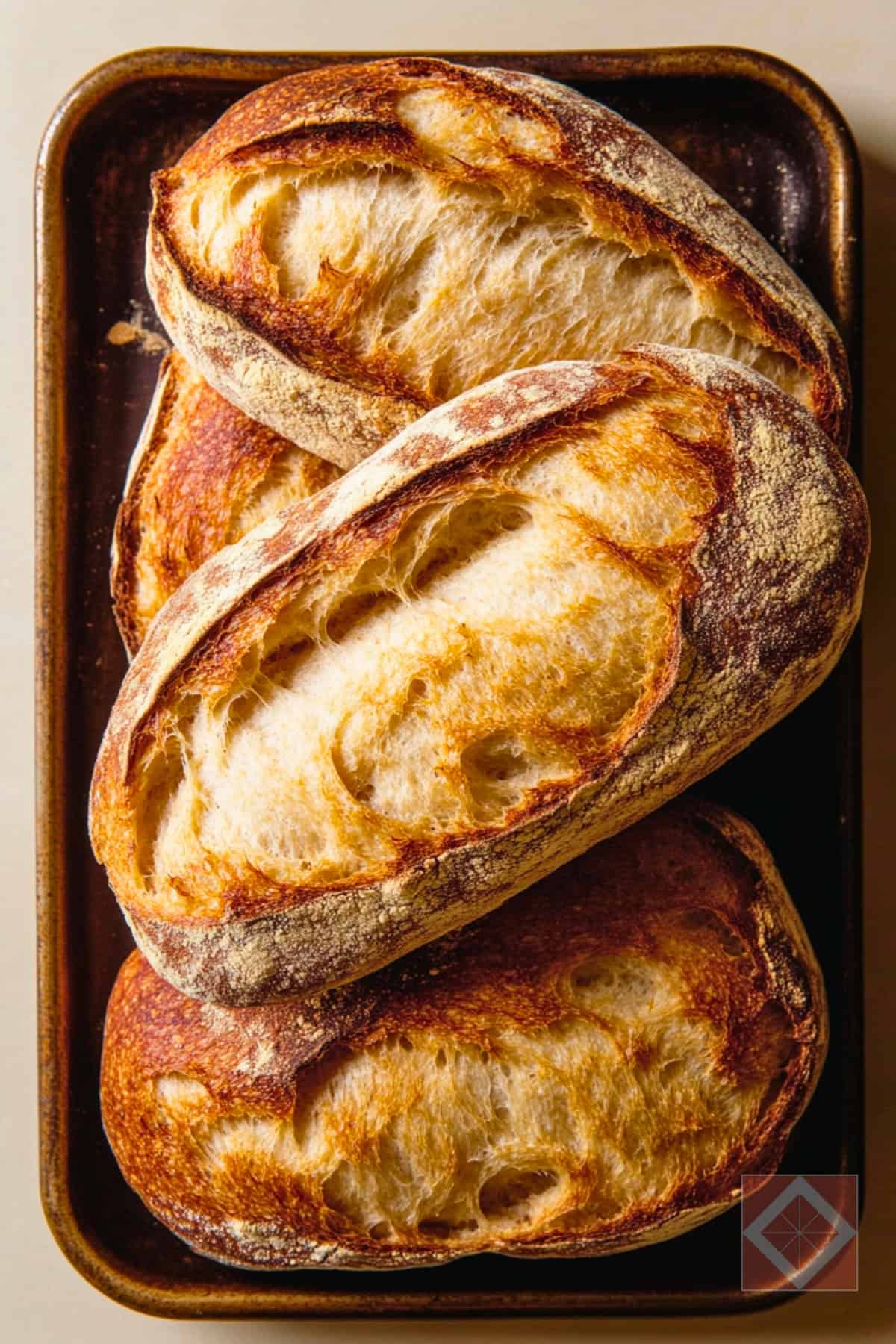
Few things rival the versatility of a freshly baked loaf of pain au levain. It’s ideal as a table bread for gatherings, where its texture and flavor can shine alongside cheese boards, olive oil dips, or hearty stews.
For everyday use, it makes outstanding toast, sandwiches, or breakfast slices topped with butter and jam.
Because the loaf keeps well, it’s also a smart choice for meal planning. Slices can be frozen and toasted straight from the freezer, making this recipe a valuable addition to any bread lover’s repertoire.
Variations & Adaptability
While the original formula calls for a small amount of whole rye flour, it can be customized to suit different flours or flavor preferences.
Whole wheat, spelt, or even heritage grains can be incorporated for added depth. Similarly, hydration can be adjusted slightly for those looking to experiment with crumb structure and texture.
Those seeking a gluten-free alternative might not find a direct match with this recipe, but the process and timing serve as a strong model for adapting similar techniques to gluten-free flour blends.
It’s this blend of precision and flexibility that makes pain au levain a foundational bread worth mastering.
A Recipe That Builds Confidence
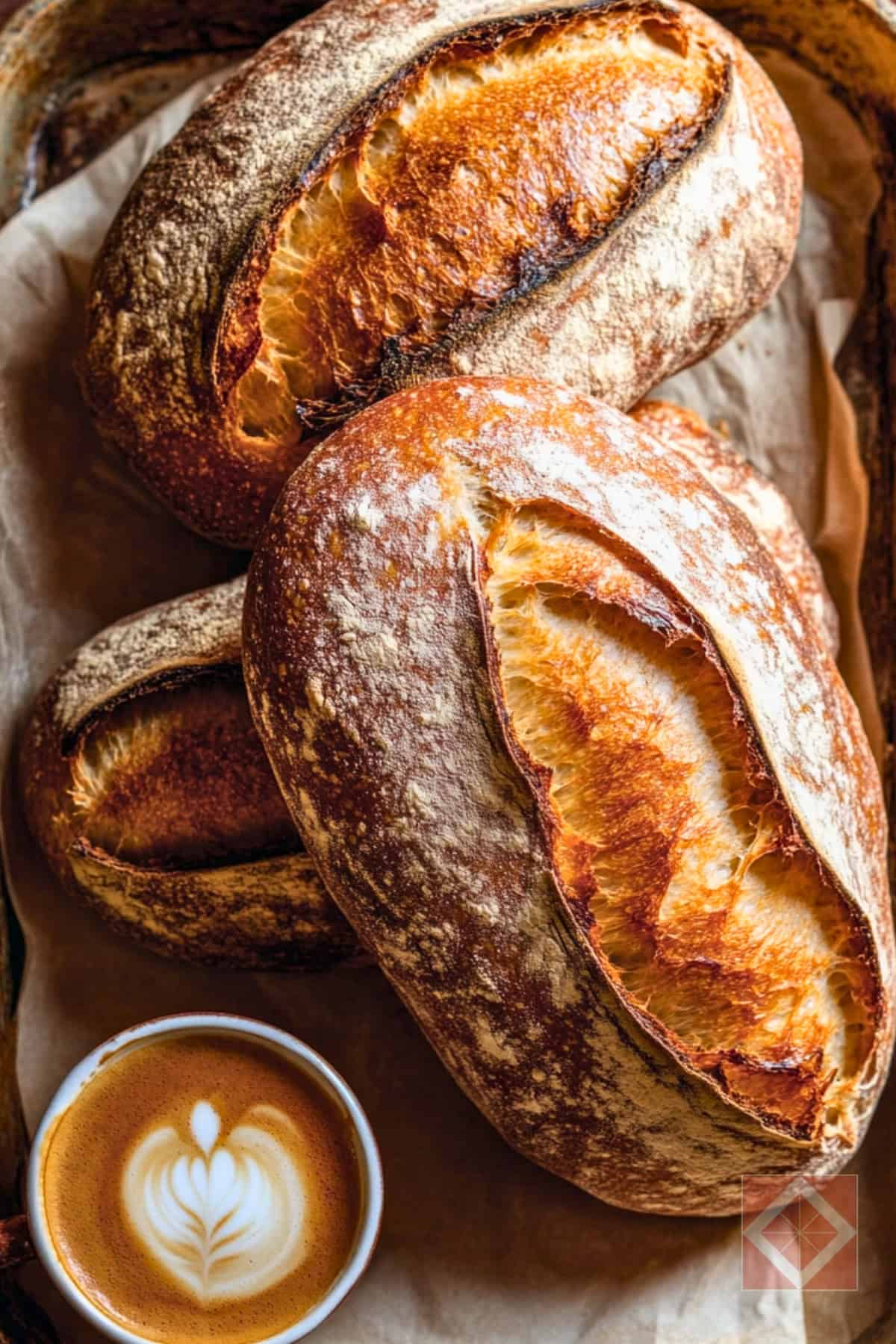
At its core, pain au levain is more than just a bread recipe—it’s an invitation to slow down and connect with the baking process.
Each fold, rest, and rise is an opportunity to learn, adapt, and gain confidence. For both novice and experienced bakers, it offers the kind of challenge that teaches something new every time it’s made.
With the right tools, timing, and mindset, this recipe becomes a deeply rewarding experience.
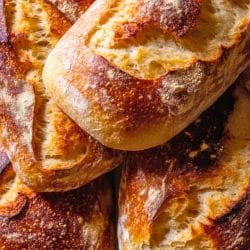
Pain au Levain Bread Recipe
Equipment
- Mixing bowls
- Digital thermometer
- Plastic bowl scraper
- 9×3-inch round or oval proofing baskets
- Parchment paper
- Cast-iron skillet or pan with lava rocks (for steam)
- Baking stone or covered Dutch oven
- Lame or sharp razor blade
- Baker’s peel or inverted baking sheet
- Optional: reusable silicone loaf lifters
Ingredients
Preferment:
- 2 tablespoons sourdough culture
- 1¼ cups unbleached all-purpose flour
- ⅓ cup cold water 55°F to 60°F
Dough:
- 2¼ cups plus 2 tablespoons warm water
- 5¼ cups unbleached all-purpose flour plus more for dusting
- ½ cup whole rye flour
- 1 tablespoon fine salt
Instructions
Day 1 – Make the Preferment:
- In a large bowl, stir together the sourdough culture, 1¼ cups flour, and ⅓ cup cold water until a rough dough forms.
- Knead on a work surface until smooth and no dry flour remains.
- Return to the bowl, cover loosely, and let sit at room temperature for 12 to 16 hours.
Day 2 – Make the Dough:
- Add warm water to the preferment and use your fingers to dissolve it into the water.
- Stir in the remaining all-purpose and rye flour along with the salt until it forms a sticky, uniform dough.
First Rise (Bulk Fermentation):
- Let the dough rest for 30 minutes covered. Then, using wet hands, perform 10–12 gentle folds by pulling the dough upward and tucking it over itself.
- Rest the dough for 1 hour, fold again, and rest for another 60 minutes.
Preshape:
- Lightly flour a surface and divide the dough into 2 equal parts (about 747g each).
- Shape each into a rough ball, seam-side up, and let rest uncovered for 20 minutes.
Final Shaping and Second Rise:
- Dust proofing baskets and reshape dough into boules or bâtards.
- Place seam-side up in baskets. Let rise for about 2 hours, or until they feel light and airy when gently pressed.
- Optional: Cover and refrigerate overnight for enhanced flavor. Bring back to room temperature for 1 hour before baking.
Baking – Option 1: Stone or Steel
- One hour before baking, preheat oven to 450°F with a stone on the middle rack and a pan (for steaming) on the bottom rack.
- Score the loaves and load them onto the hot stone.
- Pour 1 cup of hot water into the steaming pan to create steam.
- Bake for 35–40 minutes until deep golden and 200°F inside.
Baking – Option 2: Covered Baker
- Preheat oven with covered baker inside at 450°F for 1 hour.
- Transfer dough (on parchment) using a paper sling into the hot baker.
- Bake covered for 20 minutes, then uncover and bake 15–20 more minutes until golden brown and 200°F inside.
- If baking in batches: Let the baker reheat for 30 minutes before using it again.
Notes
- For a deeper, tangier loaf, refrigerate shaped dough overnight before baking.
- Be cautious when transferring dough into hot bakers—use a parchment sling or loaf lifters to prevent burns.
- Adjust water slightly if using different flours (e.g., whole wheat or spelt).
- Cool loaves completely before slicing for best texture.

Davin is a jack-of-all-trades but has professional training and experience in various home and garden subjects. He leans on other experts when needed and edits and fact-checks all articles. Also an aspiring cook we he researches and tries all kinds of different food recipes and shares what works best.