

My golden pothos used to live on top of a bookshelf and for about a year I thought it was doing great.
It was long, like really long, vines down to the floor long, which is great if you’re aiming for pothos trailing faster, but I was kind of proud of it until one day I actually looked at it from the side instead of from across the room.
It was bald. There was a crown of dirt on top with maybe six leaves on it, and then four long skinny strings hanging down with leaves bunched up at the very ends like pom poms.
It looked less like a houseplant and more like a mop somebody forgot about.
So I did what every pothos plant care article told me to do. I cut it back. And then I waited for it to get bushy.
It didn’t get bushy. It grew a new vine out of each cut and those vines went… straight down. Same shape, just shorter.
That’s the part nobody tells you, and it’s the reason I’m writing this. Cutting back a pothos is only half the fix. If you want to know how to make pothos fuller for real, the kind of full where you can’t see the dirt, you need to understand one thing about how this plant grows.
Once that clicks everything else is easy and honestly pretty much free.
Why Your Pothos Looks Thin in the First Place
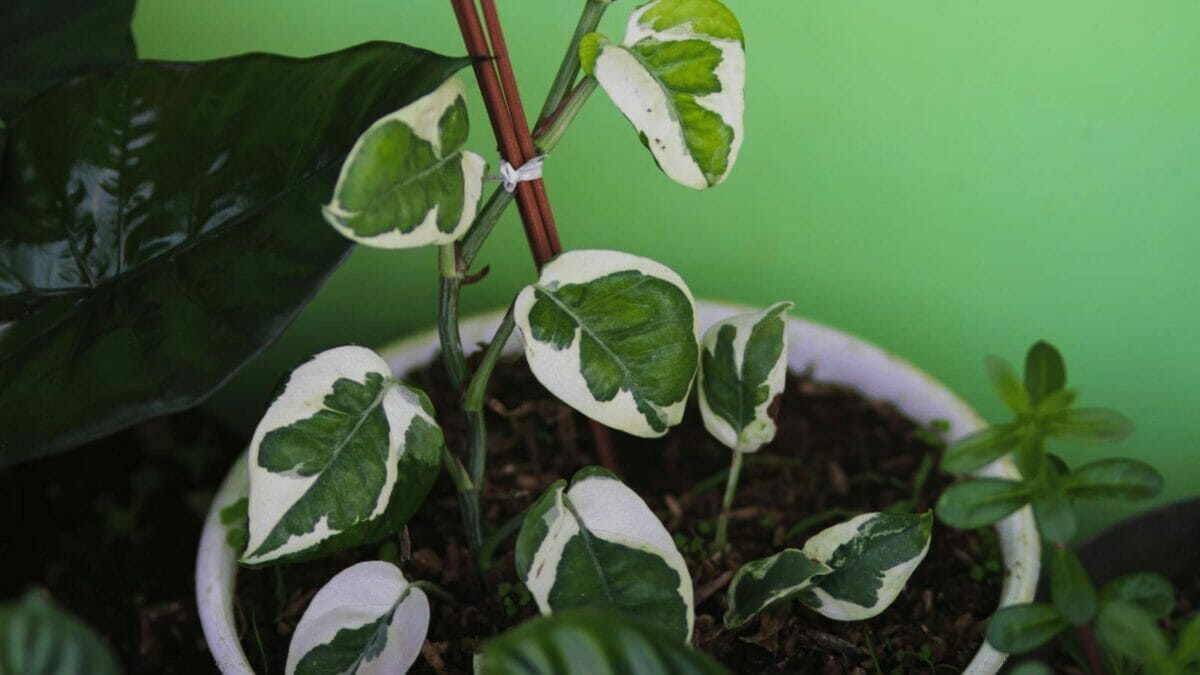
Picture a pothos vine as a string of beads. Each bead is a node, that little bump on the stem where a leaf comes out.
And every node has three things packed into it : a leaf, a tiny brown nub that wants to be a root, and a dormant bud that could become a whole new vine.
Could. Most of those buds never wake up.
The reason is the tip of the vine. The growing tip makes a hormone (auxin) that flows back down the stem and basically tells every bud below it to stay asleep, the tip’s got this handled.
Plant people call it apical dominance, which is a fancy way of saying one vine = one growing point. Your pothos isn’t choosing to be stringy. It’s built to be a rope that climbs a tree, not a shrub.
Two other things make it worse:
Not enough light. Pothos gets sold as a “low light plant” and that’s sort of true, but if you want to grow big pothos leaves, it needs more light. But survive and fill out are two different things.
In low light the vine stretches, creating gaps between the leaves, and the leaves come in smaller, which are common reasons for a pothos vine with no leaves. It’s reaching for a window. If you’ve got long bare stretches of stem between leaves, that’s what happened.
Old leaves drop off. As a vine gets longer the oldest leaves near the pot yellow and fall. NC State’s extension plant database even notes that over time most of the leaves end up concentrated at the ends of the stems.
And here’s the hard truth: a leaf that fell off will not grow back from that node. You can water and fertilize a bare stretch of vine all day long and it’ll stay bare.
The good news is the node itself is still alive and still has that sleeping bud and root nub in it, which is exactly what we’re going to use.
The Nursery Secret (This Is the Whole Game)
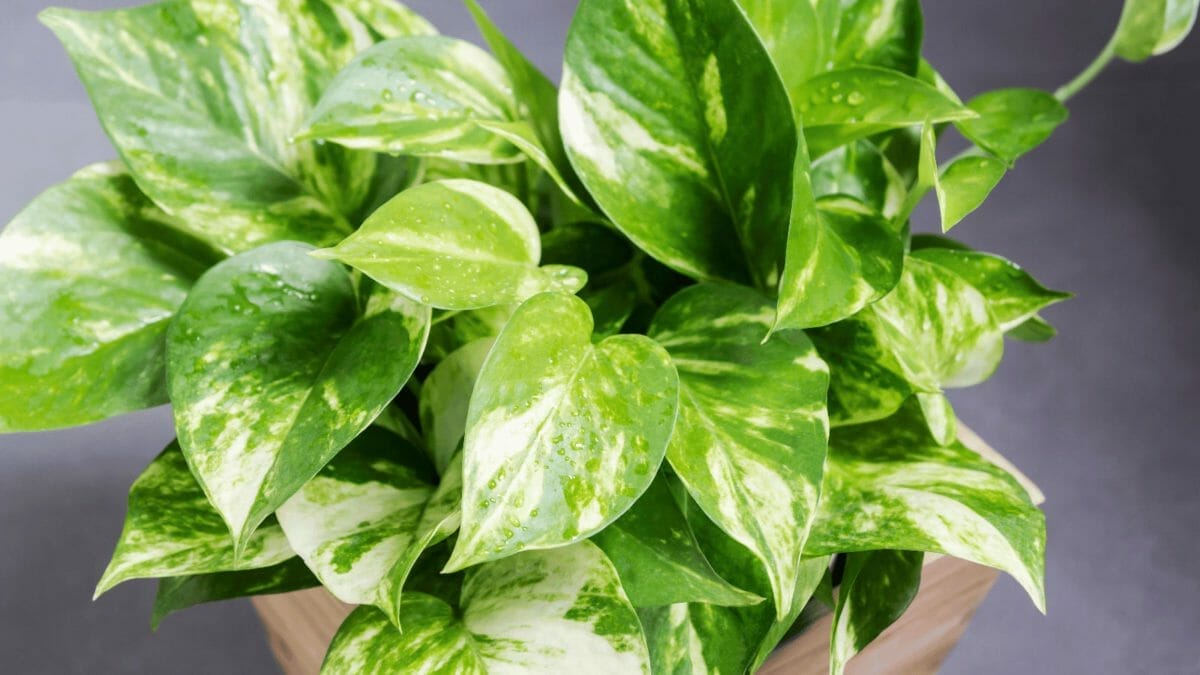
Ever notice how a pothos from the garden center looks way fuller than yours ever did, even a small cheap one?
That’s because it’s usually not one plant. Growers stick a bunch of rooted cuttings into one pot so you’ve got five, eight, ten separate vines all coming up out of the soil at once. More starting points, more fullness. That’s it. That’s the trick.
So the goal isn’t to make one vine bushier. It’s to get more vines growing out of the pot. Every method below is just a different way of doing that.
The Mistakes I Made First
Putting these up front because each one cost me months.
I cut it back and expected branches. When you cut a pothos vine, the node right below the cut usually wakes up and sends out one new vine, sometimes two if you’re lucky.
You’ll read posts promising two or three shoots per cut and maybe that happens in a greenhouse, but on my kitchen shelf it was one, almost every time. One cut, one new vine.
So cutting four vines back just gave me… four vines. Shorter ones.
I threw the cuttings away. This is the one that really gets me now. Those cut pieces were the actual fix, and I put them in the compost.
I didn’t move it. I pruned it and put it right back on the same dim bookshelf and the new growth came in stretchy and gappy, exactly like before. Pruning redirects the plant but light is what fuels it.
How to Make Pothos Fuller: 5 Methods That Actually Work
You don’t have to do all five. But the first two together are the one-two punch that fixed mine.
1. Cut Vines Back at Different Heights
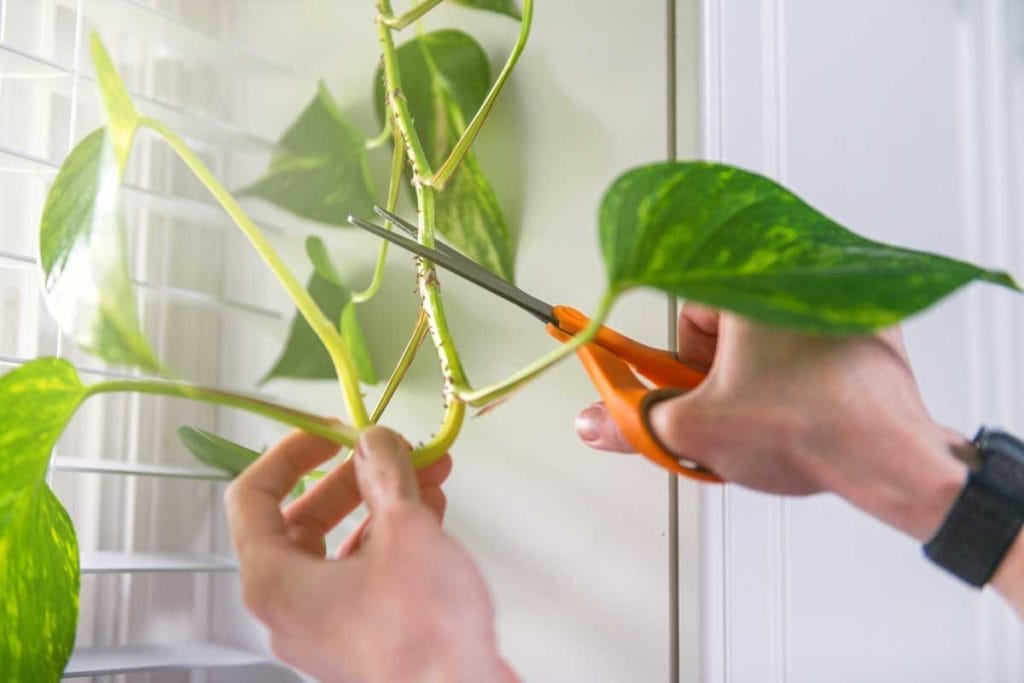
Grab clean sharp scissors. Find a node and cut about a quarter inch above it, leaving the node on the plant. That node is where your new vine will come from.
A couple of rules I follow now:
- Stagger your cuts. Don’t give the whole plant a bowl cut at one length. Cut some vines short, near the soil, some medium, leave a couple long. You end up with growth at every level instead of a flat line of new leaves all at the same height.
- Cut long vines more than once. If you’ve got one crazy long runner, you can cut it at a few spots along its length. Each cut piece becomes a cutting (see below) and the part left on the plant gets its own new tip.
- Don’t take more than about a third at once. Most growers stick to that guideline because the plant needs enough leaves left to keep making food while it recovers. If your plant is really leggy, do it in two rounds a few weeks apart.
2. Put the Cuttings Back in the Same Pot

This is the step that actually makes the pot full. Every piece you cut off can become a new vine growing up out of the soil right next to the mother plant.
Cut your trimmings into pieces with at least one node each and a leaf or two. Then you’ve got two ways to go:
Straight into the soil. Poke a hole with a pencil, push the cutting in so the node is buried, and firm the soil around it. Keep the soil lightly damp for the next few weeks. This is the lazy way and it works fine with pothos.
Root in water first. Stick the cuttings in a glass of water with the nodes underwater and the leaves above. NC State’s extension database says pothos vines root easily in water, and you’ll usually see little white roots within a couple of weeks.
Once the roots are an inch or two long, plant them into the pot. I like doing propagating pothos in water because I can see it’s working, and a jar of cuttings in the window is kind of nice to look at anyway.
Plant them around the edges and in any bare spots. Stuff in more than you think you need. Some won’t take, and a pot with too many vines looks lush while a pot with too few looks exactly like the one you’re trying to fix.
3. Pin the Long Vines Down to the Soil (Don’t Cut Anything)
If you like the length and don’t want to cut, this one is kind of magic.
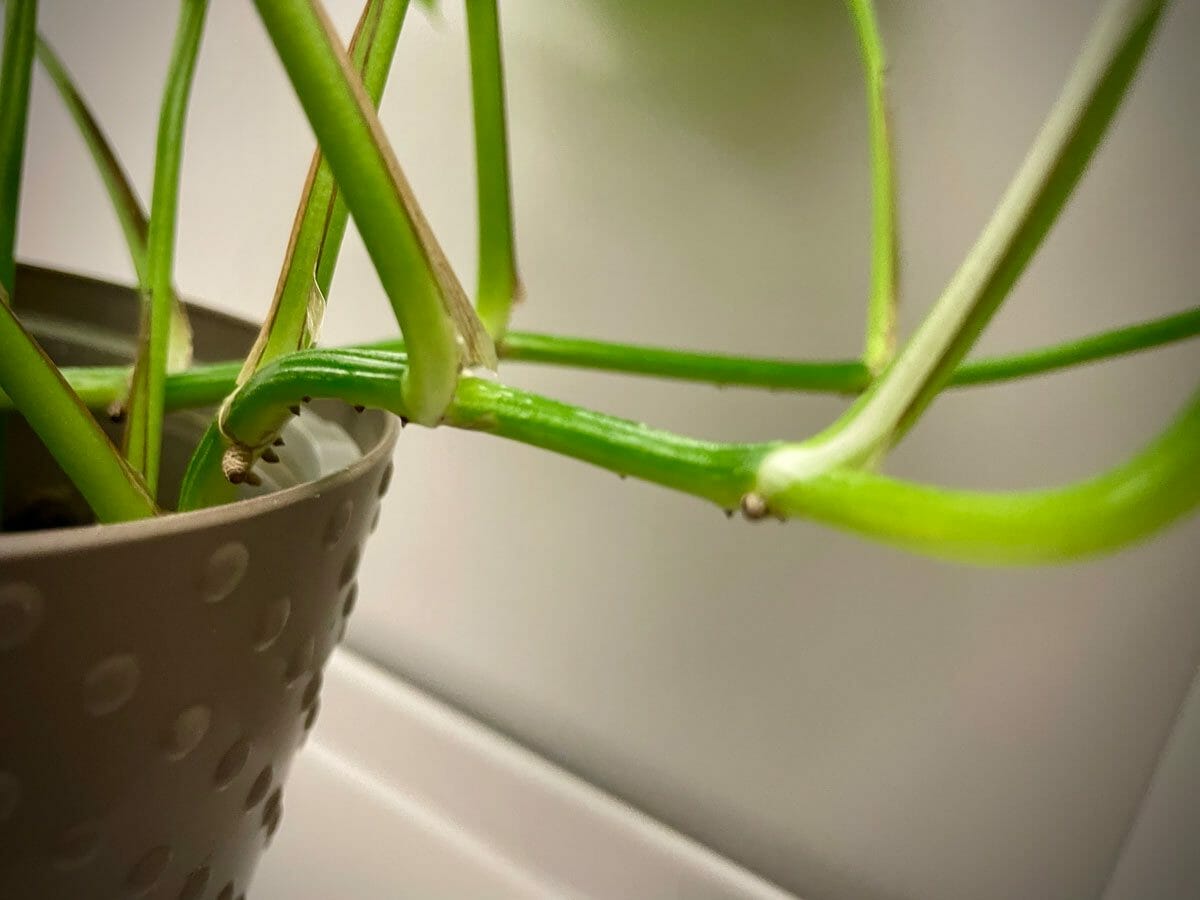
Take a long vine, loop it back up onto the top of the pot, and lay it across the soil so the nodes (those brown nubs) are touching the dirt. Pin it down right by the nodes with a bobby pin, a bent paperclip, or those U-shaped floral pins. Water like normal.
Those aerial root nubs sense the damp soil and grow down into it. Once a node has roots of its own it becomes its own growing point, so the sleeping bud there wakes up and pushes out a new vine.
You basically turn one long vine into several short ones, right where you need them, without losing any length.
Some people take it one step further: once each pinned node has rooted and put out a leaf, they snip the vine between the nodes so each one becomes its own independent plant.
Pothos likes to push energy to one dominant tip, so separating them keeps each section growing instead of sulking.
This is the best fix for the bald-on-top look, especially on a hanging pothos where the whole top is visible every time you walk under it.
4. Give It More Light

This isn’t glamorous but nothing else sticks without it. Bright indirect light is the sweet spot: close to a window but out of hot afternoon sun that can scorch the leaves.
In brighter light new growth comes in with shorter gaps between leaves and bigger leaves, which reads as fuller even before you add a single cutting.
Variegated types like marble queen, manjula, and anything with lots of white need even more light than a plain green jade pothos, because the white parts don’t make food.
Turn the pot a quarter turn every week or so too. Otherwise it all leans one way and one side gets bald.
A timing note for anyone up north like me: the days are getting short. You can absolutely do all of this in fall and winter, the cuttings will still root, but new growth slows way down until spring.
If you want faster results through the dark months, a basic grow light over the plant makes a real difference. Otherwise, do the cutting and pinning now and expect it to really fill in come March and April.
5. Or Stop Fighting It and Let It Climb

Here’s the thing that changed how I think about pothos. In the wild this plant doesn’t hang. It climbs trees. And when it climbs, it changes.
Pothos is what botanists call heteroblastic, a word that just means the young leaves and the grown-up leaves look different. The heart-shaped leaves you know are the juvenile ones.
According to Wikipedia’s botanical description, a mature pothos climbing a tree can grow leaves up to about 100 cm long with deep splits in them, while juvenile leaves usually stay under 20 cm. Indoors, in a pot, it pretty much stays a teenager forever.
But give it something to grip and decent light and it starts sizing up. NC State notes that with a support to climb and enough light, pothos starts producing larger mature leaves.
You won’t get a three-foot leaf in your living room. You will get noticeably bigger leaves, packed closer together, and that looks full in a totally different way than a trailing plant does.
This is why pothos climbing ideas are blowing up on Pinterest right now. Some options:
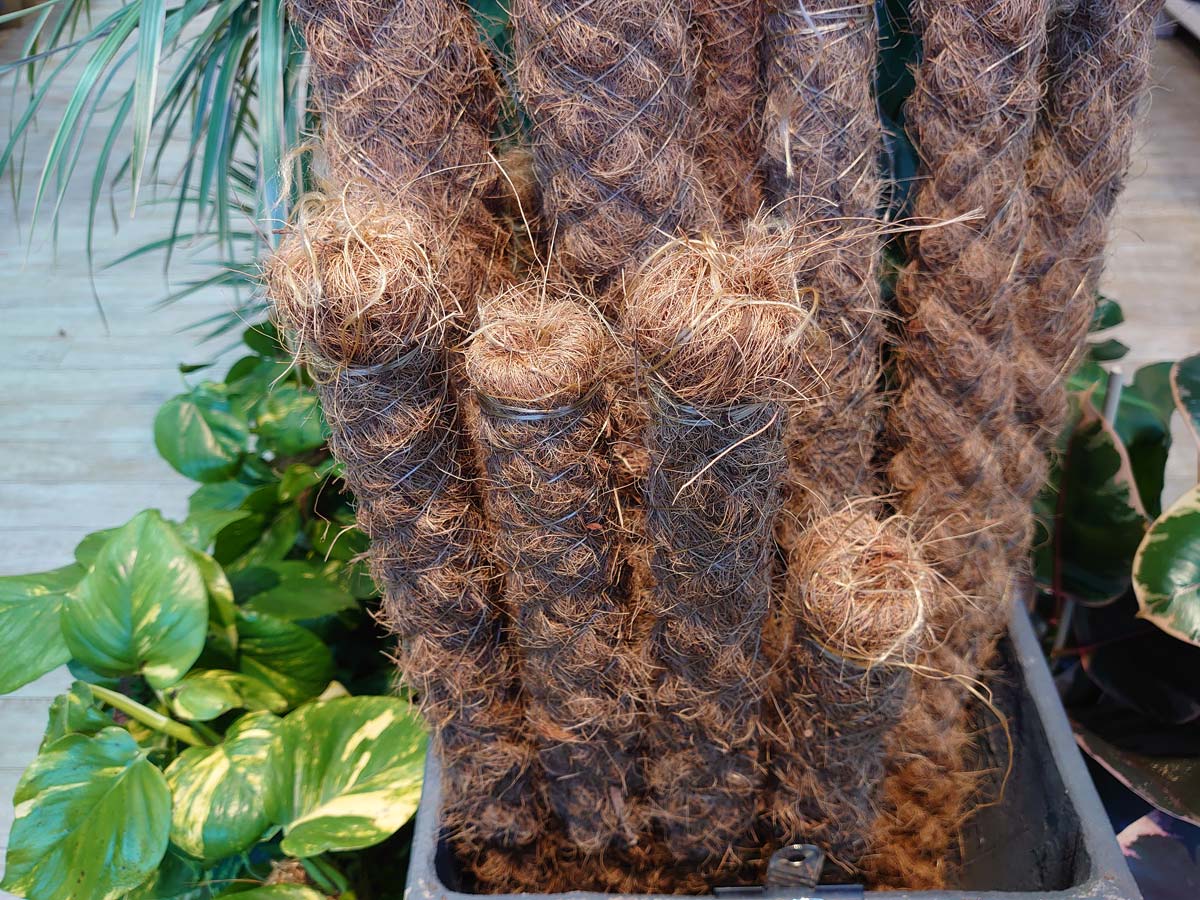
- Moss pole or coco coir pole. Stick it in the pot and tie or clip the vines to it. Keep a moss pole damp and the aerial roots grab on by themselves after a while.
- Trellis. A simple pothos trellis in the pot works great for a fuller, shaped look, and it’s easy to weave vines through.
- Wall climbing. Small adhesive clips or hooks let you train a vine across a wall, over a window, or along a shelf. It’s less “full pot” and more “the room is the plant,” but it’s the look everybody’s pinning.
My favorite combo is actually both: pack the pot with cuttings so it’s dense at the bottom, then send two or three of the strongest vines up a pole or across a wall. Full base, drama on top.
Step by Step: Fixing a Leggy Pothos in One Afternoon
Here’s exactly what I’d do if you handed me a bald, stringy pothos today.
- Move it somewhere brighter first. Bright, indirect light. This makes everything else work.
- Pull off any yellow or dead leaves and check the soil. If the soil level has sunk way down in the pot, top it up with fresh potting mix so you have something to plant and pin into.
- Pick two or three of the longest vines and pin them back across the soil surface, nodes touching dirt.
- Cut the remaining leggy vines back at staggered heights, a quarter inch above a node. Take no more than about a third of the plant.
- Chop your cuttings into single-node pieces with a leaf each and push them into bare spots in the same pot. Or root them in water first if you want to watch it happen.
- Water it well so the whole surface is damp, including where the vines are pinned.
- Leave it alone. Keep the soil lightly moist while the new roots form. You’ll usually see swelling at the nodes and the first new leaves within a few weeks, and a noticeably fuller pot in a couple of months, faster in spring and summer.
Troubleshooting
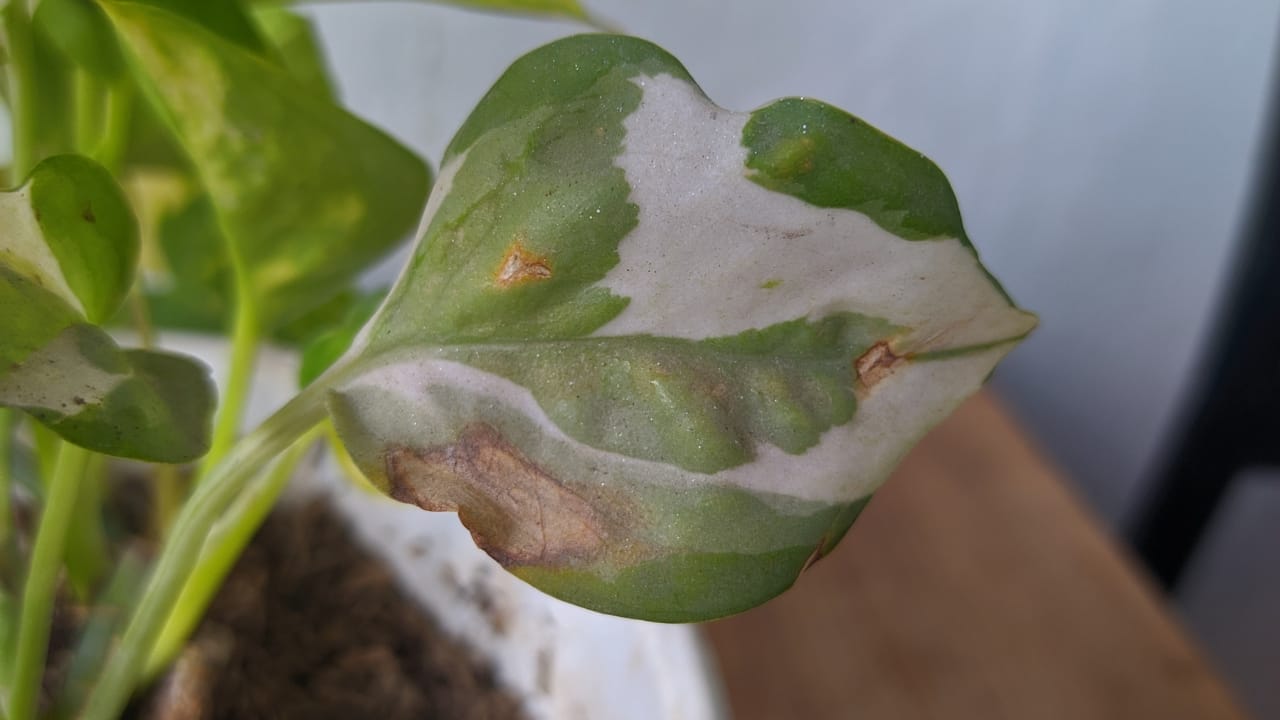
“I cut it back and nothing’s happening.” Give it time, especially in fall or winter. If it’s been over a month in summer, it probably needs more light.
“My new growth is coming in tiny and spaced out.” That’s a light problem, every time. The plant is stretching again. Move it closer to a window.
“My cuttings rotted in water.” Change the water every few days and make sure only the nodes are underwater, not a bunch of leaves. Leaves sitting in water rot and take the cutting with them.
“The pinned vines aren’t rooting.” The soil needs to stay lightly damp right where the nodes are, and the nodes have to actually touch the dirt, not float a quarter inch above it. Add another pin.
“Should I just repot it into a bigger pot?” Not to make it fuller. A bigger pot with the same few vines just looks emptier, and a lot of extra wet soil around a small root ball is how you get root rot.
Repot when it’s actually rootbound, and when you do, that’s a great time to plant extra cuttings around the edges.
“Will fertilizer fix it?” Feeding lightly during spring and summer helps a healthy plant keep pushing new growth. But fertilizer won’t regrow bare vines and it won’t fix a light problem. It’s a helper, not the fix.
FAQ
Can you make a leggy pothos fuller without cutting it? Yes. Pin the long vines back onto the soil so the nodes can root. Each rooted node becomes a new growing point and you don’t lose any length.
Will pothos leaves grow back on bare vines? No, the leaf won’t regrow from that spot. But the node is still alive, so if you pin that bare section to soil or cut it into pieces and plant them, those nodes can root and send out brand new vines.
Where do you cut pothos to make it fuller? About a quarter inch above a node, leaving the node on the plant. New growth comes from that node.
How many new vines grow from one cut? Usually one, sometimes two. That’s why planting the cuttings back into the pot matters more than the cut itself.
How long does it take for pothos to get fuller? Cuttings in water usually root within a couple of weeks. Expect new leaves within a few weeks and a visibly fuller plant in a couple of months, slower in winter.
Why are my pothos leaves turning yellow? A few old yellow leaves near the base is normal aging. Lots of yellow usually points to watering, most often too much, or soil that stays soggy. Let the top inch or so dry out between waterings.
Does this work for golden pothos, neon, marble queen, and the rest? Yes, every pothos variety grows the same way. Just give the pale and heavily variegated ones extra light.
Is pothos safe for pets? No. Pothos is often listed as a problem for cats and dogs, so keep it out of reach, which is one more reason climbing and hanging setups are handy.

Davin is a jack-of-all-trades but has professional training and experience in various home and garden subjects. He leans on other experts when needed and edits and fact-checks all articles. Also an aspiring cook we he researches and tries all kinds of different food recipes and shares what works best.