

If your Christmas cactus is blooming right now, the week of Thanksgiving, I have some news for you and you might not love it. It’s probably not a Christmas cactus.
And honestly that’s just the start. This plant has more weird quirks than almost anything else on the windowsill. It’s a cactus that hates the desert, it drops its buds if you look at it wrong, and it’s one of the very few holiday plants that won’t hurt your cat.
Some of them outlive the people who bought them.
So here are the 12 Christmas cactus care things nobody tells you, starting with the one that surprises everybody.
1. You Probably Don’t Own a Christmas Cactus (Check the Leaves)
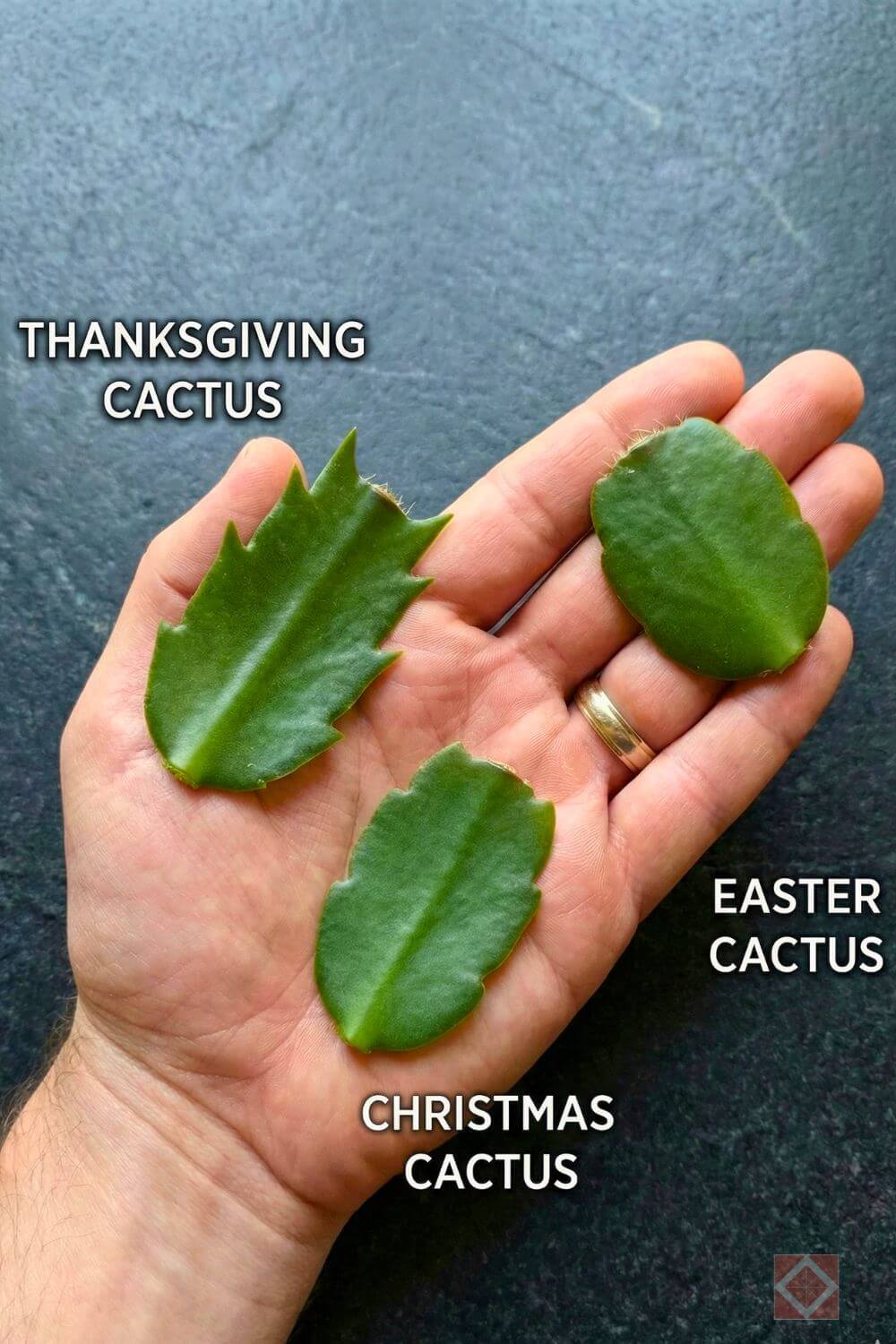
Okay here’s the big one. Most of the “Christmas cactus” plants sold in stores are actually Thanksgiving cactus, and the stores mislabel them all the time. Illinois Extension says it straight up: most of them are Thanksgiving cacti.
And it kind of makes sense once you know the backstory. The Thanksgiving cactus (Schlumbergera truncata) is actually one of the parents of the hybrid Christmas cactus (S. × buckleyi).
So they’re family, they look a lot alike, and growers push the Thanksgiving one because it’s already blooming when holiday shopping starts.
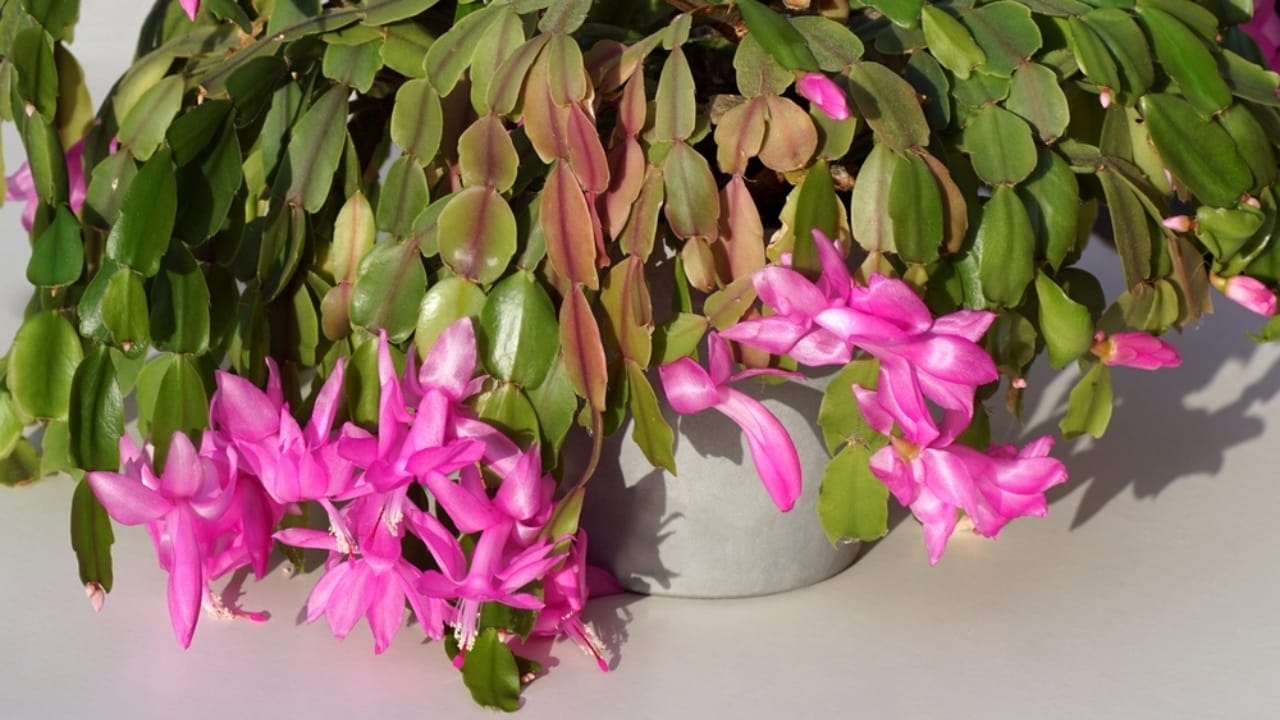
You don’t need a botany degree to tell them apart, just look at the edges of the flat green segments (those aren’t really leaves, they’re flattened stems):
| Thanksgiving cactus | Christmas cactus | Easter cactus | |
|---|---|---|---|
| Segment edges | 2 to 4 pointy teeth, kind of like a crab claw | Smooth and scalloped, rounded | Rounded, no teeth |
| Pollen (anther) color | Yellow | Pinkish to purplish brown | Not needed, the shape gives it away |
| Flowers | Stick out sideways or up | Droop down | Star or daisy shaped |
| Usual bloom time | Mid to late November into December | Mid to late December into January | Late winter to spring |
The pollen trick is my favorite because it’s the easy tiebreaker. Pop a flower open, yellow anthers means Thanksgiving, purplish brown means Christmas.
Honestly though, does it matter? Not much. They get cared for almost the same way.
The real difference is timing, so if yours blooms in November it’s not broken, it’s just a Thanksgiving cactus doing exactly what it’s supposed to do.
2. Why Your Christmas Cactus Drops Its Buds (It’s Usually Something You Did)
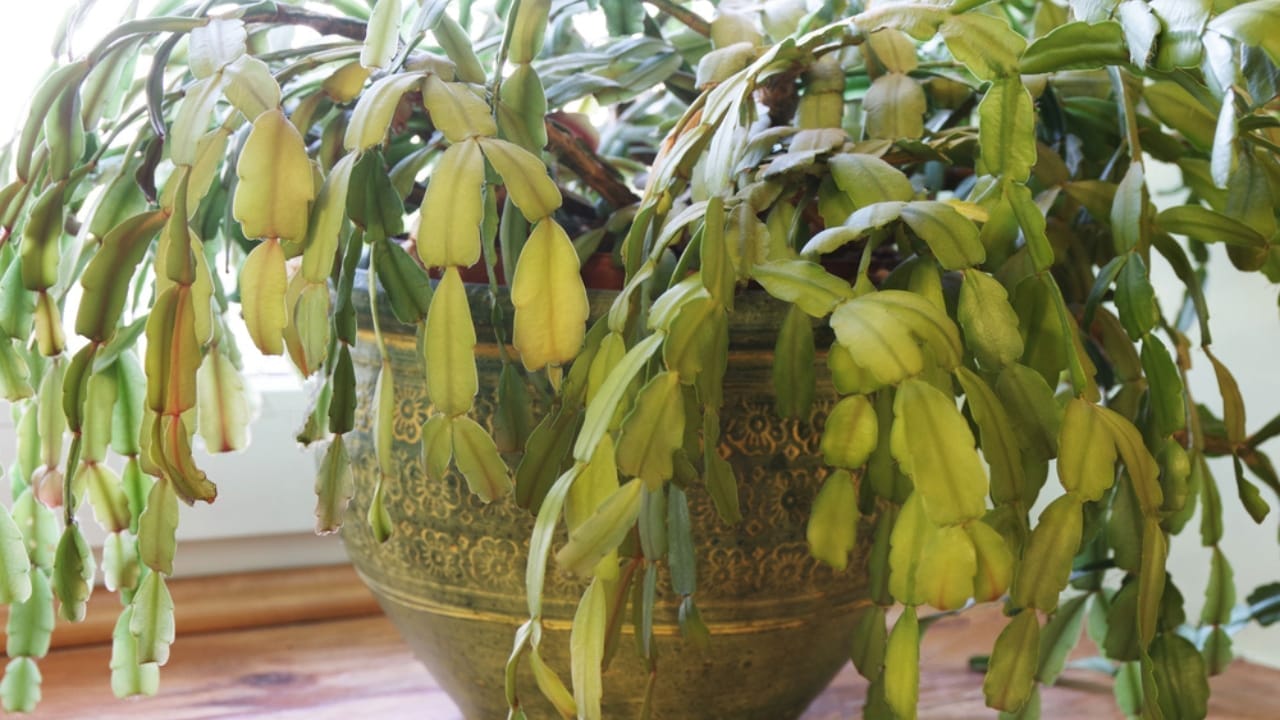
Nothing hurts quite like a plant loaded with fat pink buds that just… lets go of them one by one onto the floor. If that’s happening to you, it’s almost always one of these:
- You moved it. This is the big one. Once buds form, holiday cacti really don’t like being disturbed. Carrying it from the cool back room to the warm dining table for the party is exactly the kind of sudden change that triggers drop. If you want it somewhere else, move it right when the buds first show up, not when they’re about to open.
- It’s sitting near a heat vent, a drafty door, or the fireplace. Drafts, heaters, vents, and quick swings in temperature or humidity are the usual suspects according to Minnesota Extension.
- The soil dried out. It’s a tropical plant, so it isn’t as drought tolerant as a desert cactus. Purdue says it may drop buds if the soil gets too dry. After buds set in fall, keep the soil evenly moist (moist, not swampy).
- The house is warm all the time. Clemson notes that continuous warm temperatures can cause buds to drop.
- It’s carrying too many buds. Sometimes the plant just self-prunes when it set more buds than it can support. Annoying, but normal, and the rest usually open fine.
The fix for basically all of these is boring but it works: pick a spot, leave it there, and keep the light, water and temperature steady until it’s done blooming.
3. Your Living Room Is Probably the Worst Place for It (How to Get a Christmas Cactus to Bloom)
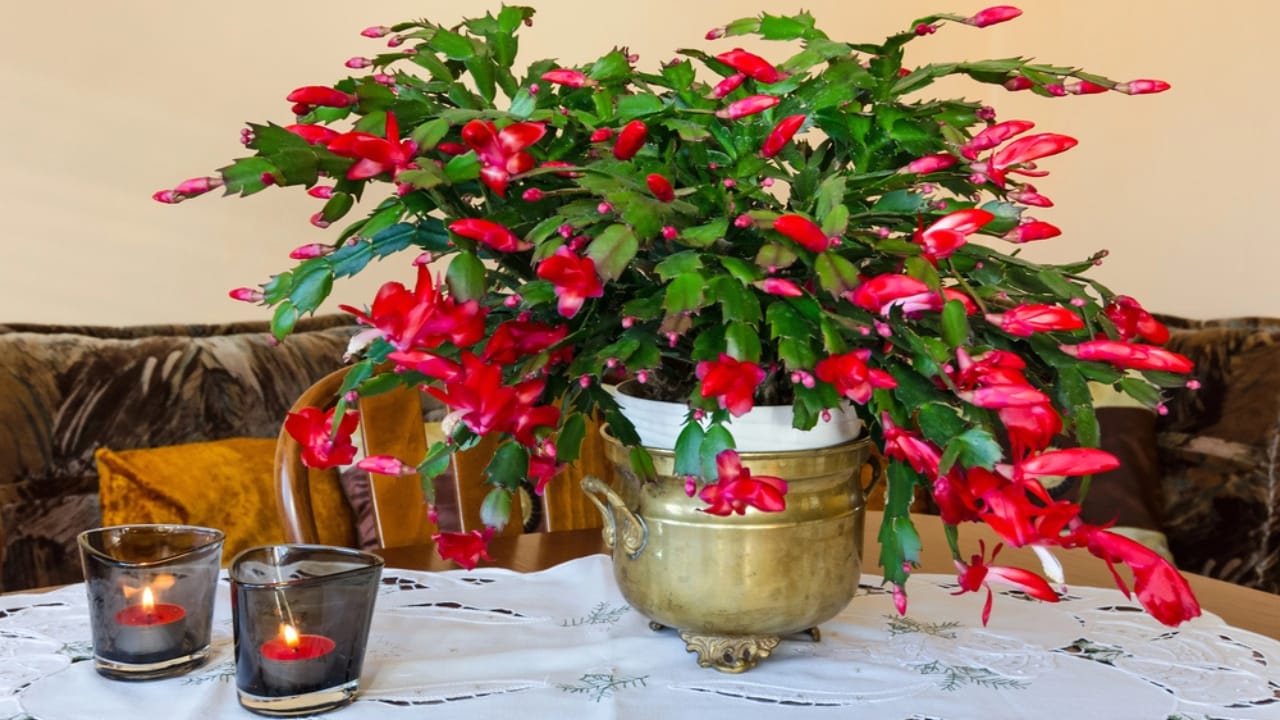
This one is sneaky. Holiday cacti are short-day plants, which just means they set flower buds when the nights get long and cool. And the cozy living room is warm, bright and lit up till bedtime, so the plant never gets the memo that it’s fall.
Here’s what it actually needs to bloom, per Minnesota Extension:
- Cool nights around 55°F: it’ll usually bloom in about 5 to 6 weeks, sometimes no matter how long the days are.
- Nights of 60 to 65°F: it needs at least 12 hours of complete darkness every night for about 6 weeks.
- Nights above 65°F: blooming is unlikely. That’s a lot of living rooms in winter.
And “complete darkness” means it. Lamps, a TV, even street lights or car headlights through the window can mess it up. Illinois Extension says buds won’t set if the dark gets interrupted for too long (2+ hours).
The easy fixes:
- Move it to a cool spare bedroom, basement window or porch that stays above freezing and nobody turns the light on in.
- Or throw a paper bag or a box over it every evening for 12 to 14 hours, then uncover it in the morning for bright light.
- Keep it up for about 6 weeks. Once buds are set, the day length stops mattering.
Timing for next year: Purdue says to start the dark treatment around mid-October to have it in full bloom for the holidays, or start cool treatments (50 to 55°F nights) by early November.
[Your story here: where your plant lives and whether it actually blooms there.]
4. It’s the Holiday Plant You Can Actually Keep Around Pets
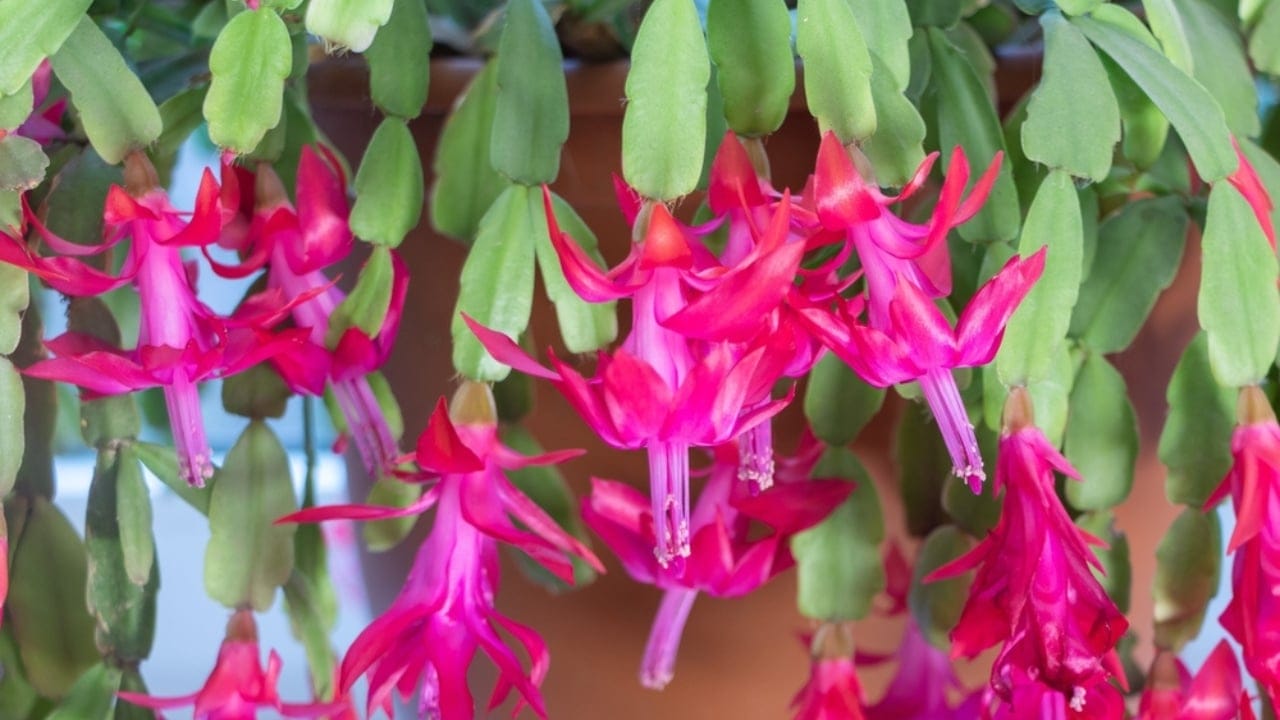
If you’ve got a cat that eats everything green (or a dog that thinks a plant on the floor is a chew toy), this is good news. The ASPCA lists Christmas cactus as non-toxic to dogs, cats and even horses.
That’s a big deal at this time of year because a lot of the other holiday favorites aren’t so friendly.
Penn State Extension points out that amaryllis and paperwhites are both poisonous to cats and dogs, and anything in the true lily family is extremely dangerous for cats, even the pollen.
One honest caveat though. Non-toxic doesn’t mean it’s a snack. UNH Extension notes a non-toxic plant can still cause vomiting or an upset stomach if a pet eats a bunch of it, it just shouldn’t be life threatening.
So a heavy pot up on a shelf is still smart, mostly so you’re not sweeping up dirt and broken segments on Christmas morning.
Bonus: if a curious cat does knock a few segments off, don’t toss them. You can root them into new plants (see #8).
5. It’s a Rainforest Cactus, So Stop Treating It Like a Desert One
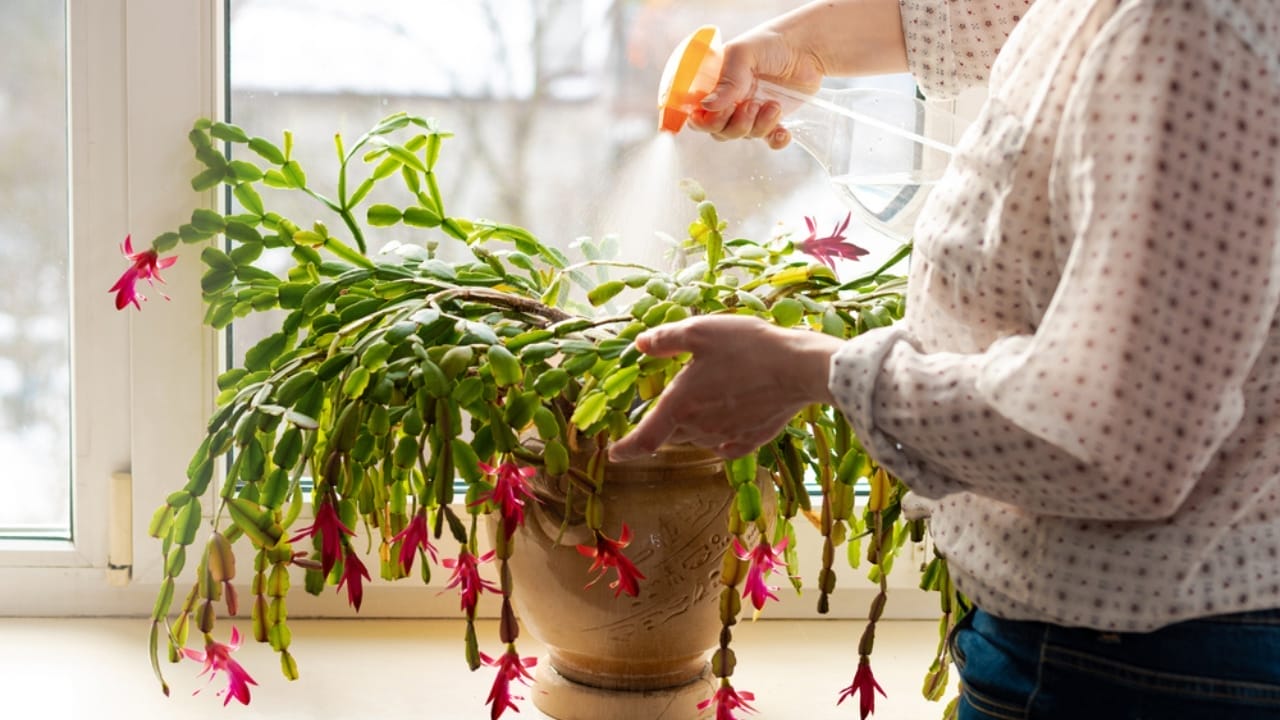
This is probably the most common Christmas cactus care mistake out there. People hear “cactus” and treat it like the spiky guy on the sunny windowsill that gets watered twice a year. Wrong plant.
Holiday cacti come from Brazil, where they grow as epiphytes on tree branches in shady rainforests (Clemson’s words). Basically they live up in the trees, in humid air, with the light filtered through the canopy.
Once you picture that, the care makes a lot more sense:
- Water when the top of the soil feels dry, then water well and let it drain. Don’t let it sit in a saucer of water. Root rot from overwatering is the major disease killer of these plants.
- Keep it evenly moist once buds set in fall, then water a little less after blooming finishes.
- Light should be bright but not baking. Too much direct sun can make the segments pale and stressed, and in summer part shade is ideal.
- Use a loose, airy mix, not straight bagged potting soil. Minnesota Extension suggests 1 part potting soil, 2 parts peat moss and 1 part sand or perlite. A regular succulent mix cut with extra perlite gets you close.
- Don’t rush to repot. They bloom best a little pot-bound, and repotting about every three years in spring is plenty.
If you take one thing from this whole post, it’s this: think rainforest tree branch, not desert.
6. Your Christmas Cactus Could Outlive You
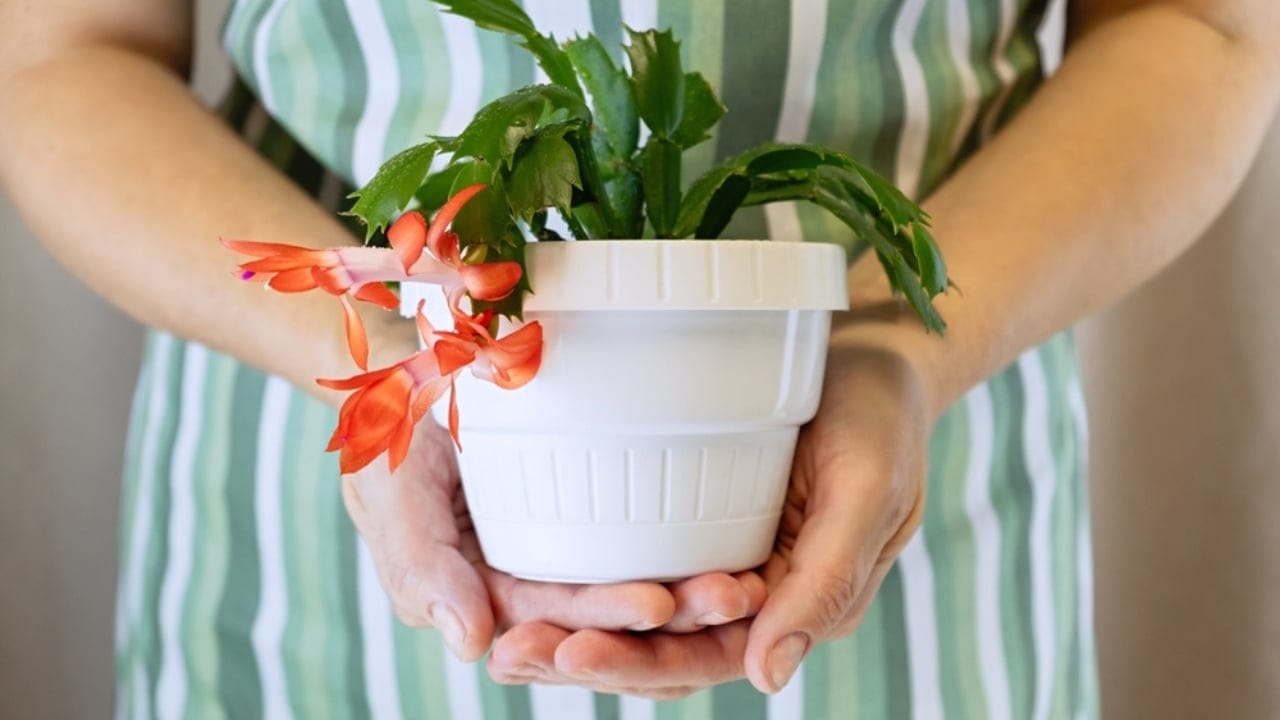
Most houseplants are lucky to make it a few years. Holiday cacti are a whole different deal. Minnesota Extension says they can live over 100 years, and they’re often passed down through families.
That’s why so many people have a story about grandma’s cactus. It was on her windowsill for decades, then a cutting went to mom, then a cutting went to you, and technically it’s all the same plant.
One thing to know if you’ve got an old one: a brown, woody, kind of corky base is usually just normal aging, according to Minnesota Extension. Check it for scale insects first, but if it’s clean, it’s just an old plant with a trunk, and that’s kind of the best part.
[Your story here: if there’s a family cactus, this is the spot for it, plus a photo of the old plant.]
7. Red, Purple or Limp Leaves Are It Talking to You
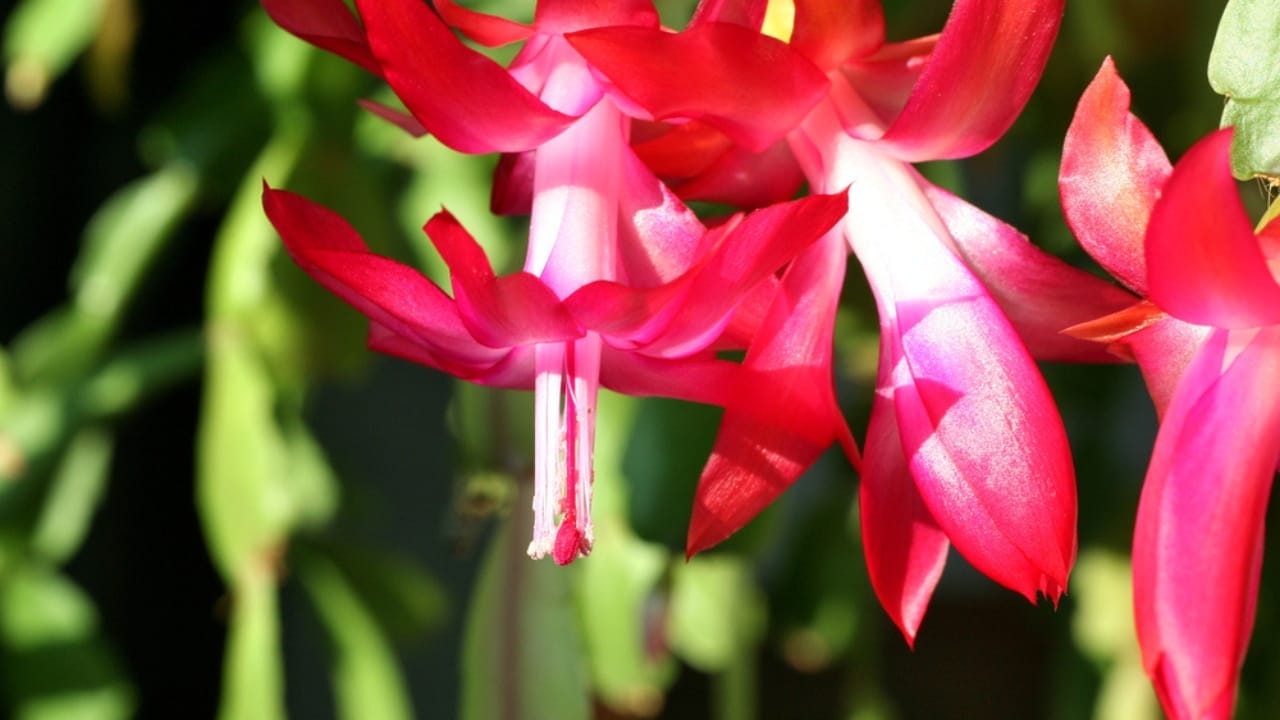
When a Christmas cactus is unhappy, it doesn’t wilt dramatically like a peace lily. It changes color or goes floppy, and each one points to a different problem.
Red or purple segments are a stress signal. The purple comes from pigments called anthocyanins that take over when the plant is stressed. Common causes:
- Too much direct sun. This is the most common one, especially a south window in summer.
- Missing nutrients, especially magnesium (also nitrogen or phosphorus).
- Temperature stress, either too hot or a cold window.
- Roots packed too tight in an old pot. Slightly pot-bound is good, but not strangled.
A little red tint on the edges or on brand new growth can be totally normal, though. It’s when whole segments go red or purple that you should pay attention.
Limp, wilting segments mean you need to check the soil before you do anything:
- Soil is bone dry? It’s thirsty. Purdue notes these plants wilt under drought stress. Water it well and it should perk up.
- Soil is wet and it’s still wilting? That’s the scary one. Minnesota Extension says wilting with wet soil usually means root rot from overwatering. Let it dry out, check that the pot drains, and never let it sit in water.
About the Epsom salt thing you’ve seen on Pinterest: it’s not just a myth. Clemson Extension actually recommends Epsom salt (magnesium sulfate) at 1 teaspoon per gallon of water, once a month during the growing season, just not the same week you fertilize.
8. Christmas Cactus Propagation Is Ridiculously Easy (Free Plants for Gifts)
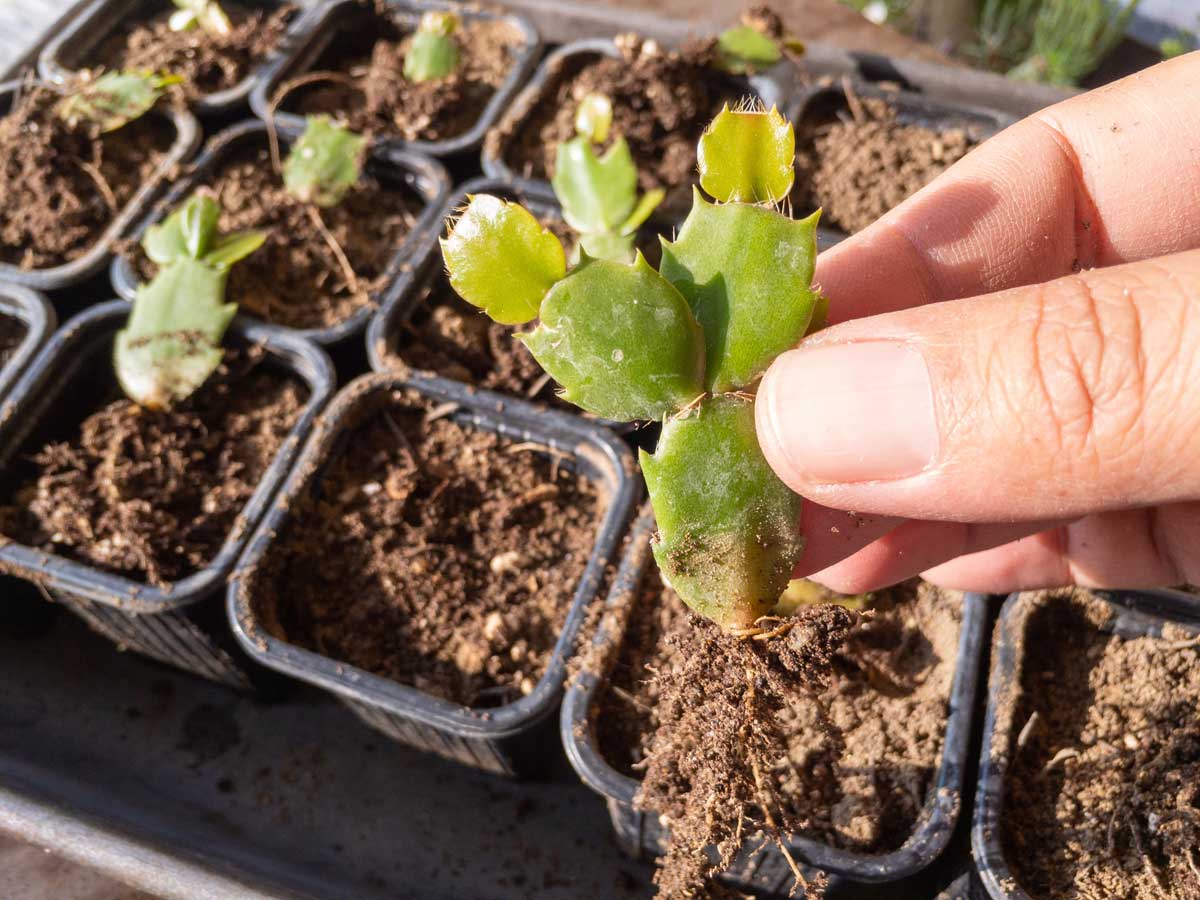
If you want to propagate a Christmas cactus, you don’t need anything fancy. A few segments, a small pot and some patience. This is how one plant turns into five, and how those family heirloom plants get passed around.
Here’s the method from Clemson Extension:
- Take cuttings in late spring (they say May or June). Twist or cut off a piece that’s 3 to 5 segments long.
- Let the cut end dry for a day or two in the shade so it calluses over. This helps keep it from rotting.
- Plant them about 1 inch deep in well-draining mix. Three cuttings fit in a 4-inch pot, five in a 6-inch pot. Grouping them makes a fuller looking plant way faster than one lonely cutting.
- Water it, then cover it with a clear plastic bag held on with a rubber band to keep the humidity up.
- Put it in bright, indirect light and wait. Roots take about 3 to 8 weeks. Once it’s rooted, take the bag off.
And here’s the bonus most people don’t know: pruning after it finishes blooming makes it bushier. Minnesota Extension says to cut where two segments join, and each cut usually sprouts 1 or 2 new segments.
More tips means more places for flowers next year. So you prune, root the pieces you cut off, and now you’ve got next year’s Christmas gifts already growing.
9. It Can Bloom More Than Once a Year
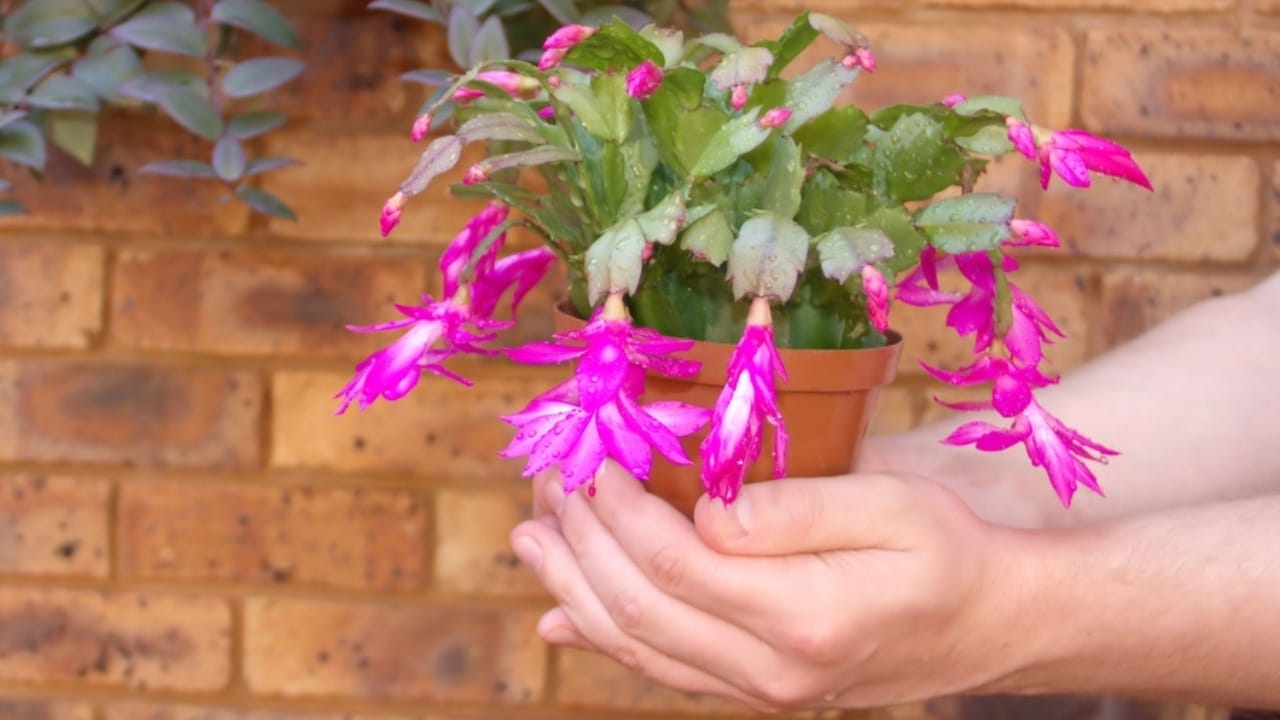
Most people enjoy the holiday flowers, then let the plant sit there green and boring until next November. But Penn State Extension says Thanksgiving and Christmas cacti can bloom more than once a year if they get the right care.
The idea is pretty simple. You just repeat the same trick that made it bloom the first time:
- Let it finish blooming, then pick off the spent flowers (or let them drop on their own).
- Give it a short rest. Water a little less and keep it somewhere cool.
- Bring back the long nights. Another round of 12 to 14 hours of uninterrupted darkness, plus cool nights, tells it to set buds again. A lot of growers report a second round of flowers in late winter or early spring this way.
One honest warning: don’t push it every single year. Growers who force blooms over and over say they get smaller and smaller returns.
Some growers alternate, letting it bloom naturally one year and forcing an extra round the next, which seems like a fair deal for the plant.
10. Give It a Summer Vacation, and Stop Feeding It in Fall
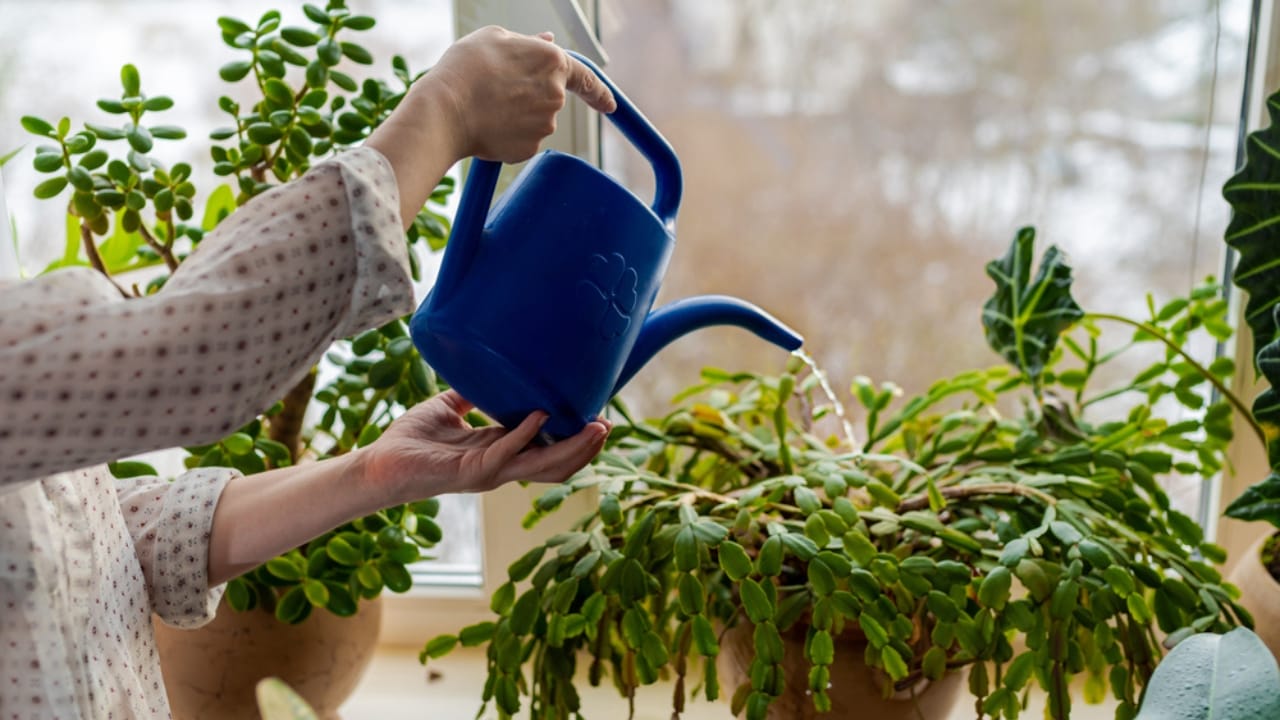
This is the part that sets up next year’s flowers, and it happens months before you see a single bud.
Summer outside is a treat. Once nights stay warm, a holiday cactus loves a spot outdoors in filtered light, like under a tree or on a shady porch. Minnesota Extension suggests part shade with about 3 to 6 hours of sun a day.
Too much sun leads to pale segments and sunburn, so ease it into brighter light instead of plunking it in full sun on day one.
Bring it in before it gets cold. Clemson says not to leave it outside once temps drop below 50°F.
Here’s a neat trick though: Minnesota Extension says leaving it out in a protected spot until just before frost lets those shorter days and cooler nights kick off bud formation naturally. Just watch the forecast.
Feed it in the growing season, then back off:
- Spring through summer: a balanced houseplant fertilizer at half strength, about once a month. Clemson suggests something like 20-20-20 or 20-10-20.
- Late summer: stop the regular feeding. Clemson says stopping in late summer encourages fall bud production.
- Once buds form in fall: if you want to feed, Minnesota Extension suggests switching to a low-nitrogen, higher phosphorus and potassium fertilizer like 0-15-10.
- While it’s blooming: Purdue says it doesn’t really need fertilizer at all.
Basically, lots of growth in summer, then let it chill out and save its energy for flowers.
11. Yes, It Can Grow Fruit
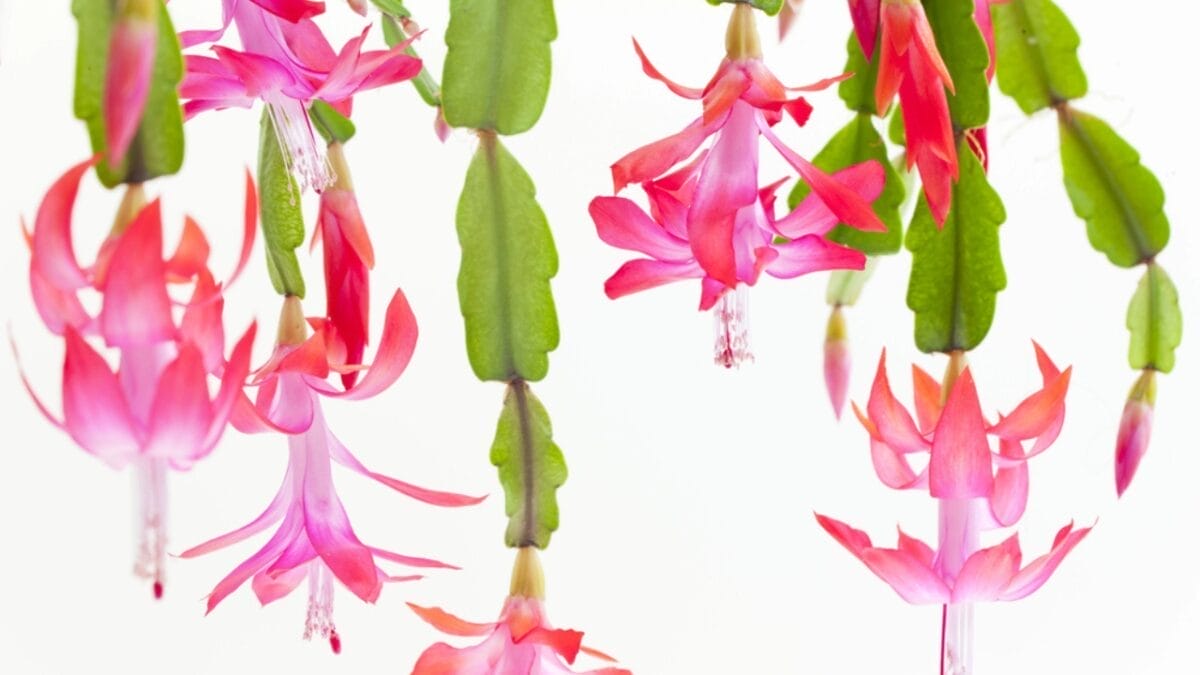
This one surprises almost everybody. A Christmas cactus can actually make little fruits, about the size of a grape, usually pink, fuchsia or purple. They form right behind where the flower was.
So why haven’t you ever seen one? Because most holiday cacti can’t pollinate themselves. Researchers have confirmed that both Thanksgiving and Christmas cacti are mostly self-incompatible, which means a flower’s own pollen basically won’t work.
In the wild in Brazil, the flowers are built for hummingbirds, which carry pollen from plant to plant. In your kitchen, nobody’s doing it.
If you want to try it yourself:
- You need two different plants (different colors or varieties) blooming at the same time. Thanksgiving and Christmas cacti can cross with each other too.
- Use a small paintbrush or a cotton swab to pick up pollen from the anthers of one flower.
- Dab it onto the sticky tip (the stigma) of a flower on the other plant.
- Wait. If it took, the base of the flower swells into a little fruit after the bloom fades.
People who’ve tasted them say they’re mild and not much to get excited about, so this is more of a science project than a snack. But it’s a pretty fun one to do with kids, and the seeds inside can grow brand new plants that aren’t exactly like either parent.
[Photo idea: a ripe fruit on the plant, if you ever get one.]
12. In Brazil, It’s Called the May Flower
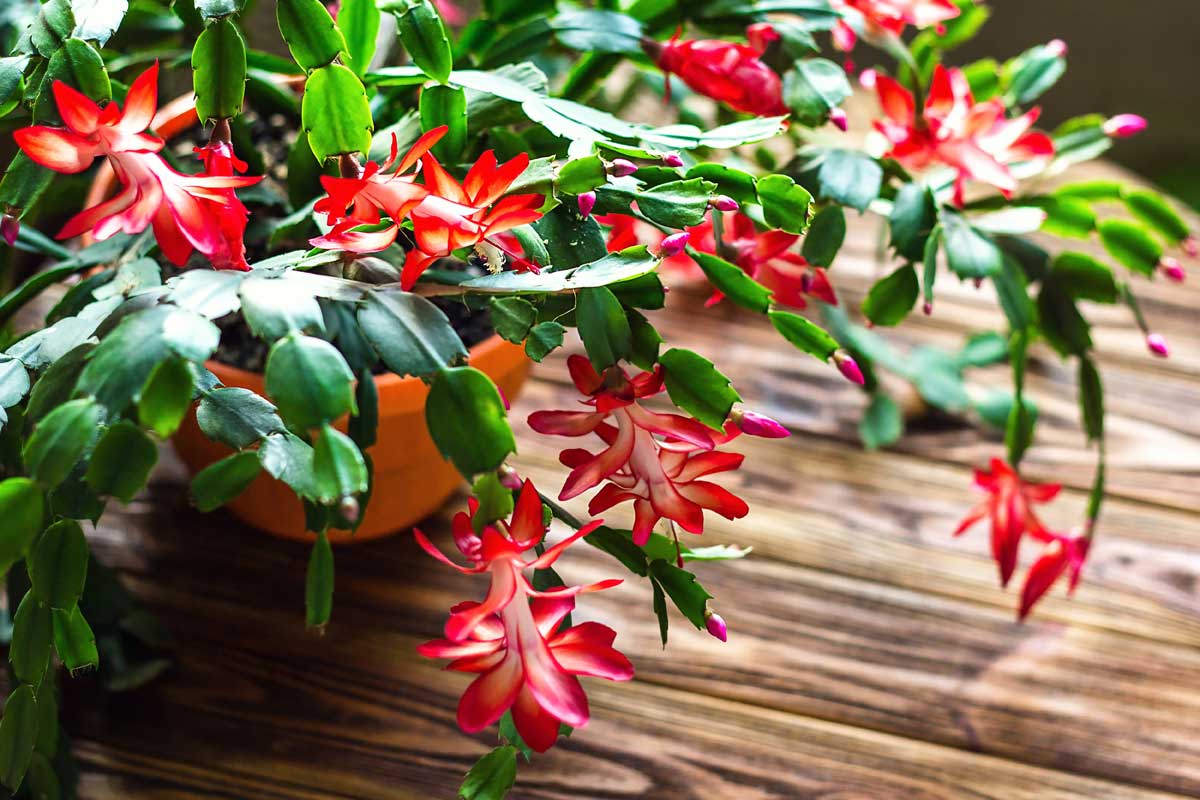
Last one, and it’s my favorite piece of trivia. Back home in Brazil, nobody calls this a Christmas cactus. It’s called flor-de-maio, which means May flower.
That’s because it comes from the Atlantic Forest in the coastal mountains of southeastern Brazil, south of the equator, where the seasons are flipped.
Their late fall, the short cool days that trigger blooming, lands around April and May. Same plant, same trigger, just a different calendar.
So our “Christmas” cactus is really a “fall” cactus. It blooms when the days get short and the nights get cool, no matter which half of the planet it’s on.
Kind of a nice way to think about it when you’re throwing a bag over it every night in November.
Christmas Cactus Care FAQ
How often should I water a Christmas cactus? There isn’t a magic schedule. Water when the top of the soil feels dry, let it drain completely, and dump the saucer. Keep it evenly moist while it’s budding and blooming, then a bit drier after.
How long do the blooms last? A good while if you leave it alone. Clemson says Thanksgiving cactus flowering can last up to 7 to 8 weeks when the plant is kept around 68°F.
Why isn’t my Christmas cactus blooming? Almost always the nights are too warm or too bright. Nights above 65°F make blooming unlikely. Give it cool nights or 12 to 14 hours of real darkness for about 6 weeks (see #3).
Does Epsom salt help a Christmas cactus? It can. Clemson recommends 1 teaspoon of Epsom salt per gallon of water once a month during the growing season, just not the same week as fertilizer.
When should I repot it? Not while it’s blooming. Repot in spring or early summer, and only about every three years. It actually blooms better a little pot-bound.
Is a Christmas cactus safe for cats and dogs? Yes. The ASPCA lists it as non-toxic to dogs, cats and horses. Eating a lot of it can still upset a stomach, so keep it out of easy reach.

Davin is a jack-of-all-trades but has professional training and experience in various home and garden subjects. He leans on other experts when needed and edits and fact-checks all articles. Also an aspiring cook we he researches and tries all kinds of different food recipes and shares what works best.