

Bagels often suffer from two extremes… too fluffy or painfully dense. This recipe strikes the perfect middle ground, producing chewy, blistered-crust bagels that can easily rival those from a specialty bakery.
The key lies in the careful shaping, two-step rising process, and a hot water bath that locks in the perfect texture. This isn’t just another bread, it’s a standout example of how a good dough and a few extra steps can elevate a classic into something crave-worthy.
Why This Bagel Recipe Is Worth the Time
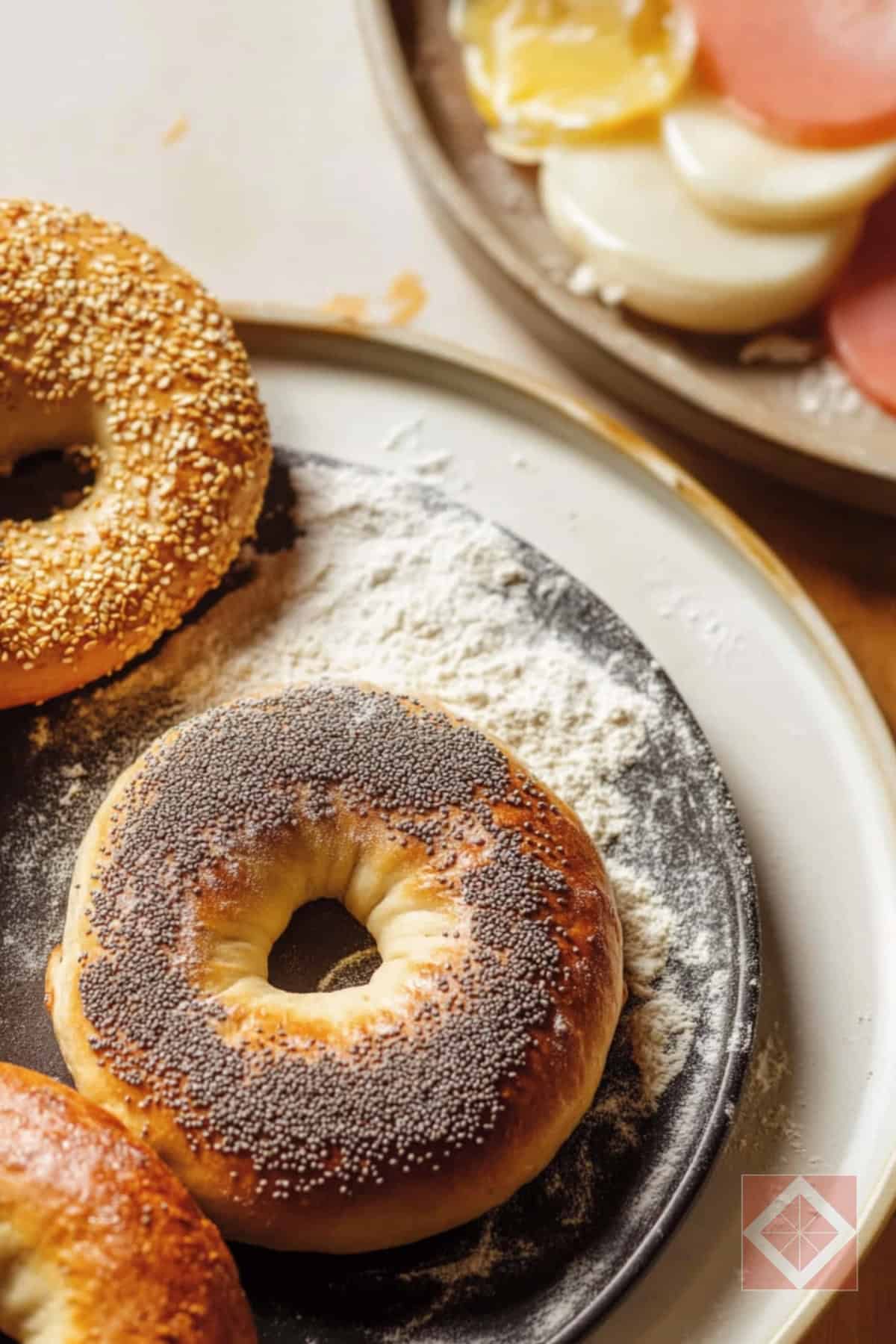
Unlike fast-rise bread recipes that sacrifice flavor for speed, this bagel recipe emphasizes slow fermentation and structured preparation.
The dough undergoes bulk fermentation before preshaping, which allows time for the gluten to strengthen and for more complex flavors to develop.
A second rise—ranging from a quick 15 minutes to an overnight chill—gives the baker flexibility while improving texture and bite.
The shaping process also contributes significantly to the outcome. By stretching the dough into rings and boiling each bagel before baking, the crust achieves its signature chewiness and sheen.
Whether made in a single afternoon or prepared over two days, these bagels offer a far superior result compared to shortcuts or store-bought alternatives.
The Process Behind the Perfect Crust
Boiling is non-negotiable in this bagel recipe. Immersing the shaped dough into a honey-sweetened water bath for just a minute per side sets the crust and locks in that chewy texture.
It’s this boiling step that distinguishes bagels from standard bread, sealing the surface and preparing it for high-heat baking. The result is a crust that blisters and browns beautifully without compromising the moist, springy interior.
After boiling, the bagels are topped with optional coatings like sesame or poppy seeds, which adhere best when the surface is still slightly tacky.
Even this detail improves the end result, helping seeds stick without excessive egg wash or moisture.
Customizing the Recipe for Any Occasion
This base recipe can be easily adapted to suit different flavor preferences or dietary goals. For a savory twist, minced garlic, onion flakes, or shredded cheese can be kneaded into the dough.
Sweet variations work well, too—add dried fruit, cinnamon, or a touch of brown sugar for a morning-ready version.
The bagels can also be shaped smaller for mini sandwiches or larger for oversized deli-style builds. For anyone looking to make multiple batches, they freeze well after baking.
Simply cool completely, then store in airtight containers or freezer bags.
Because the dough is relatively stiff, it also holds up well to gluten-free experimentation when using specialized flour blends.
Although results will vary, the structure and step-by-step approach give home bakers a reliable framework to tweak the recipe without losing integrity.
Helpful Tips for Consistent Results
There are a few tricks that make this bagel recipe easier and more reliable. Using a bench knife to scrape the dough during kneading can speed up the process and make handling easier.
To prevent overstretching the dough during shaping, lifting it with parchment paper helps keep the ring uniform and avoids tearing.
Dusting surfaces with semolina or cornmeal not only adds texture but also prevents sticking. When transferring the bagels from boil to bake, spacing them out evenly ensures they don’t steam each other and lose crust quality.
During baking, rotating pans halfway through helps promote even browning—a crucial factor in developing that characteristic bagel finish. The final product is deeply golden, with a firm crust that softens slightly once cooled.
Ideal for Meal Prep, Gatherings, or Gifting
These bagels aren’t just an occasional indulgence—they’re perfect for weekly meal prep, family-friendly breakfasts, or make-ahead brunch spreads.
Slice and freeze extras for easy weekday use, or pair them with spreads, smoked fish, or deli meats for a crowd-pleasing centerpiece at events.
With so many bread recipes leaning into no-knead or quick-rise methods, this bagel recipe proves that taking the time to do it right can still win out. It offers a process that’s approachable yet impressive, resulting in a finished product that’s as beautiful as it is satisfying.
Whether served plain, toasted, or piled high with sandwich fillings, these bagels deliver that elusive balance of flavor, texture, and versatility.
For those seeking the ultimate at-home bakery experience, this is the recipe to bookmark.
Bread Bagel Recipe
Equipment
- Stand mixer with dough hook (or mixing bowl and hands)
- Bench scraper
- Plastic wrap
- Parchment paper
- 6-quart pot for boiling
- Slotted spoon or tongs
- Baking sheets
- Wire cooling rack
Ingredients
Dough
- 6¾ cups plus 2 tablespoons bread flour plus extra for dusting
- 2¾ teaspoons fine salt
- 1 teaspoon instant yeast
- 2¼ cups plus 2 tablespoons warm water
- Semolina flour or cornmeal for dusting
Water Bath
- 8 cups water
- 2 tablespoons honey
- 1 tablespoon fine salt
Optional Coating
- ½ cup sesame seeds poppy seeds, or everything bagel seasoning
Instructions
- Prepare the Dough: In a stand mixer fitted with the dough hook, combine the flour, salt, yeast, and warm water. Mix on low until no dry patches remain. Increase to medium speed and mix until a smooth, elastic dough forms and pulls away from the sides, around 5 minutes. Transfer to a bowl, cover, and let rise until doubled in size — about 1½ to 2 hours.
- Hand-Mixing Option: Stir ingredients in a large bowl to form a cohesive dough. Let rest for 10 minutes. Then knead on a floured surface until the dough is bouncy and tacky, 5–8 minutes. Shape into a ball, cover, and let rise for 1½ to 2 hours.
- Divide and Preshape: Dust a surface with flour and turn the dough out. Use a bench scraper to divide the dough into 12 equal pieces (about 115 grams each). Form each piece into a ball, then cover and let rest for 15 minutes.
- Shape the Bagels: Line baking sheets with parchment paper, spray lightly with oil, and dust with semolina or cornmeal. Use your finger to poke a hole in the center of each dough ball and stretch it into a 2–3 inch ring. Aim for even thickness around the ring. Place 6 bagels per sheet. Cover and refrigerate for 12–16 hours if making ahead.
- Boil the Bagels: Preheat your oven to 475°F with racks in the upper and lower thirds. In a wide 6-quart pot, simmer the water, honey, and salt. For seeded toppings, sprinkle seeds onto a sheet of parchment. Lower each bagel into the simmering bath (2–3 at a time) and boil for 1 minute per side. Use a slotted spoon or tongs to turn and remove bagels.
- Add Toppings (optional): While still tacky, dip tops of bagels into the seeds. If the surface has dried, brush lightly with water before applying toppings.
- Bake: Arrange boiled bagels on prepared baking sheets. Bake for 20–25 minutes until deeply golden and firm, rotating pans halfway through. Cool on a wire rack.
Notes
- Over-kneading with added flour can make bagels dense, so resist adding too much extra.
- Bagels freeze well once completely cooled — slice before freezing for easy toasting.
- For extra crust, use a baking stone and steam during the first 5 minutes of baking.

Davin is a jack-of-all-trades but has professional training and experience in various home and garden subjects. He leans on other experts when needed and edits and fact-checks all articles. Also an aspiring cook we he researches and tries all kinds of different food recipes and shares what works best.