

Every Easter, there’s one smell that floats through kitchens and immediately feels like the season: hot cross buns. Warm, spiced, sticky-topped, and studded with dried fruit, these little buns are more than just a sweet treat—they’re tradition baked into every bite.
Whether you’re making them from scratch for the first time or it’s part of your yearly spring routine, there’s something kind of magical about baking hot cross buns at Easter.
A Bite of History in Every Bun
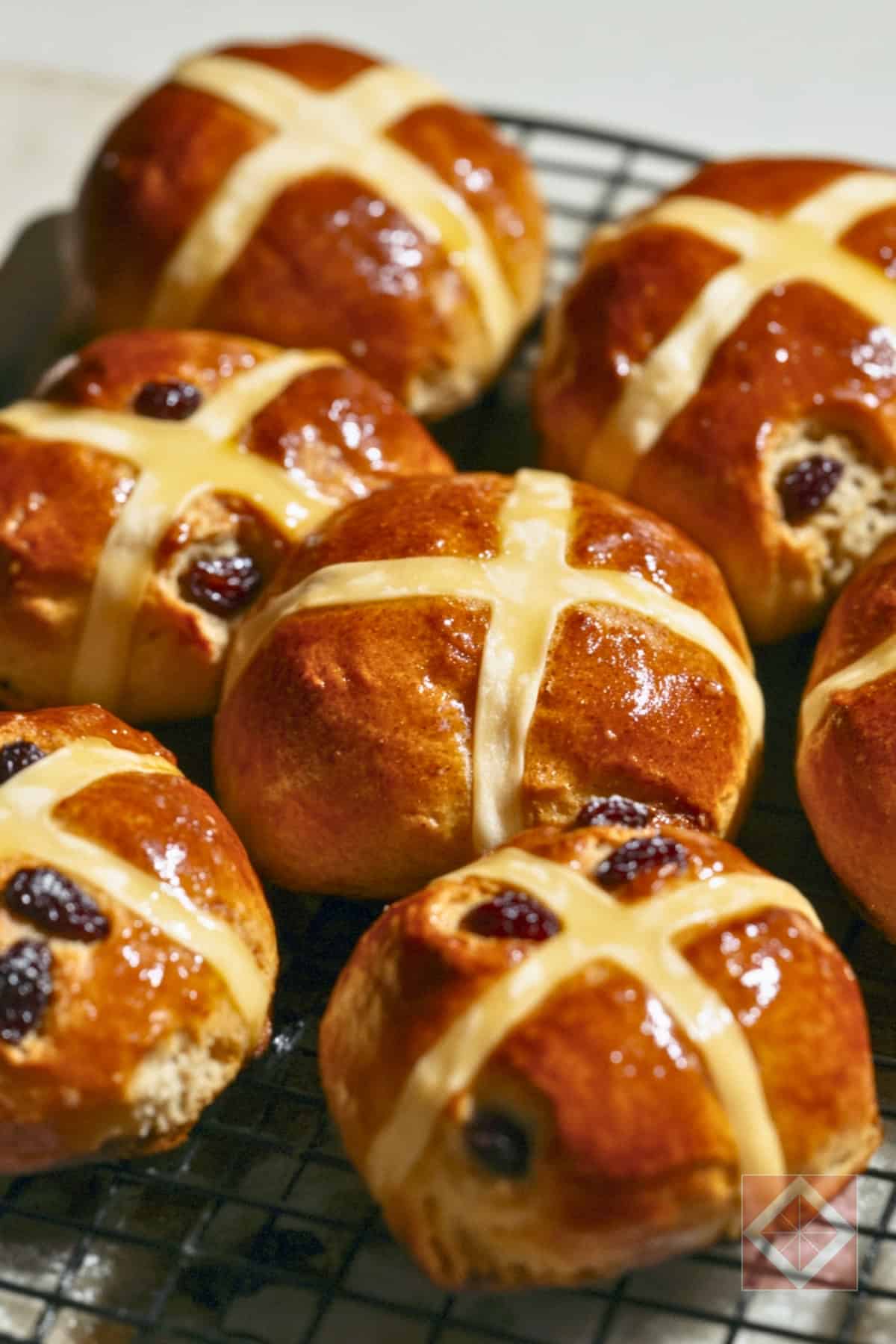
Hot cross buns have been around for centuries. Most people trace their roots back to England, where they were traditionally eaten on Good Friday. That little cross on top?
It symbolizes the crucifixion, but the bun itself carries a lot more with it—stories of spring, renewal, and rituals that go way back.
Some say versions of these buns even showed up long before Christianity, in ancient spring festivals. Spiced bread has always had a way of bringing people together, no matter the century.
By the 1800s, they were already a staple across Europe, and now? You’ll find hot cross buns on Easter tables from London to Sydney to your grandma’s kitchen.
What Makes Them Perfect for Easter
It’s not just about the flavor (although, wow—that flavor). It’s the whole experience. The smell of cinnamon, nutmeg, and cloves warming up your home.
The shine of the glaze catching sunlight through the kitchen window. Sharing a fresh, warm bun with someone you love. It just feels like Easter.
The dough’s enriched with milk, eggs, and butter so it’s soft and pillowy. Raisins or currants add that burst of sweetness. And the spice blend? It’s cozy and comforting—like a blanket in bun form.
And don’t skip the glaze—it’s what gives them that glossy, just-sweet-enough finish that makes every bite feel special.
Tips for Your Best-Ever Easter Batch

If you’re baking them this year, here’s how to make sure they turn out just right:
- Use active yeast that hasn’t expired. Trust us, this one’s key to fluffy, well-risen buns.
- Knead with care. The dough’s sticky thanks to all that richness. Don’t stress—just keep at it or let a mixer help out.
- Let the dough rise fully. Don’t rush this step! The texture depends on it.
- Be gentle with your spices. A little goes a long way—balance is what brings the flavor together.
How to Serve (and Celebrate)
Easter morning? Warm buns, a little butter, and a hot cup of tea or coffee. Perfection. They’re also great as an afternoon snack after an egg hunt or as part of your Easter brunch spread.
Toast the leftovers (if you have any) the next day for a cozy breakfast.
Wanna switch things up this year? Try:
- Chocolate chip hot cross buns (a favorite with kids)
- Orange or lemon zest for a fresh spring twist
- Dried cranberries or apricots instead of raisins
- A citrus glaze instead of traditional sugar syrup
Still, the classic version—with its sticky top, fruit, and spice—is hard to beat.
More Than a Bun—It’s an Easter Memory
Hot cross buns aren’t just delicious—they’re full of meaning. They bring back memories of past holidays, family baking days, and the comforting feeling of tradition.
Whether you’re making them with a handwritten recipe passed down through generations or trying a new variation this year, each batch connects you to something bigger than just dessert.
So as you prep for Easter—setting the table, dyeing eggs, planning the meal—don’t forget the buns. They’re more than a side dish; they’re part of the story.
And if this is your first time baking them? Welcome to a beautiful tradition. It might just become your favorite part of Easter.

Old-Fashioned Hot Cross Buns Recipe (1900s)
Ingredients
For the Buns:
- ¼ cup butter softened
- ⅓ cup packed dark brown sugar
- 1 cup whole milk
- 1 ½ cups raisins
- 2 packets active dry yeast 5 ¼ teaspoons total
- 3 ½ cups bread flour plus extra if needed
- 1 teaspoon ground allspice
- 1 tablespoon ground cinnamon
- 1 teaspoon salt
- 3 large eggs
For the Crosses:
- ½ cup all-purpose flour
- About 5 tablespoons water
For the Glaze:
- 3 tablespoons granulated sugar
- 3 tablespoons water
Instructions
Making the Dough
- In a saucepan, melt the butter with the brown sugar, milk, and raisins over low heat. Stir occasionally until the butter has fully melted and the sugar has dissolved. Remove from heat and allow the mixture to cool until lukewarm.
- Once cooled, stir in the yeast and let it sit for about 5 minutes to activate.
- In a mixing bowl fitted with a dough hook, combine the bread flour, allspice, cinnamon, and salt.
- Gradually add the wet mixture into the dry ingredients, kneading at medium speed.
- Lightly beat the eggs in a separate bowl, then add them one at a time to the dough while mixing. Let the dough knead for 10 minutes.
- Stop the mixer and allow the dough to rest for 15 minutes. Resume mixing at medium speed for another 5 minutes.
- If the dough is too wet and sticky, add extra flour, one tablespoon at a time, but only as needed. This dough should remain slightly sticky.
- Transfer the dough onto an unfloured countertop and knead for about 10 minutes.
- Shape into a ball and place in a greased bowl. Cover and let it rise in a warm place for about 1 ½ to 2 hours.
- Preheat the oven to 375°F.
Shaping and Proofing the Buns
- Punch down the dough and divide it into 12 equal portions. Roll each portion into a smooth ball by cupping it in your hand and rolling it on an unfloured surface.
- Arrange the dough balls evenly on a greased 9×13-inch baking pan lined with parchment paper. Cover loosely and let them proof for about 1 hour.
Making the Crosses
- For the flour paste, mix the all-purpose flour with water until a thick paste forms. Transfer to a piping bag and carefully pipe thin lines across the buns to form crosses.
Baking the Buns
- Bake for about 20-22 minutes, or until the buns turn a golden brown on top.
Preparing the Glaze
- While the buns are baking, heat the granulated sugar and water in a small saucepan until it simmers and dissolves.
- As soon as the buns are out of the oven, brush them with the warm sugar glaze. Let them cool completely before storing in an airtight container.
Notes
- This dough is rich in butter and sugar, making it naturally sticky when kneading. Expect some resistance at first. A bench scraper can help manage the dough.
- When kneading, stretch the dough outward before folding it back over itself. Continue this method, occasionally scraping and repositioning the dough to work in all directions. Over time, the dough will become more elastic and less sticky.

Davin is a jack-of-all-trades but has professional training and experience in various home and garden subjects. He leans on other experts when needed and edits and fact-checks all articles. Also an aspiring cook we he researches and tries all kinds of different food recipes and shares what works best.