
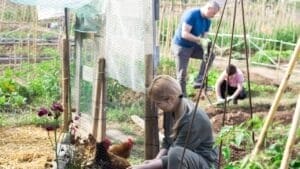
If you have kept chickens for more than a single season, you know the “moonscape” look. It starts as a lush patch of grass and quickly turns into a compacted, muddy rectangle of bare earth.
While we often think of landscaping as something we do for our own curb appeal, the right choice of plants can actually make your coop work harder for you.
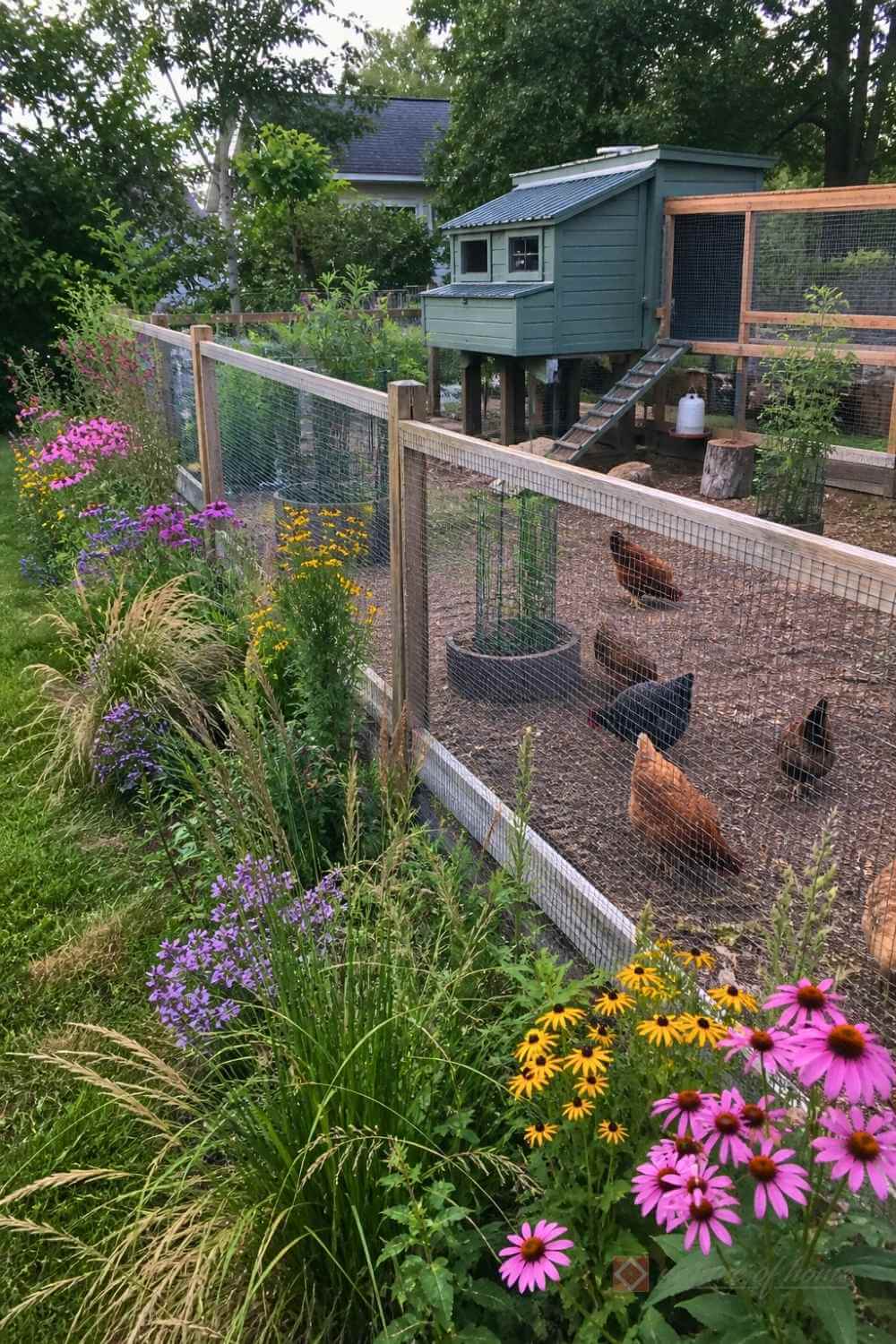
Integrating native wildflowers around your run does more than just hide the chicken wire. These plants act as a biological filter, a natural pharmacy, and a security system for your flock.
By choosing species that belong in your specific corner of the country, you get a garden that thrives on neglect while providing tangible benefits to your birds.
The Engineering of the Soil
A coop is a high-input environment. Between the manure and the spilled water, the soil can quickly become anaerobic, leading to odors and pathogens like Coccidiosis.
Native prairie plants are the engineers of the soil world. While turf grass has roots only a few inches deep, species like Switchgrass or False Indigo have root systems that can reach ten feet into the earth.
These deep roots act as a biological pump. A single mature Cup Plant can transpire gallons of water a day.
By planting these in the low spots or the “drip line” of the coop roof, you are using biology to keep the structural wood dry. This extends the life of your building and prevents the “sour crop” issues that come with anaerobic mud.
 For a garden that supports pollinators while keeping weeds at bay, explore these “plants that keep weeds out & pollinators in“.
The Science of the Golden Yolk
Most people know that pastured eggs have darker yolks, but fewer realize it is a direct result of specific plant pigments called xanthophylls.
Native wildflowers in the Aster family, such as Black-eyed Susans and Coreopsis, are packed with these carotenoids.
When chickens forage on the petals or the insects attracted to these blooms, they sequester those pigments into the yolk. Beyond looking better on a breakfast plate, these pigments are powerful antioxidants like lutein, which support the bird’s eye health and immune system.
By planting these around the perimeter, you are essentially creating a natural supplement station.
 For more on creating a bird-friendly garden, check out these “native plants that attract & nourish local birds“.
A Regional Guide to the Best “Chicken-scaping” Natives
| Region | Featured Native Species | Primary Functional Benefit |
| Midwest / Driftless | Cup Plant (Silphium perfoliatum) | Leaves hold rainwater for beneficial insects; massive root systems for drainage. |
| Northeast | Wild Bergamot (Monarda fistulosa) | High thymol content; naturally antimicrobial and repels biting flies. |
| Southeast | Partridge Pea (Chamaecrista fasciculata) | A native legume that fixes nitrogen and produces high-protein seeds. |
| Southwest | Blanketflower (Gaillardia pulchella) | Highly drought-tolerant; contains antioxidants that support skin health. |
| Pacific NW | Western Yarrow (Achillea millefolium) | Nearly indestructible groundcover; antimicrobial properties for foot health. |
Breaking the Fly Lifecycle
We often talk about “good bugs” eating the “bad bugs,” but the specifics matter for a poultry keeper. Most coop pests, like stable flies and house flies, pupate in the top two inches of soil.
When you have a bare dirt run, those larvae are safe.
A wildflower border creates a habitat for Carabid beetles (ground beetles). These are the lions of the undergrowth. They don’t care about the flowers; they want the cool, moist mulch layer the plants provide.
Once established, these beetles spend their nights patrolling the perimeter and eating fly pupae before they can ever hatch.
It is a silent, automated pest control system that requires zero input from you once the habitat is set.
 To boost pollinator activity in your garden, consider these “bee-friendly ground covers“.
Thermal Buffering and Predator Defense
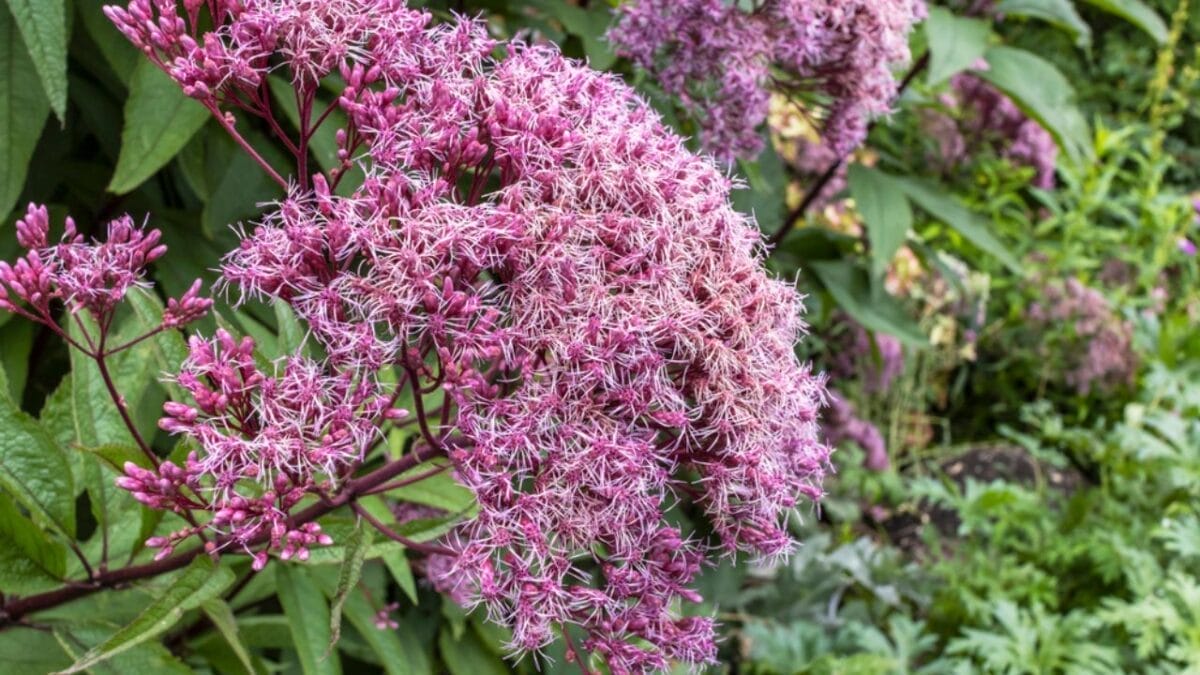
Think of your wildflower border as a living insulation layer. A thick stand of tall natives like Joe Pye Weed on the south or west side of a coop provides significant evaporative cooling.
In the height of summer, the temperature inside a “screened” coop can be several degrees cooler than one sitting in the middle of a sun-baked dirt lot.
In the winter, the dried, standing stalks act as a windbreak, breaking the force of the biting winds before they hit the coop walls. Furthermore, these tall plants provide “visual screening.”
This breaks the line of sight for aerial predators like hawks, giving your birds a sense of security that reduces flock stress.
The Bee-to-Bird Bridge
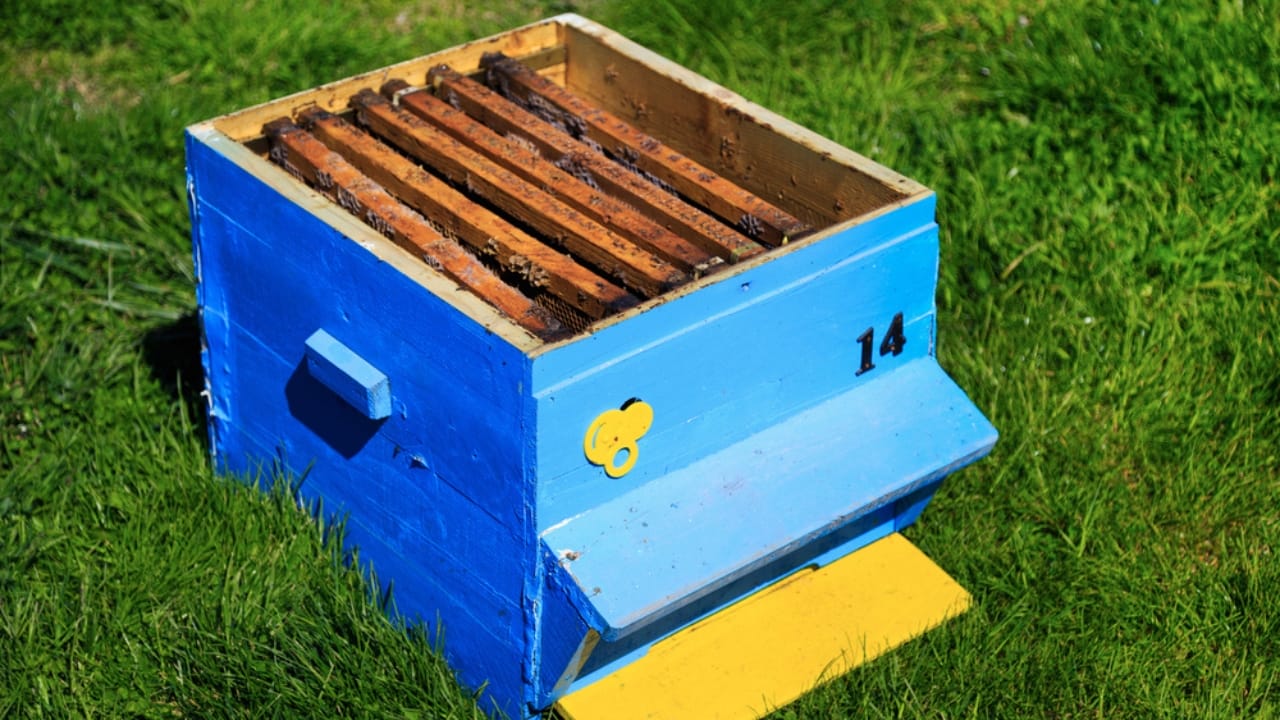
If you are managing bees alongside your poultry, these wildflowers serve as a “buffer crop.” Chickens are notorious for catching bees mid-air, but a thick stand of nectar-rich wildflowers creates a physical flight path.
It forces bees to fly upward and over the coop area rather than through it. This reduces inter-species conflict and provides a critical nectar source during the “hungry gap” of late summer when other forage dries up.
Practical “Chicken-Proofing”
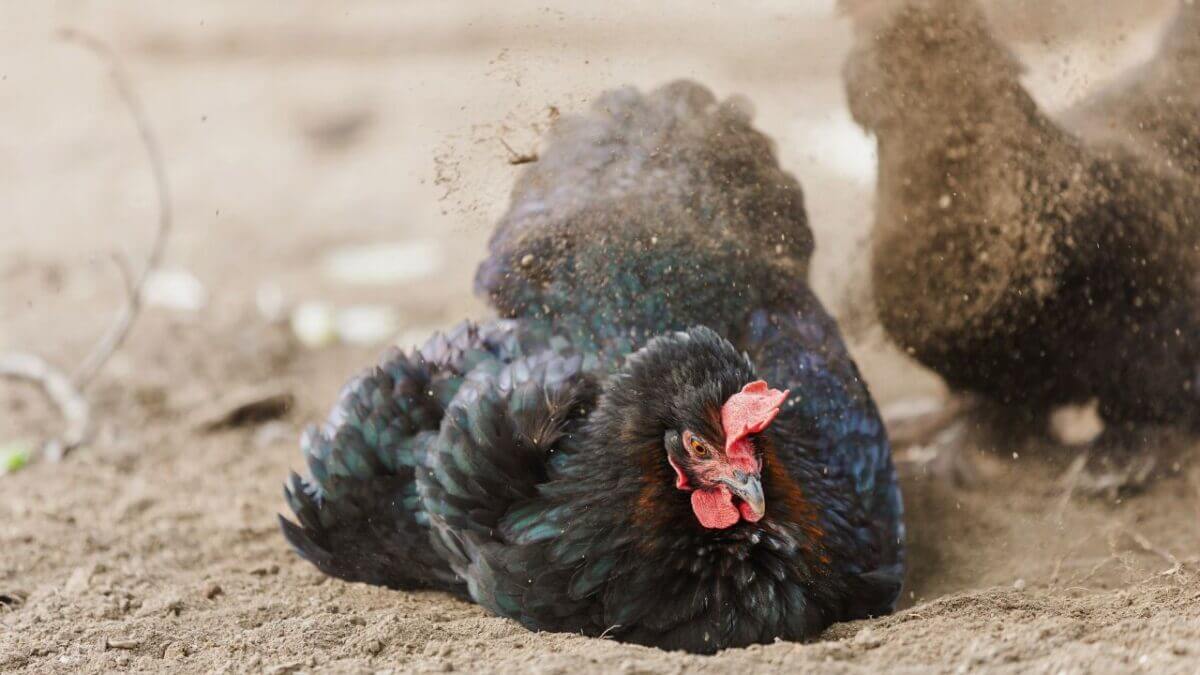
To ensure your wildflowers survive the “scorched earth” tendencies of chickens (they like dust baths), utilize a tiered planting strategy:
- The Overhang Method: Plant your flowers about a foot away from the run. This allows the plants to grow to full height while the chickens only “prune” the leaves that poke through the wire.
- The Hardware Cloth Basket: For the most vulnerable plants, create a “cloche” or basket out of half-inch hardware cloth. Secure it over the crown of the plant. This allows the wildflower to grow through the mesh, but the chickens cannot get to the “heart” of the plant or scratch up the root ball.
- The Grit Factor: Deep-rooted natives pull trace minerals like manganese and zinc from the subsoil. As chickens “till” the edges of these beds, they ingest tiny amounts of this mineral-rich soil and plant matter. This acts as a natural “grit” and mineral supplement that is far more bioavailable than store-bought options.
By looking at the coop as a node within a larger system, these plants stop being decorations and start being components.
You spend less time hauling feed, less time cleaning “sour” mud, and more time observing a system that is in balance.

Davin is a jack-of-all-trades but has professional training and experience in various home and garden subjects. He leans on other experts when needed and edits and fact-checks all articles. Also an aspiring cook we he researches and tries all kinds of different food recipes and shares what works best.