

I started making this bariatric gelatin recipe after I ran out of ways to drink protein powder
Not because I was trying to be clever. Because I was tired of thick shakes that sat in my stomach like regret, and because getting enough protein shouldn’t feel like a second job.
Someone mentioned jello. I thought they were joking.
They weren’t.
What Actually Happens When You Make High-Protein Jello
Most recipes tell you to boil water and dump everything in. That’s how you get chunks.
The protein powder seizes. It clumps like scrambled eggs you didn’t want, because the water is too hot and whey doesn’t forgive heat the way gelatin does.
The science is simple: whey protein denatures at around 149°F to 158°F. Boiling water hits 212°F. That 60 degree difference is what turns your $40 protein powder into chalky lumps.
I learned this the expensive way. Twice.
The Part That Matters
The trick is temperature, not talent.
You dissolve the gelatin in hot water, then you cool it down to about 140°F before the protein touches anything. That’s it. That’s the whole thing.
It sounds obvious now. It wasn’t obvious at 2am when I was trying not to waste another tub of protein powder.
What I Use (and Why I Use It)
For the base:
- 1 small box sugar-free Jello (whatever flavor doesn’t make you sad)
- 1 packet unflavored gelatin (about 7 grams)
- 1 cup boiling water
- 1 cup ice water
For the protein:
- 2 scoops clear whey isolate (the fruity kind, not the milky kind)
The clear whey matters. Regular protein powder turns this into a cloudy science experiment. Clear whey disappears into fruit Jello like it was supposed to be there.
I use the unflavored gelatin because one box of Jello alone gets weak when you add protein. Standard Jello uses a ratio of about 7 grams gelatin per 2 cups liquid. When you add protein powder, you’re adding more solids that interfere with the gelatin network. You need extra gelatin to compensate.
How to Make It Without Regret
First: Mix both gelatins together while they’re still powder. Dry. Just whisk them in a bowl so the unflavored stuff doesn’t clump later.
Then: Pour the boiling water over the powder. Stir until it’s clear. All the way clear. This takes maybe two minutes but it feels longer.
Wait: Let it sit on the counter for five to seven minutes. You’re waiting for it to cool to the point where you can hold the bowl without a towel. Around 140°F if you want to measure it. Warm, not hot.
While you wait: Shake the protein powder with the ice water in a shaker bottle. Shake it hard. Then let it sit for a minute so the foam calms down.
Now: Pour the cold protein water into the warm Jello. The temperature will drop immediately to somewhere safe, probably around 100°F or below. Stir gently.
Don’t whisk like you’re angry. Just fold it together like you’re trying not to wake it up.
Finally: Pour it into small cups. Refrigerate for at least four hours.
What You Get
Firm jello that doesn’t fall apart when you eat it. About 15 grams of protein per little cup if you divide it into four servings.
The total batch has roughly 50 to 60 grams depending on your protein powder scoop size.
It doesn’t taste like protein powder. It tastes like cold, slightly serious Jello.
The Protein Math That Matters
Most people need about 0.8 grams of protein per kilogram of body weight daily.
If you’re active or trying to maintain muscle while losing weight, that number goes up to 1.2 to 1.6 grams per kilogram.
For someone who weighs 180 pounds, that’s roughly 65 to 130 grams of protein a day.
Which sounds manageable until you realize how much chicken breast or how many protein shakes that actually is.
This jello gives you 15 grams in about 4 ounces. Small volume. High return. And it doesn’t feel like eating your macros.
The Mistakes I Made So You Don’t Have To
Adding protein to boiling water: This turns it into cottage cheese. Immediate. Irreversible. You’re watching denaturation happen in real time.
Skipping the extra gelatin: The jello will be too soft. It won’t hold itself together. Standard gelatin has a “bloom strength” of around 225 to 250, which measures gel firmness.
Protein powder weakens that structure. You need the reinforcement.
Using regular whey instead of clear: It works, technically. But it looks like cloudy dishwater and tastes like compromise.
Blending everything together: This creates foam. So much foam. Whey acts like soap because of its protein structure. A foam hat you have to skim off or eat around. Just stir with a spoon.
Why This Works When You Don’t Feel Like Cooking
It’s cold. It’s already portioned. You can make a batch on Sunday and eat it all week without thinking about it.
Some nights I’d open the fridge and just eat one standing there in the kitchen with the door still open. It felt like stealing a snack, not choking down a nutrition requirement.
That mattered more than I expected it to.
The other thing: jello is solid at room temperature but melts at body temperature. 98.6°F. So it feels like you’re eating something, which satisfies that need to chew, but it doesn’t sit heavy in your stomach afterward.
The Version with Greek Yogurt
If you want it creamier, use half the amount of hot water to dissolve the Jello, then stir in a cup of plain nonfat Greek yogurt after it cools.
Whisk it fast right when you add the yogurt. The cold yogurt makes the gelatin start setting immediately, and if you whisk while that’s happening, you trap air.
It turns into something between jello and mousse.
This version adds another 15 to 20 grams of protein from the yogurt. Plus calcium.
I make this when I want dessert but don’t want to feel like I’m pretending.
The Night Version
Before bed, I sometimes make a warm one.
One tablespoon unflavored gelatin. A mug of hot herbal tea. Stir until it dissolves. Add lemon juice and a little stevia.
Drink it while it’s warm.
It sits differently than water. Heavier. Quieter. I sleep better after it, though I can’t say exactly why.
Maybe it’s the glycine. Gelatin is about 27% glycine by weight, and there’s some research suggesting glycine affects neurotransmitters related to sleep and calm.
Or maybe it’s just the ritual of having something warm before bed.
What People Ask
Does it really stay firm? Yes, if you use both gelatins. If you skip the unflavored packet, it gets sad and wobbly.
Can I use fresh fruit? Not pineapple or kiwi. They have enzymes called bromelain and actinidin that cut protein chains. Your gelatin won’t set, it’ll just stay liquid.
Canned fruit is fine. The heat treatment during canning kills the enzymes.
How long does it last? A week in the fridge. After that it starts weeping water, a process called syneresis. The gelatin network tightens and squeezes liquid out. Make small batches.
Can I freeze it? Don’t. Ice crystals destroy the texture. You’ll thaw it into rubber and regret.
Why clear whey and not regular? Clear whey is acidified to a lower pH, which keeps it soluble and transparent in liquid. Regular whey protein is milky and opaque.
Both work, but clear whey blends invisibly into fruit flavored jello. Regular whey makes it look like you mixed jello with milk.
The Part No One Mentions
Making this felt like finding a small loophole in the daily grind of hitting protein goals.
I could choose the flavor. I could make it firmer or softer. I could eat it at 9pm or 6am or not at all.
That sounds dramatic for jello. Maybe it is.
What This Actually Replaces
Protein shakes that made me gag by week three. The guilty feeling when I couldn’t hit my protein target and didn’t know how to make up the gap without eating another chicken breast.
Each cup of this has about 80 calories. Negligible fat. Less than 5 grams of sugar.
This is just one tool. But it’s a reliable one.
And on the days when eating enough protein felt like work I didn’t want to do, having something cold and small and already finished in the fridge meant I did the work anyway.
The Real Recipe (No Story)
- Mix 1 box sugar-free Jello + 1 packet unflavored gelatin
- Add 1 cup boiling water, stir until clear
- Let cool 5 to 7 minutes (to about 140°F)
- Shake 2 scoops clear whey with 1 cup ice water
- Combine gently
- Refrigerate 4 hours
15g protein per serving. Keeps one week. Makes 4 servings.
That’s it.

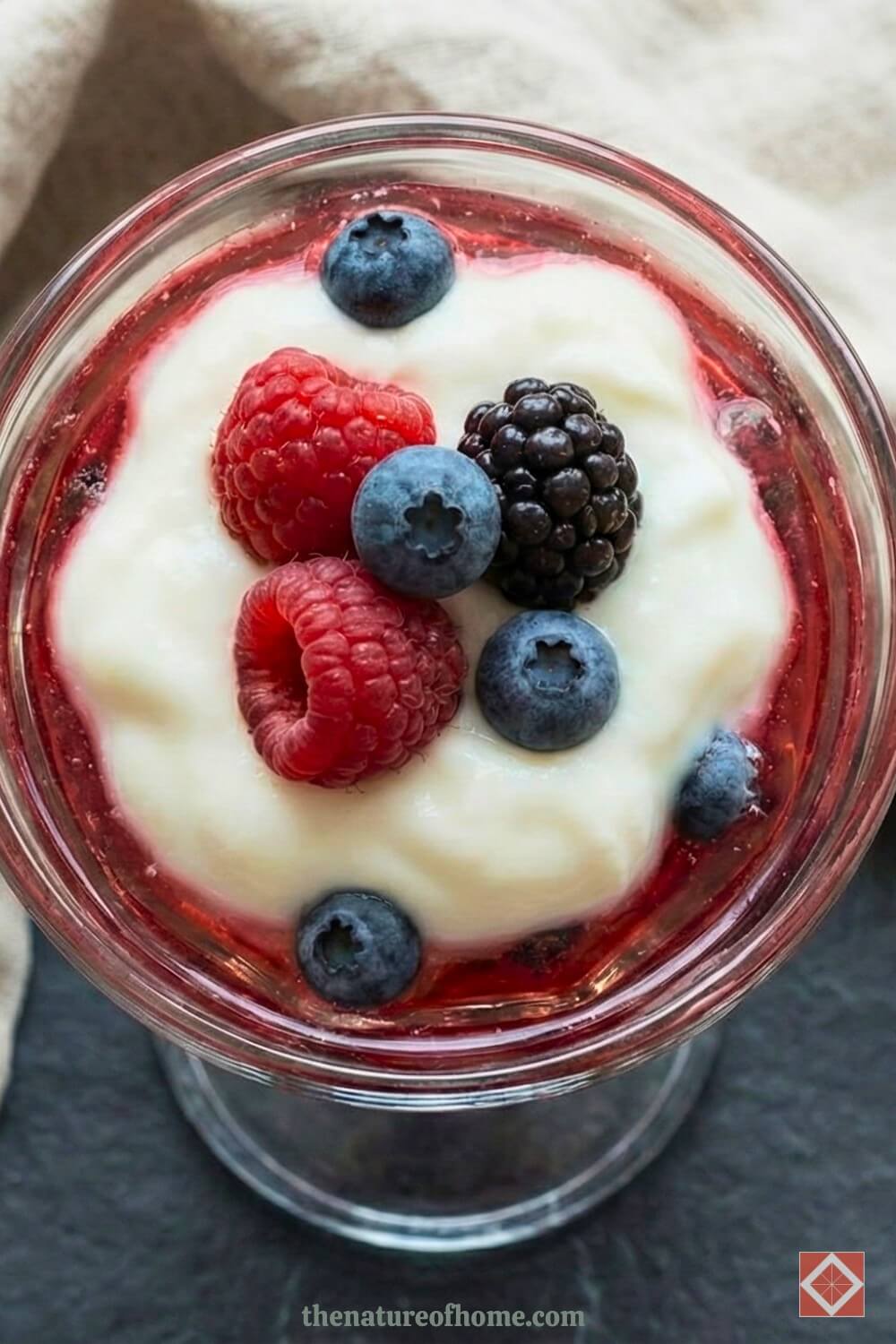
Protein-Packed Berry Gelatin Parfait
Equipment
- Medium mixing bowl
- Small bowl or shaker bottle
- Whisk or spoon
- Measuring cups and spoons
- 4 small serving glasses or jars
Ingredients
- 1 box 0.3 oz sugar-free strawberry or raspberry gelatin mix
- 1 cup boiling water
- 1 cup cold water
- 1 scoop approx. 30g unflavored or vanilla protein powder
- 1 cup plain non-fat Greek yogurt
- 1/2 cup fresh berries raspberries, blueberries, blackberries for garnish
Instructions
- In a medium bowl, dissolve the sugar-free gelatin mix in the boiling water. Stir for at least 2 minutes until completely dissolved.
- Stir in the cold water.
- In a separate small bowl or shaker bottle, mix the protein powder with the Greek yogurt until smooth and well-combined. If the mixture is too thick, you can add a tablespoon of water or milk to thin it slightly.
- To create the parfait layers, pour about 1/4 cup of the liquid gelatin into each of the 4 serving glasses or bowls. Place them in the refrigerator for about 30-45 minutes, or until set but not completely firm.
- Once the first layer is set, gently spoon a layer of the protein-yogurt mixture over the gelatin.
- Carefully pour the remaining liquid gelatin over the yogurt layer.
- Refrigerate the parfaits for at least 2 hours, or until the gelatin is completely firm.
- Before serving, top each parfait with a dollop of any remaining yogurt mixture and fresh berries.
Notes
- Protein Powder: Ensure your protein powder is fine and dissolves easily to avoid a grainy texture. Unflavored is best to let the gelatin flavor shine, but vanilla works well too.
- Bariatric-Friendly: This recipe is designed to be low in sugar and high in protein. Always consult your nutritionist for your specific dietary phase and needs.
- Serving Size: The portion sizes are small, perfect for a post-bariatric surgery pouch. Eat slowly and listen to your body’s fullness cues.
Nutrition

Davin is a jack-of-all-trades but has professional training and experience in various home and garden subjects. He leans on other experts when needed and edits and fact-checks all articles. Also an aspiring cook we he researches and tries all kinds of different food recipes and shares what works best.