

When it comes to dinner, there’s nothing more comforting than a hearty bowl of soup, especially one that packs a punch like this kimchi soup with pork and tofu.
If you’re looking to spice up your weeknight meals or impress your family with a dish that’s as satisfying as it is vibrant, this recipe is for you.
Combining the bold flavors of Korean spices, tender pork, and silky tofu, this soup is the ultimate one-pot wonder that will warm you from the inside out.
The Perfect Fusion of Flavor & Comfort

This recipe showcases the bold, spicy, and tangy essence of kimchi paired with the richness of pork and the delicate texture of tofu. It’s not just another soup—it’s a deeply flavorful experience that captures the heart of Korean cuisine.
The fiery notes from gochujang (Korean chili paste) and gochugaru (Korean chili flakes) bring depth, while fresh cilantro and scallions add a refreshing finish.
The beauty of this dinner recipe is its adaptability. Whether you’re cooking for a family of four or planning ahead for meal prep, this dish offers flexibility and convenience without sacrificing taste.
Plus, with just 40 minutes of total time, it’s perfect for busy evenings.
Tips for Making This Recipe Your Own
One of the best aspects of this kimchi soup is its versatility. Here are a few ways to tailor it to your taste or dietary needs:
- Switch Up the Protein: While pork belly or pork loin is the star here, you can easily substitute chicken or even a plant-based protein like tempeh for a lighter option.
- Go Gluten-Free: Use tamari instead of soy sauce and ensure the gochujang you’re using is certified gluten-free.
- Vary the Heat Level: Control the spice by adjusting the amount of gochugaru. For a milder version, reduce the chili flakes, or omit them entirely.
This dinner recipe is also a great way to make use of pantry staples like soy sauce, sesame oil, and stock. It’s simple yet deeply rewarding, with a flavor profile that’s anything but ordinary.
Why This Recipe Belongs on Your Dinner Table
Not only does this soup deliver on taste, but it also offers a balanced meal in a single bowl. With protein from the pork and tofu, fiber from the bok choy, and probiotics from the kimchi, it’s as nourishing as it is delicious.
Plus, the spicy and tangy broth is known for clearing up stuffy noses and warming you up on cold nights.
Imagine coming home after a long day, the rich aroma of sesame oil and garlic filling the kitchen as this soup simmers on the stove. It’s more than dinner—it’s an invitation to slow down and savor each bite.
Pair it with steamed rice or enjoy it as is for a light yet satisfying meal.
Meal Prep & Storage
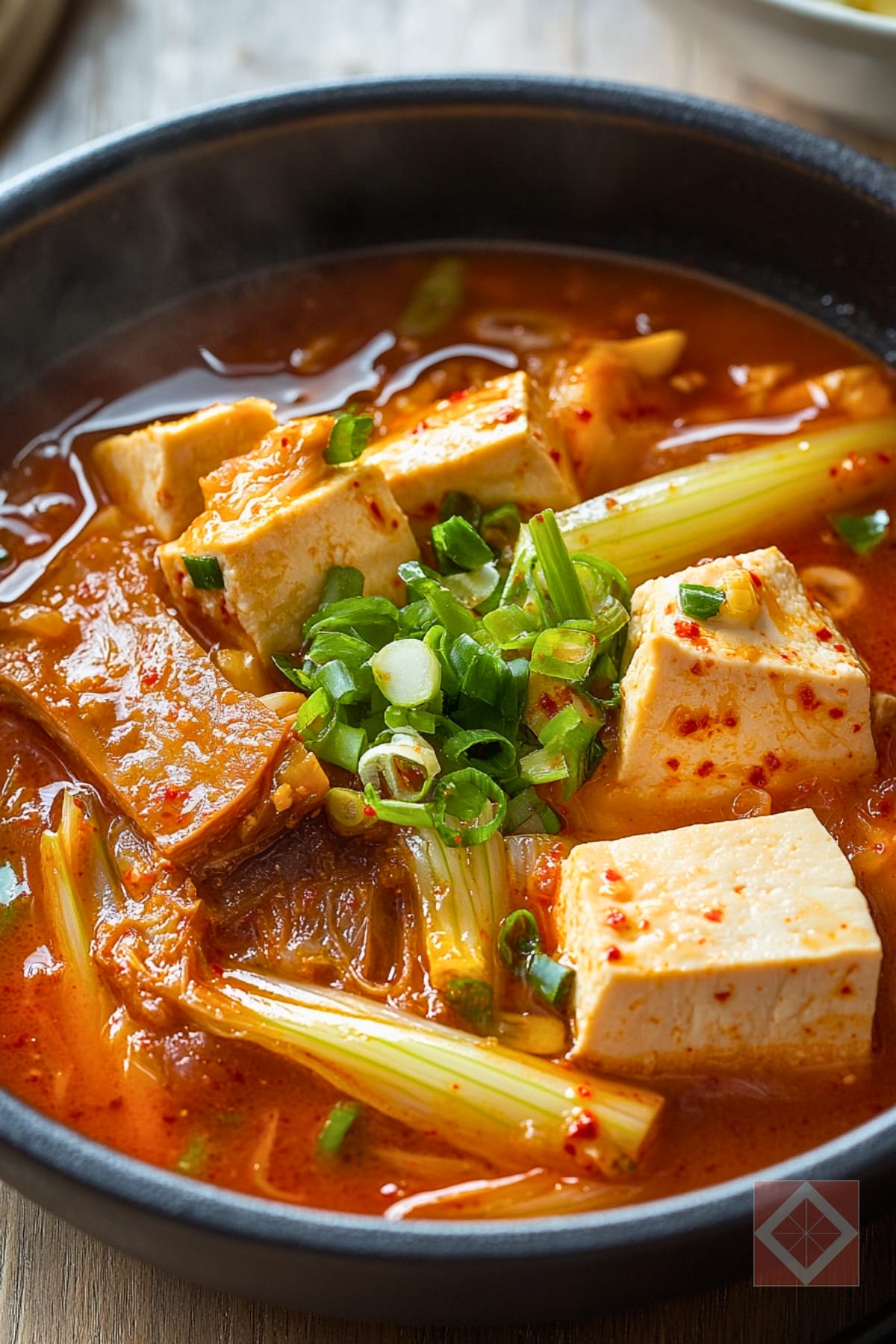
This kimchi soup with pork and tofu is also a fantastic option for meal prep. Make a big batch and store individual portions in airtight containers.
It keeps well in the refrigerator for up to four days and freezes beautifully, making it a great option for those busy weeknights when cooking feels like a chore.
To reheat, simply bring the soup to a gentle simmer on the stove, adding a splash of stock or water if needed. Top with fresh scallions and cilantro for that just-cooked freshness.
This kimchi soup with pork and tofu is more than just a recipe—it’s a dinner solution that’s brimming with bold flavors, nourishing ingredients, and the comforting warmth of a homemade meal.

Kimchi Soup with Pork & Tofu for Dinner
Equipment
- Heavy-bottomed soup pot
Ingredients
- 1 pound pork belly or boneless pork loin cut into ½-inch pieces
- Kosher salt to taste
- 4 garlic cloves minced
- 1 tablespoon grated peeled fresh ginger
- 2 tablespoons soy sauce
- 1 teaspoon toasted sesame oil
- 1 teaspoon Asian fish sauce
- 8 ounces baby bok choy stems and leaves separated
- 2 tablespoons peanut oil
- 1 medium onion chopped
- 3 tablespoons gochujang (Korean red chili paste)
- ½ to 1 teaspoon gochugaru (Korean red chili flakes) to taste
- 2 cups kimchi chopped, juices reserved
- 4 cups chicken, pork, or beef stock
- 12 ounces soft or silken tofu cut into large cubes
- 8 scallions white and green parts, thinly sliced, for serving
- Fresh cilantro leaves for serving
Instructions
- Marinate the Pork: Combine the pork pieces in a bowl and season them generously with salt. Add the minced garlic, grated ginger, soy sauce, sesame oil, and fish sauce. Toss everything together until the pork is well coated. Allow it to marinate for at least 20 minutes at room temperature or cover and refrigerate overnight for deeper flavor.
- Prepare the Bok Choy: Slice the baby bok choy into two parts—separating the stems from the leaves. Keep these parts distinct as they will be added to the soup at different stages of cooking.
- Cook the Pork and Aromatics: Heat a sturdy soup pot over high heat and add the peanut oil. Once the oil is hot, add the marinated pork and sear it until browned, about 5 minutes. Lower the heat to medium, add the chopped onion, and cook while stirring until the onion softens, roughly 5 minutes. Mix in the gochujang and gochugaru, cooking for 1 to 2 minutes until the paste turns a deeper red color and its aroma is released.
- Simmer the Soup: Add the chopped kimchi along with its juices, the bok choy stems, the stock, 4 cups of water, and a pinch of salt to the pot. Bring everything to a rolling boil, then reduce the heat to maintain a steady simmer. Let the soup cook for about 20 minutes, stirring occasionally. Taste the broth and adjust the seasoning if needed.
- Add Finishing Ingredients: Shortly before serving, gently stir in the bok choy leaves and the tofu cubes. Allow the tofu to warm through and the bok choy leaves to wilt. Once these ingredients are tender and combined, remove the soup from the heat.
- Serve and Garnish: Ladle the soup into individual bowls. Garnish each serving with a sprinkling of scallions and fresh cilantro leaves. Serve the soup hot and enjoy.
Notes
- This recipe works equally well with pork belly or boneless pork loin, though pork belly yields a richer flavor and texture.
- For an extra kick, adjust the amount of gochugaru to your spice preference.
- Serve with steamed rice for a complete dinner.

Nancy has been a plant person from an early age. That interest blossomed into a bachelor’s in biology from Elmira College and a master’s degree in horticulture and communications from the University of Kentucky. Nancy worked in plant taxonomy at the University of Florida and the L. H. Bailey Hortorium at Cornell University, and wrote and edited gardening books at Rodale Press in Emmaus, PA. Her interests are plant identification, gardening, hiking, and reading.