
if your pork chops come out dry and chewy like you’re gnawing on a shoe, it’s not your fault. it’s because nobody told you the actual rules.
pork chops aren’t complicated. but there’s a thickness thing nobody talks about. a temperature thing. a moisture thing. get any of those wrong and you end up with expensive leather that tastes like sadness.
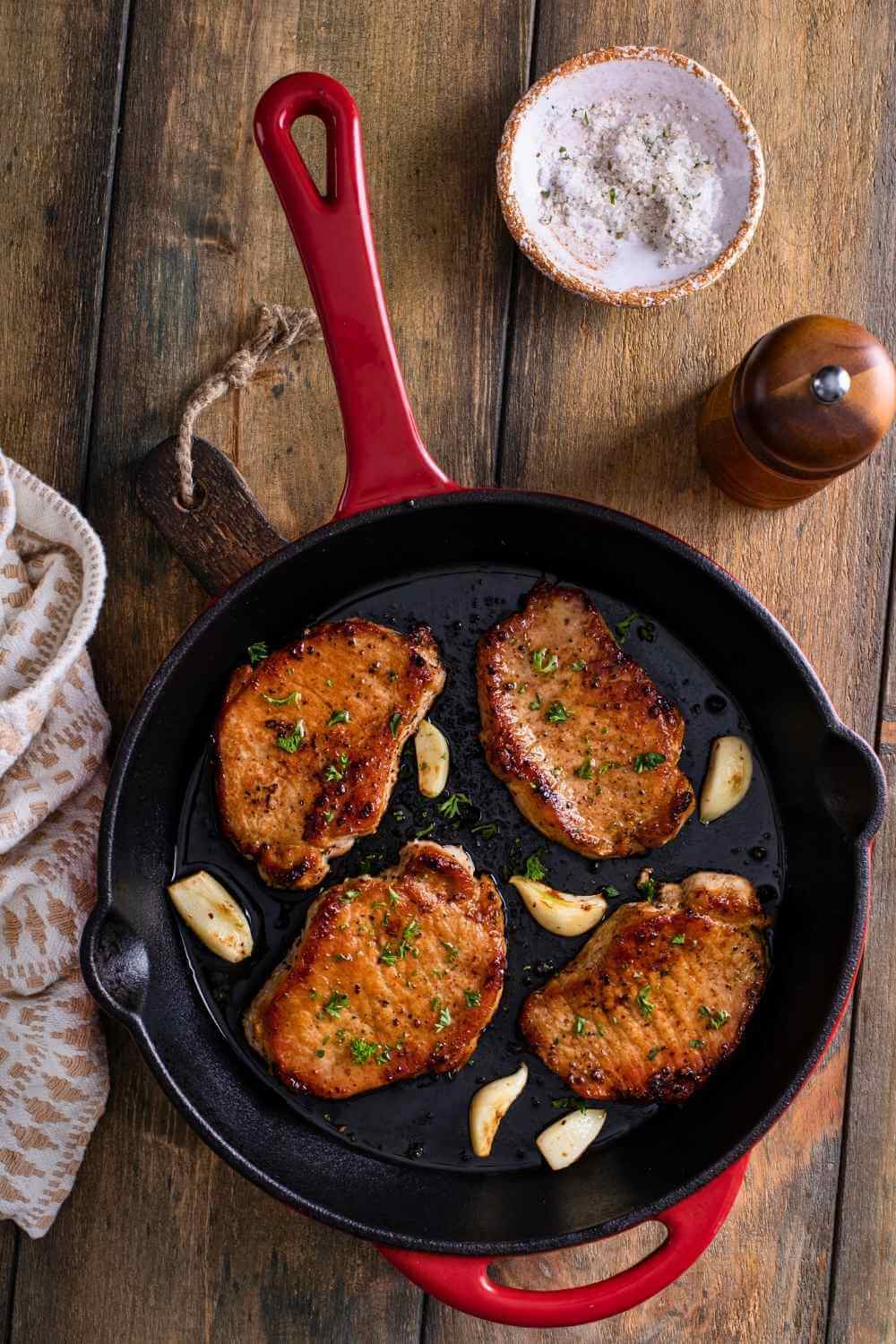
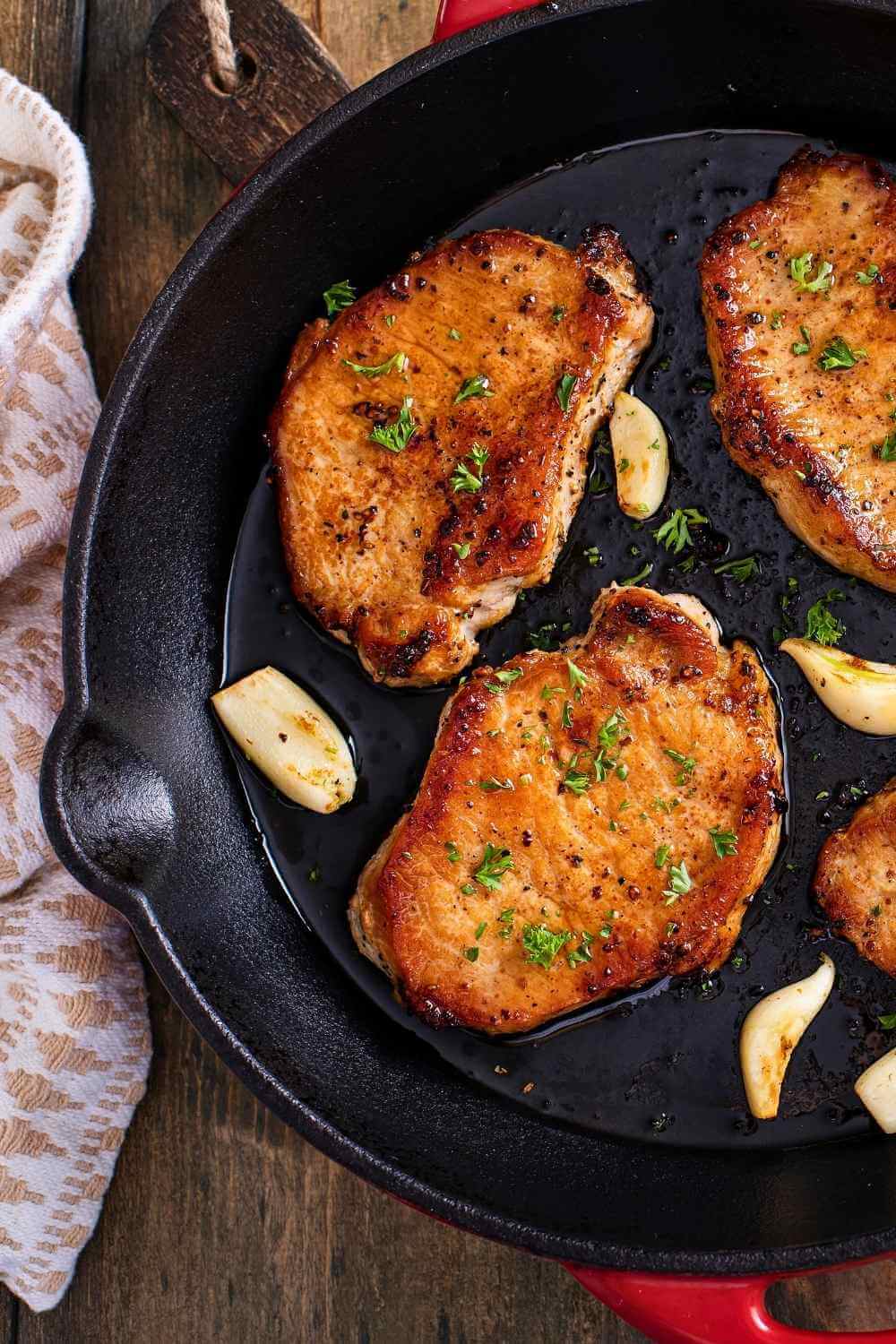
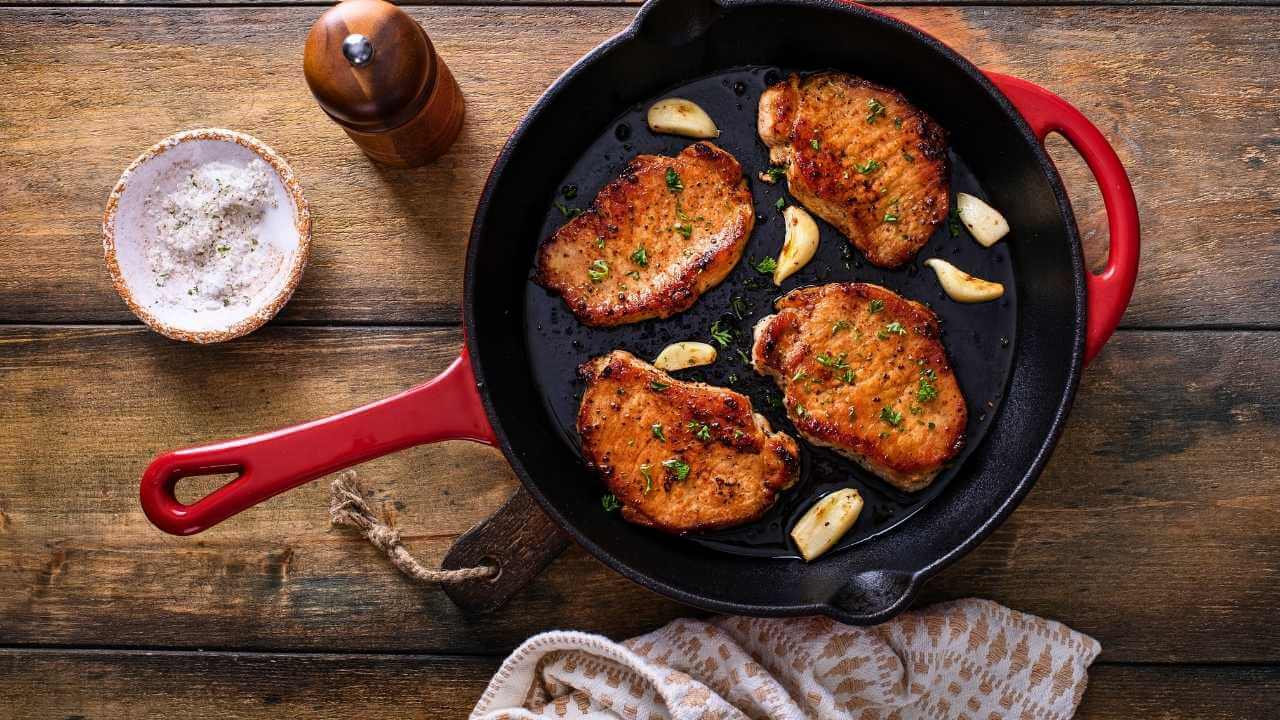
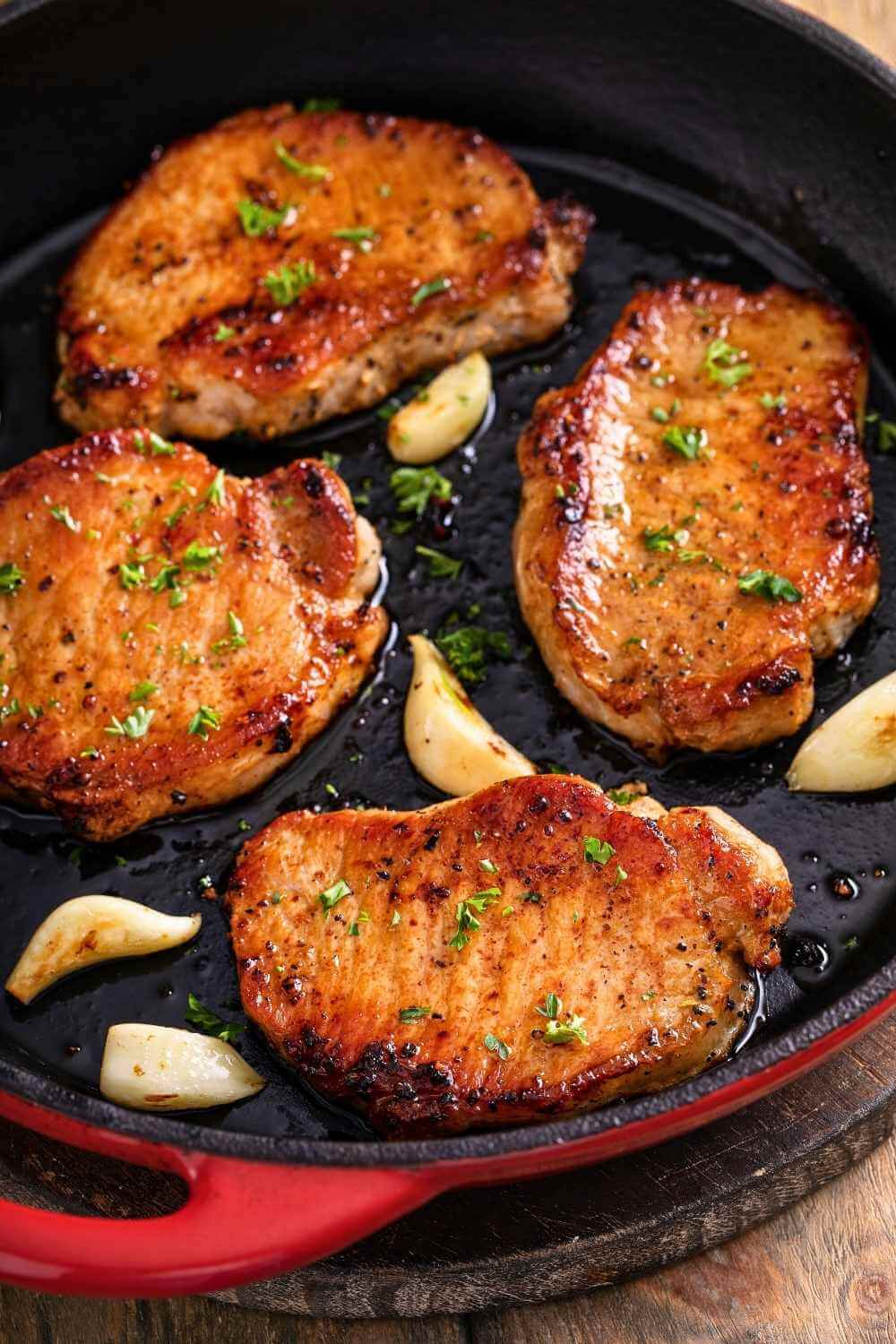
this method fixes all of it. thick golden crust on the outside. juicy and tender inside. garlic butter that pools on the plate and begs you to sop it up with bread. tastes like a steakhouse but costs like $4 per person and takes 15 minutes.
bone-in or boneless. thick cut or regular. this works for all of them once you know which technique to use.
why your pork chops have been failing
you’re cooking them straight from the fridge. cold meat hits a hot pan and the muscle fibers seize up. that’s why it’s tough. meat needs to come to room temp first so it cooks evenly.
they’re wet when they hit the pan. wet meat steams instead of searing. you get that gray sad look instead of a brown crust. moisture is the enemy of a good sear.
you’re using the wrong method for the thickness. thin chops on the stove are fine. thick chops on the stove burn on the outside before the inside is done. nobody told you thick chops need to finish in the oven.
you’re overcooking them. we all grew up thinking pork had to be cooked to death or you’d get sick. that’s old information. modern pork is safe at 145°F which is still a little pink inside. cooking it past that makes it dry.
you’re cutting into them too soon. you pull them off the heat and immediately slice to check if they’re done. all the juices run out onto the cutting board. the chops are dry before you even eat them.
fix these things and your pork chops will be completely different.
the thickness rule (this is critical)
grocery store pork chops vary wildly in thickness. some are half an inch. some are two inches. they cannot be cooked the same way.
standard chops (0.5 to 1 inch thick):
cook entirely on the stove. sear both sides. baste with garlic butter. done in about 6 to 8 minutes total.
thick cuts and pork chop filets (1.5 to 2+ inches):
you cannot cook these fully on the stove or the outside will burn before the inside is cooked. they need the sear-and-bake method. sear both sides for 2 minutes each. baste with butter for 1 minute. then stick the whole pan in a 375°F oven for 8 to 12 minutes to finish cooking through.
this is why your thick fancy pork chops always come out wrong. you needed the oven.
what you’ll need
for the pork chops:
- 4 bone-in pork chops, 1 inch thick (or boneless, both work)
- 2 tablespoons high smoke point oil (avocado, grapeseed, or vegetable)
- salt and black pepper (or your favorite steak rub)
- 3 tablespoons butter
- 4 cloves garlic, smashed
- fresh thyme or rosemary sprigs (optional but good)
equipment:
- cast iron skillet or heavy stainless steel pan (nonstick won’t get hot enough for a good sear)
- meat thermometer (optional but helpful)
- tongs
- oven if using thick chops
prep work (don’t skip this)
temper the meat. take your pork chops out of the fridge and let them sit on the counter for 20 to 30 minutes before cooking. this brings them to room temperature so they cook evenly. cold meat cooks unevenly and gets tough.
dry them completely. use paper towels and pat both sides of each chop until they’re bone dry. you want them almost sticky dry. this is what creates that golden brown crust.
season generously. hit both sides with salt and black pepper. or use a steak rub. something like susie q’s santa maria rub or montreal steak seasoning works great. you want more seasoning than you think. some of it falls off during cooking.
how to cook standard thickness chops (stovetop only)
heat your pan. put your cast iron skillet over medium-high heat. let it preheat for 3 to 4 minutes until it’s screaming hot. add oil and swirl to coat.
sear side one. lay the pork chops in the pan. don’t move them. don’t touch them. let them sear for 3 to 4 minutes until they release easily and have a deep golden crust.
flip and sear side two. flip the chops. sear another 3 to 4 minutes.
add the garlic butter. reduce heat to medium. add butter, smashed garlic cloves, and herb sprigs to the pan. tilt the pan slightly and use a spoon to baste the melted butter over the chops constantly for about 1 minute. this is what makes them taste like a steakhouse.
check doneness. insert a thermometer into the thickest part. you want 140°F. it’ll rise to 145°F while resting. if you don’t have a thermometer, press the meat with your finger. it should feel like the tip of your nose—firm but with a little give. if it feels like your forehead, it’s overcooked.
rest them. transfer chops to a plate and let them rest for 5 minutes. this lets the juices redistribute. cutting too soon means dry chops.
how to cook thick chops (sear-and-bake method)
preheat your oven to 375°F.
sear both sides. heat your cast iron pan over medium-high. add oil. sear the chops for 2 minutes per side until golden brown.
baste with butter. add butter, garlic, and herbs to the pan. baste the chops for about 1 minute.
finish in the oven. transfer the whole skillet to the oven. bake for 8 to 12 minutes depending on thickness. check temp at 8 minutes. you want 140°F internal temp.
rest. pull them out, transfer to a plate, let rest 5 minutes.
this method keeps the outside from burning while the inside cooks through. game changer for thick cuts.
doneness without a thermometer
if you don’t have a meat thermometer, use the touch test.
touch test guide:
press the meaty part of the chop with your finger.
- feels like your cheek = rare, too underdone for pork
- feels like the tip of your nose = medium, perfect for pork (145°F)
- feels like your forehead = well done, too dry
you’re aiming for nose firmness. firm but still springy.
visual cues:
cut a small slit in the thickest part. it should be white with just a hint of pink in the center. the juices should run clear, not red.
the garlic butter baste (why it matters)
basting does two things. it adds flavor and it helps cook the top of the chop without flipping it 47 times.
when you tilt the pan and spoon hot butter over the meat, you’re essentially cooking both sides at once. the butter also picks up all the brown bits from the pan and garlic flavor and carries it onto the meat.
this is restaurant technique. it’s why steakhouse chops taste different than yours. they baste.
flavor variations
you don’t have to use just salt and pepper. pork chops take seasoning really well.
steak rubs:
susie q’s santa maria rub, montreal steak seasoning, or any bbq rub you like. coat the chops before searing.
cajun style:
use cajun seasoning instead of salt and pepper. add a squeeze of lemon at the end.
italian herbs:
mix dried oregano, basil, garlic powder, and parmesan into the seasoning. use rosemary for basting.
asian inspired:
season with five spice powder. baste with butter, ginger, and soy sauce.
spicy:
add smoked paprika and cayenne to your seasoning. finish with a drizzle of hot honey.
what to serve with them
classic sides:
mashed potatoes, roasted brussels sprouts, sautéed green beans, mac and cheese, baked sweet potato
low carb / keto:
cauliflower mash, roasted broccoli, creamed spinach, sautéed mushrooms, side salad with blue cheese
easy starch:
rice pilaf, roasted potatoes, garlic bread (for sopping up that butter)
make it a meal:
start with a simple salad. serve the chops with two sides. pour the garlic butter from the pan over everything. done.
storage and reheating
leftovers: store in an airtight container in the fridge for up to 3 days.
reheating: the microwave will make them rubbery. reheat in a skillet over medium-low with a splash of broth or water, covered, for about 3 to 4 minutes. or reheat in a 300°F oven covered with foil for 10 minutes.
freezing: you can freeze cooked pork chops for up to 3 months but the texture changes. they get a little drier. thaw in the fridge overnight before reheating.
common mistakes to avoid
not drying the meat. wet chops won’t sear. they’ll steam and turn gray.
cooking them cold. cold meat cooks unevenly and gets tough.
using too low heat. you need high heat for a good sear. medium heat gives you sad gray meat.
moving them around in the pan. let them sit undisturbed to develop a crust.
overcooking. pull them at 140°F. they’ll coast to 145°F while resting.
cutting into them immediately. let them rest or all the juice runs out.
using a nonstick pan. nonstick can’t get hot enough. use cast iron or stainless steel.
why cast iron matters
cast iron holds heat better than any other pan. it gets screaming hot and stays hot even when you add cold meat to it. that’s what creates the sear.
stainless steel works too but you need to really preheat it.
nonstick pans can’t handle the high heat needed for a proper sear. they’ll warp or release fumes. save nonstick for eggs.
diet friendly options
keto / low carb:
pork chops are already keto. pair with low carb sides like cauliflower mash or roasted veggies. the garlic butter adds fat which is perfect for keto macros.
paleo:
use ghee instead of butter. otherwise this is already paleo compliant.
whole30:
swap butter for ghee. skip any rubs with sugar. use fresh herbs and spices.
gluten free:
already gluten free. just check your seasoning blends to make sure they don’t have hidden wheat.
dairy free:
skip the butter baste or use ghee or olive oil. you lose some of the richness but it still works.
faq quick hits
bone-in or boneless?
bone-in has more flavor and stays juicier. boneless cooks faster and is easier to eat. both work with this method.
can i use pork loin chops?
yes but they’re leaner so they dry out faster. watch your temp closely and don’t overcook.
what if my chops are different thicknesses?
cook them separately or pull the thinner ones out earlier. different thicknesses need different cook times.
can i make these in advance?
you can cook them ahead and reheat gently but they’re best fresh. the crust won’t be as crispy after sitting.
what oil should i use?
avocado oil has the highest smoke point. grapeseed and vegetable oil work too. don’t use olive oil, it’ll smoke and burn.
Garlic Butter Pan-Seared Pork Chops
Equipment
- Cast Iron Skillet (Crucial for that golden sear!)
- Kitchen Tongs
- Meat Thermometer (The only way to be 100% sure)
Ingredients
The Meat
- 2 Pork Chops Bone-in is best for flavor, but boneless works too. See notes for thickness adjustments.
- 1 tbsp Avocado Oil or Olive Oil You need an oil with a high smoke point.
The Seasoning
- 1 tsp Coarse Kosher Salt Use less if using fine table salt.
- ½ tsp Freshly Cracked Black Pepper
- ½ tsp Onion Powder Adds a nice savory depth.
- ½ tsp Smoked Paprika Optional, but gives it a great color.
The Garlic Butter Baste
- 3 tbsp Unsalted Butter
- 4 cloves Garlic Smashed, not minced—minced garlic burns too fast!.
- 3 sprigs Fresh Thyme or Rosemary
Instructions
- Take the Chill Off (Don’t Skip!): Pull your pork chops out of the fridge about 20 minutes before cooking. Let them sit on the counter. If you throw cold meat into a hot pan, it seizes up and cooks unevenly.
- Dry & Season: Use paper towels to pat the chops bone-dry on all sides. (Wet meat steams instead of searing!). Season generously with the salt, pepper, onion powder, and paprika. Press the seasoning into the meat so it sticks.
- Choose Your Method (Check Your Thickness):
- Method A: For Standard Chops (Under 1 inch): Heat your oil in a large cast-iron skillet over medium-high heat. When the oil shimmers, sear the chops for 3-4 minutes per side undisturbed until golden brown.
- Method B: For Thick Cuts / Filets (Over 1.5 inches): Preheat your oven to 375°F. Sear the chops in the hot skillet for just 2 minutes per side (use tongs to sear the fat cap on the edges, too!). Then move to Step 4 immediately.
- The Butter Baste: Reduce the stove heat to medium. Drop in the butter, smashed garlic, and herbs. Tilt the pan slightly so the melting butter pools at the bottom. Use a large spoon to continuously scoop that foaming golden butter and pour it over the chops for 1-2 minutes.
- If using Method B (Thick Cuts): After basting for a minute, slide the entire skillet into your hot oven for 8-12 minutes to finish cooking the center.
- Check Doneness: Insert a meat thermometer into the thickest part. You are looking for 140°F (60°C). Pull them off the heat immediately—they will rise to the perfect 145°F while they rest.
- No thermometer? Press the center. It should feel firm but springy (like the tip of your nose), not rock hard.
- Rest & Serve: Transfer the chops to a plate and pour the remaining garlic butter from the pan over top. Let them rest for 5 full minutes before cutting. This keeps the juices inside the meat where they belong!
Notes
- Why Smashed Garlic? We smash the cloves rather than mincing them because minced garlic will burn and turn bitter at high searing temperatures. Smashed cloves infuse the butter gently.
- The “Pink” Myth: It is perfectly safe (and delicious) to eat pork with a slight blush of pink in the center (145°F). If you cook it until it’s completely gray (160°F+), it will be dry.
- Storage: Leftovers keep well in the fridge for 3 days. Reheat gently in a skillet with a splash of broth or water to keep them moist—microwaving tends to rubberize pork!

Davin is a jack-of-all-trades but has professional training and experience in various home and garden subjects. He leans on other experts when needed and edits and fact-checks all articles. Also an aspiring cook we he researches and tries all kinds of different food recipes and shares what works best.