

Craving bakery-level bread without the trip to a boulangerie? This everyday French loaf delivers exactly that: a golden, crisp crust and a soft, airy interior that tastes like it came straight out of a professional oven.
With just a few basic ingredients and a bit of patience, this recipe transforms simple flour, water, yeast, and salt into something truly spectacular.
Why This Recipe Works So Well
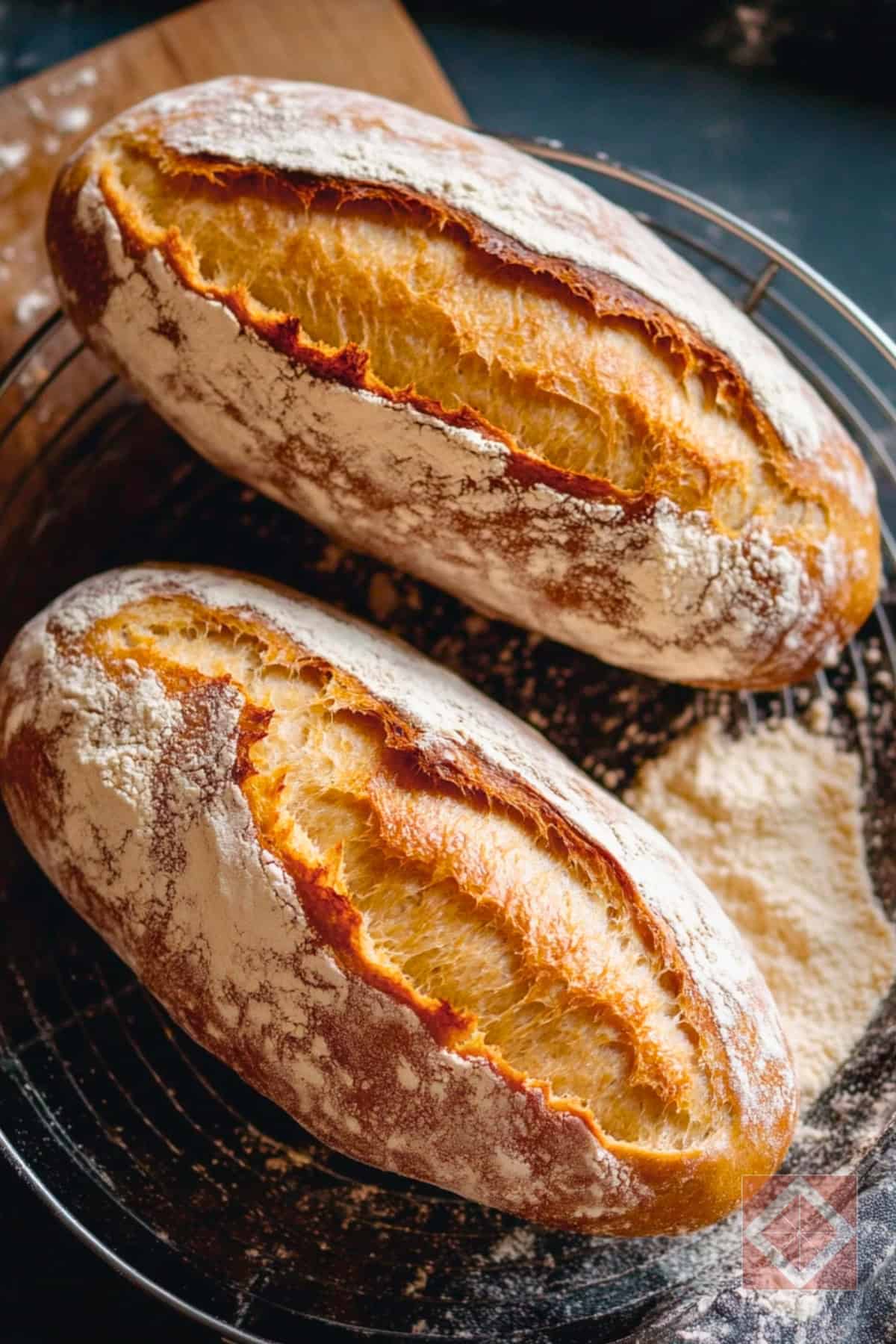
What sets this loaf apart is its use of a preferment, which deepens the flavor and improves the texture. By allowing part of the dough to ferment overnight, the resulting loaf develops a more complex, slightly tangy note that enhances its rustic character.
Once the dough is fully mixed on day two, it undergoes a carefully timed series of rests and folds. These short intervals allow the gluten to strengthen naturally, improving both structure and oven spring.
After this bulk fermentation stage, it’s divided, shaped, and proofed to perfection.
This method rewards patience. Every step in the process—each fold, each rise—serves to build the loaf’s beautiful crumb and chewy texture.
The final result is bread that holds its shape, slices cleanly, and stays fresh longer than average.
Perfect for Any Occasion
Whether served warm with butter at dinner, sliced for hearty sandwiches, or toasted for breakfast, this bread fits seamlessly into everyday life. It’s an ideal recipe for anyone looking to add a reliable go-to loaf to their baking routine.
Because it yields two loaves, it’s also great for gatherings or meal prep. One loaf can be enjoyed fresh, while the other freezes beautifully.
And if there’s a particular meal or theme involved—say, a cheese board, a soup night, or a Mediterranean-inspired lunch spread—this recipe delivers the kind of subtle flavor that complements everything it’s paired with.
For those who love experimenting, this loaf is versatile enough to handle minor variations.
A portion of whole wheat flour can be substituted in without impacting hydration or structure. And there’s even an option to swap out the commercial yeast in the preferment with sourdough starter for a deeper, tangier finish.
Baking Methods That Maximize Results
This bread adapts well to different baking setups. Whether using a baking stone or a covered baker, both techniques produce beautiful results.
Baking on a stone or steel creates a crisp crust, thanks to even heat conduction. A steam tray added to the oven mimics the conditions of a bakery oven, helping the loaf rise before the crust sets.
The covered baker, on the other hand, traps steam naturally—ideal for those who don’t want to fuss with added water or trays. Both methods result in a crust that crackles with every bite and a golden hue that signals perfection.
Regardless of the method, scoring the top of the loaf right before baking is essential. It controls the expansion and gives the bread its signature rustic appearance.
It’s also a chance to express creativity—whether it’s a simple slash or a decorative pattern.
A Bread That Teaches Patience & Reward
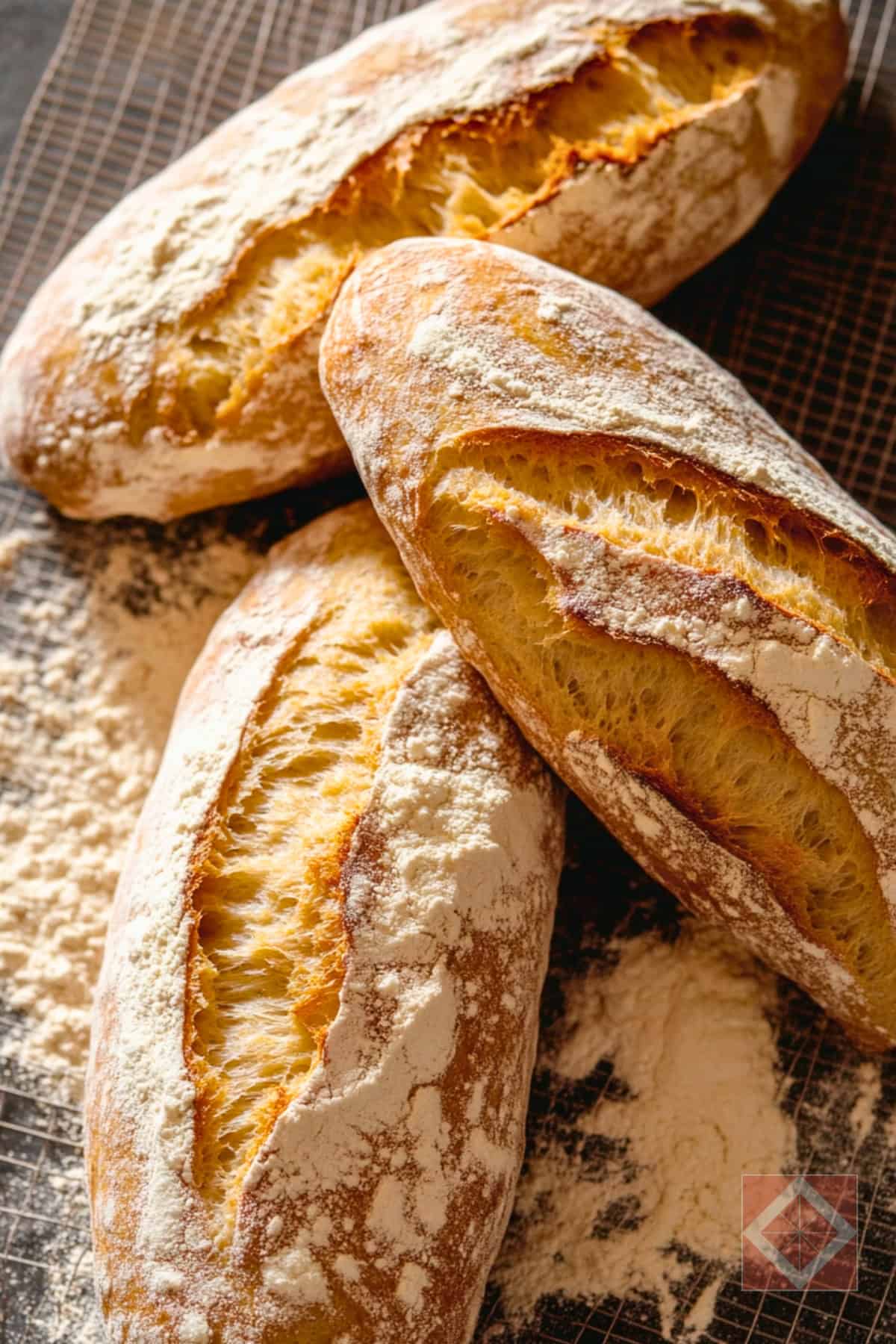
The everyday French loaf isn’t just another recipe—it’s an opportunity to slow down, observe transformation, and build skill with each bake. It’s the kind of project that teaches patience while rewarding attentiveness.
Even for novice bakers, the step-by-step approach provides a confidence-building path to success. With built-in rest times and clear fold techniques, this process becomes a rhythm that’s easy to follow.
For those who enjoy the meditative side of baking, this is a perfect weekend activity with an irresistible payoff.
From the first stretch and fold to the final slice, this recipe invites bakers to engage in the craft of breadmaking in a meaningful way. And the final result? A crusty, tender loaf that disappears almost as quickly as it cools.

Everyday Bread Recipe
Equipment
- Mixing bowls
- Bench knife or dough scraper
- Proofing baskets (9 x 3-inch round or oval)
- Dutch oven or baking stone and cast-iron skillet
- Parchment paper
- Lame or sharp blade for scoring
- Kitchen thermometer (optional)
Ingredients
Preferment:
- 1¾ cups plus 1½ tablespoons all-purpose flour
- ¼ teaspoon instant yeast or 1 tablespoon sourdough culture as a substitute
- Scant 1 cup cold water 55°F to 60°F
Dough:
- 1¼ cups plus 2½ tablespoons warm water
- 4¼ cups plus 1 tablespoon all-purpose flour plus more for dusting
- 2½ teaspoons fine salt
- ½ teaspoon instant yeast
Whole-Wheat Variation:
- Use 3¾ cups all-purpose flour and 1 cup plus 2½ tablespoons whole wheat flour for the dough
Instructions
- Make the Preferment (Day 1): In a large bowl, stir together the flour, yeast (or sourdough culture), and cold water until fully combined and no dry flour remains. Cover the bowl and let it rest at room temperature overnight for 12 to 16 hours.
- Prepare the Dough (Day 2): Add the warm water to the preferment and break it apart using your fingers. Mix until mostly dissolved. Stir in the flour, salt, and yeast, mixing by hand until all dry bits disappear.
- Bulk Fermentation: Let the dough rise at room temperature for 2 hours. During the first hour, fold the dough every 20 minutes using a bowl fold technique (lifting and folding the dough onto itself). After the final fold, let it rest undisturbed for the second hour.
- Strengthen the Dough: Cover and rest the dough for 20 minutes. Then perform 8 to 12 bowl folds. Let it rest again for 20 minutes, and follow with 2 to 3 coil folds using wet hands. Once the dough becomes smooth and elastic, shape it into a ball and let it sit for 1 hour.
- Divide and Preshape: Lightly flour a surface and use a scraper to remove the dough. Cut it in half and gently form each piece into a ball. Let rest seam side down, covered, for 15 minutes.
- Final Shaping and Proofing: Lightly flour two 9 x 3-inch proofing baskets. Shape each dough round into a boule or bâtard, place them seam side up into baskets, and cover. Let rise for 45 minutes to 1 hour, until soft and puffy.
- To Bake on a Stone or Steel: Preheat oven to 475°F with a baking stone and empty cast-iron skillet. Flip the dough onto parchment paper, score the tops, and transfer them onto the hot stone. Pour 1 cup of hot water into the skillet to steam. Bake 32 to 38 minutes until crust is firm and golden brown.
- To Bake in a Covered Baker: Preheat oven and baker to 475°F for 1 hour. Transfer one dough round into the hot baker using parchment paper as a sling. Score the top, cover, and bake for 20 minutes. Remove lid and bake uncovered for another 12 to 18 minutes until golden brown. Repeat with second loaf.
- Cool: Transfer finished loaves to a wire rack and let cool fully before slicing.
Notes
- You can replace the instant yeast in the preferment with sourdough culture for deeper flavor.
- To add whole wheat, substitute 25% of the total flour in the dough (use 3¾ cups all-purpose flour and 1 cup plus 2½ tablespoons whole wheat flour) without adjusting hydration.
- Be sure to preheat the oven and baking vessel thoroughly for best results.

Davin is a jack-of-all-trades but has professional training and experience in various home and garden subjects. He leans on other experts when needed and edits and fact-checks all articles. Also an aspiring cook we he researches and tries all kinds of different food recipes and shares what works best.