
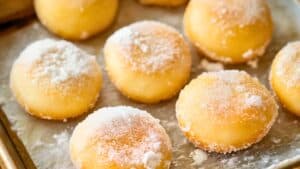
At any given Chinese buffet, there’s usually a quiet standout—one that skips the main course drama and waits patiently under a glowing heat lamp. The Chinese sugar donut isn’t flashy.
But the moment that golden, sugar-dusted circle hits the plate, it steals the show.
Warm, soft, and coated in glistening granulated sugar, these donuts strike a perfect balance between comfort food and indulgent treat.
Why This Chinese Donut Recipe Works So Well

What makes this Chinese sugar donut recipe so approachable is its flexibility. The base dough comes from a reliable milk bread dough, known for its airy texture and subtle sweetness. Once proofed and rolled out, the dough is shaped into thick, pillowy rounds that fry up with just the right chew.
This recipe is particularly useful for families or home cooks looking for a simple, no-fuss dessert that still impresses. It avoids complex fillings or glazes, letting the sugar do the talking. The sugar coating clings to the warm surface of the donut, creating that iconic sparkle and slightly crisp exterior without overpowering the soft, doughy interior.
Quick Tips for Better Donuts at Home
Success with this recipe comes down to a few key techniques. First, make sure the dough proofs fully before shaping—aim for double in size. This ensures the final donuts puff up properly during frying.
Another trick is the dimple. Right before the final proof, a small indentation in the center of each donut helps keep them from expanding too much in the middle.
It also gives that classic, gently puffed look often seen at Chinese buffets.
Oil temperature matters, too. Use a thermometer if possible to maintain a steady 285°F to 300°F. If the oil gets too hot, the donuts will brown too quickly on the outside without cooking through. Not hot enough, and they’ll absorb excess oil and turn greasy.
Serving Suggestions & Customizations
These sugar donuts are best enjoyed warm, but they also hold up well at room temperature. They make a fun addition to party platters, dessert boards, or casual brunch tables.
For an easy serving idea, offer them with small bowls of chocolate or fruit dipping sauces. They also pair surprisingly well with fresh fruit like watermelon or cantaloupe, cutting the richness with a refreshing bite.
For those looking to adapt this Chinese donut recipe, a few changes can help meet different dietary preferences.
Substituting the dough with a plant-based milk bread can make the donuts suitable for vegan diets. Gluten-free flour blends with binding agents can work, though texture may vary slightly.
Adding flavor to the sugar is another way to personalize the recipe. Try cinnamon, cardamom, or even a dash of citrus zest for something different. Just make sure the sugar is applied while the donuts are still warm so it adheres well.
Make-Ahead & Storage Tips
While these donuts are at their peak fresh out of the fryer, they can be made ahead for convenience. After frying and cooling, avoid tossing in sugar right away if storing. Instead, let them cool completely, keep them in an airtight container, and coat with sugar just before serving to restore that freshly-made look and texture.
Reheating in the oven at a low temperature (around 300°F) for a few minutes brings them back to life without drying them out. Avoid the microwave—it tends to make the texture rubbery.
A Must-Try Chinese Dessert Recipe
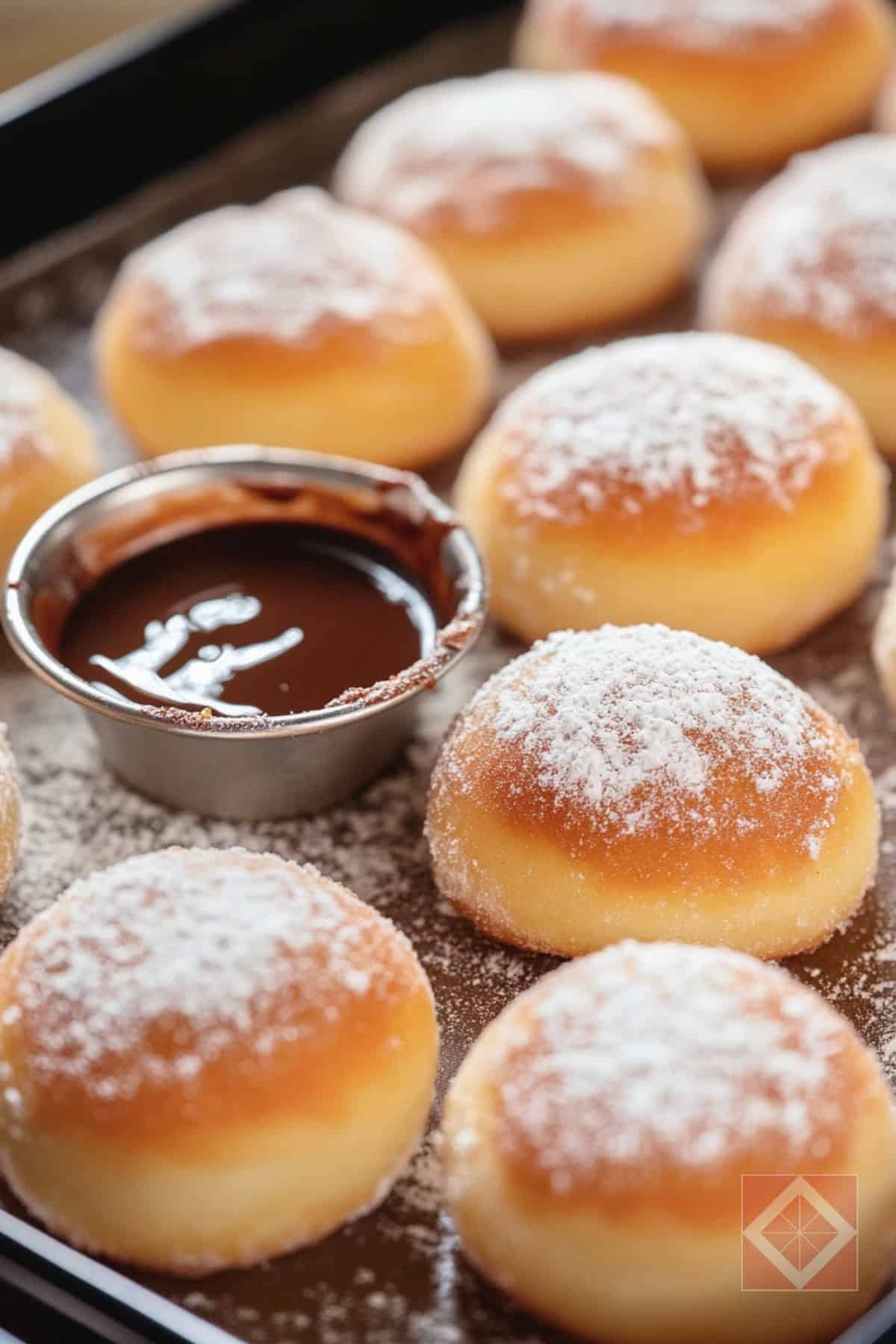
For anyone exploring new Chinese food recipes or searching for an unexpected dessert, these sugar donuts offer the kind of simplicity that works. They’re comforting, easy to make, and satisfy every age group—from kids to adults.
It’s not often a recipe from a buffet line finds a second life in home kitchens, but this one earns its spot.

Chinese Sugar Donuts Recipe
Equipment
- 2½-inch round biscuit or cookie cutter
- Parchment paper
- Wire cooling rack
- Medium pot for frying
- Slotted spoon
- Kitchen towel
- Tongs
Ingredients
- ½ batch Milk Bread dough ingredients mixed, ready after first proof
- Neutral oil for frying
- ½ to 1 cup white granulated sugar for coating
Instructions
- Let the Milk Bread dough rise for 1 to 2 hours or until it has doubled in size. Once risen, punch it down and knead briefly. Let it rest for 5 minutes, then place on a clean surface with no flour.
- Prepare a baking sheet lined with parchment paper. Form the dough into a ball, then roll it out to a ½-inch thickness.
- Use a 2½-inch biscuit cutter to cut out as many dough circles as possible. You can gather scraps and re-roll for one extra donut.
- Place the dough circles onto the prepared sheet and press a small indentation in the center of each with your finger. This helps prevent puffing up too much during frying.
- Cover the tray with a clean kitchen towel and allow the dough to rest for 15 minutes.
- While resting, heat neutral oil in a medium pot to 300°F. Once it reaches this temperature, reduce the heat to maintain a consistent range between 285°F and 300°F.
- Gently add 3 to 4 donuts to the hot oil at a time, ensuring they’re not overcrowded. Watch for a small cluster of bubbles when each donut is added—this means the temperature is right.
- Fry the donuts for 10 to 12 minutes total, flipping them halfway through until they turn a light golden brown. Use a slotted spoon to transfer each one to a cooling rack placed over a baking sheet. Let them cool for 10 minutes.
- Once slightly cooled but still warm, pour sugar into a medium bowl and coat each donut in it. The warmth will help the sugar stick without melting too much.
- Repeat the frying and sugar-coating process with all remaining donuts.
Notes
- The recipe uses half a batch of Milk Bread dough, making it easy to scale. You can double the recipe if desired.
- Best enjoyed warm, but leftovers can be reheated briefly in the oven to revive texture.
- Make a batch of chocolate pudding or serve with fresh fruit for a nostalgic buffet-style dessert platter.

Davin is a jack-of-all-trades but has professional training and experience in various home and garden subjects. He leans on other experts when needed and edits and fact-checks all articles. Also an aspiring cook we he researches and tries all kinds of different food recipes and shares what works best.