

There’s something deeply comforting about a dish that feels both rustic and soulful—like it was made to warm your bones and slow time for just a moment.
The first time I had a real Irish stew, it was in a thatch-roof pub on a rainy afternoon, the kind where your coat stays damp and your fingers ache for a spoon.
What hit me first wasn’t just the flavor… but the memory it pulled out of nowhere: my grandmother’s tiny kitchen, her worn wooden spoon, and that same earthy aroma filling the air.
What Makes Stobhach Gaedhealach So Authentic
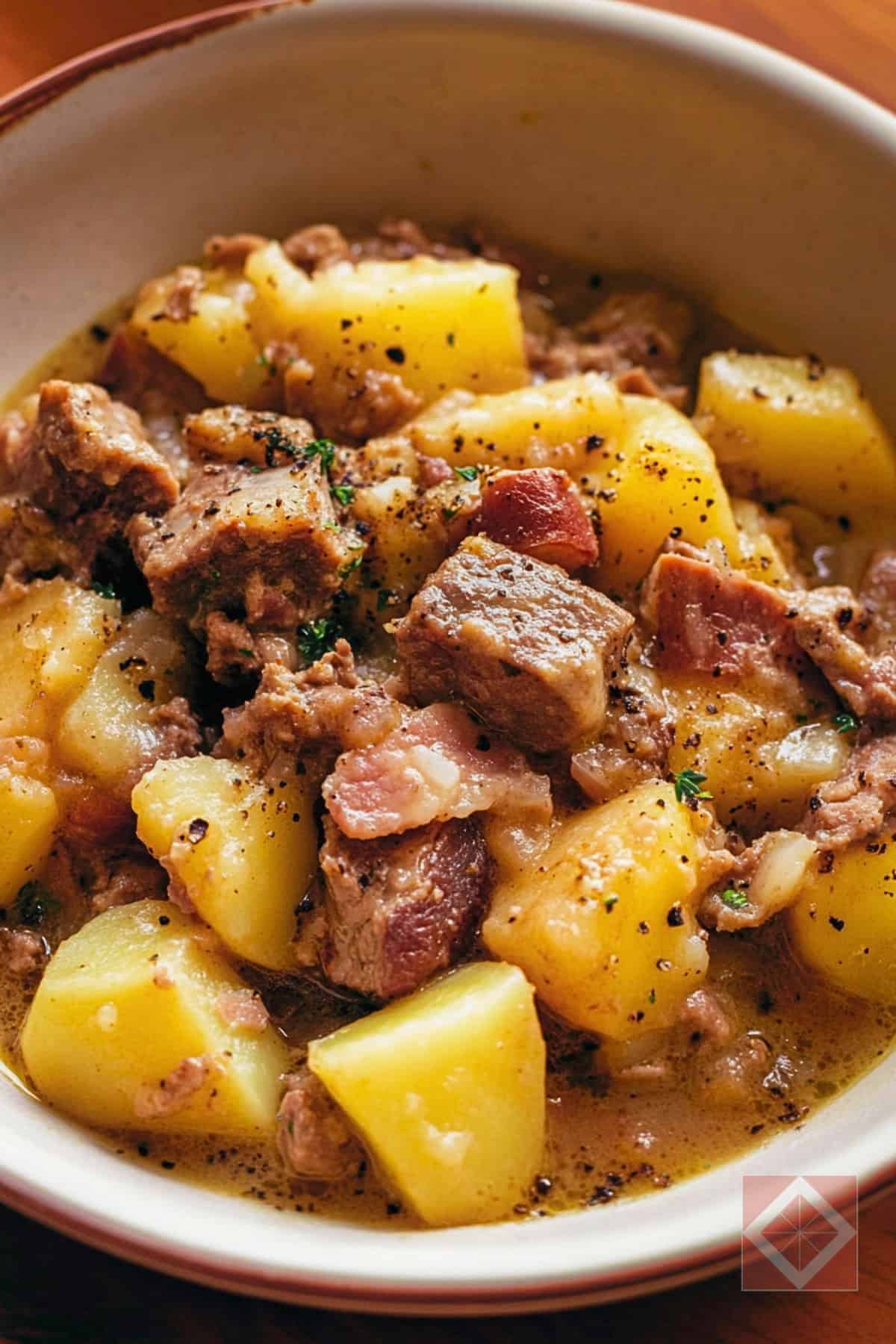
What sets this recipe apart from modern stew variations is its minimal use of broth and its focus on layering rather than mixing. That gentle technique draws out bold flavor from humble parts.
Each bite feels like it’s been slow-cooked for days.
- Made with just a few farm-fresh ingredients
- Deeply tied to Ireland’s culinary heritage
- Cooked in layers for unmatched texture and richness
- No fancy techniques—just slow simmered comfort
Ingredient Notes & Easy Swaps
While the classic ingredients are simple, there’s flexibility here—especially if you’re adapting for dietary needs or preferences. The beauty of this dish is how forgiving it is, while still delivering big, bold flavor.
- Lamb is traditional, but you can swap for beef chuck or even mushrooms for a vegetarian version.
- Irish bacon adds a subtle smokiness, but Canadian bacon or pancetta works just fine.
- Potatoes should be floury—russets or Yukon Golds hold up best during simmering.
- For a low-sodium option, cut back on salt and let the natural flavors shine.
- Add fresh herbs like thyme or parsley for a fragrant lift without changing the classic base.
Perfect for Family Dinners or Cold-Weather Gatherings
This dish isn’t just cozy—it’s practical. It’s the kind of meal you can throw on the stove and forget about for a bit while it works its magic. Ideal for Sunday suppers, casual potlucks, or a quiet night when you want something that feels like a hug in a bowl.
- Serves 4–6 easily, making it family-friendly
- Great for meal prep—flavors deepen overnight
- Budget-friendly ingredients you probably already have
- One-pot cooking means minimal cleanup
- Naturally gluten-free, and easily made dairy-free
How to Serve It for Maximum Flavor
Irish stew is hearty enough to stand alone, but with a few small additions, it turns into a full-blown meal that hits every note.
- Serve with crusty soda bread or buttered rye
- A pint of Guinness or a rich red wine pairs beautifully
- A side of steamed greens or roasted root vegetables rounds it out
- Add a swirl of sour cream or crème fraîche just before serving for a creamy finish
Let the stew sit for 5–10 minutes after cooking—it thickens slightly and becomes even richer. It’s also one of those rare meals that’s even better the next day.
Why This Stew Deserves a Spot in Your Weekly Rotation
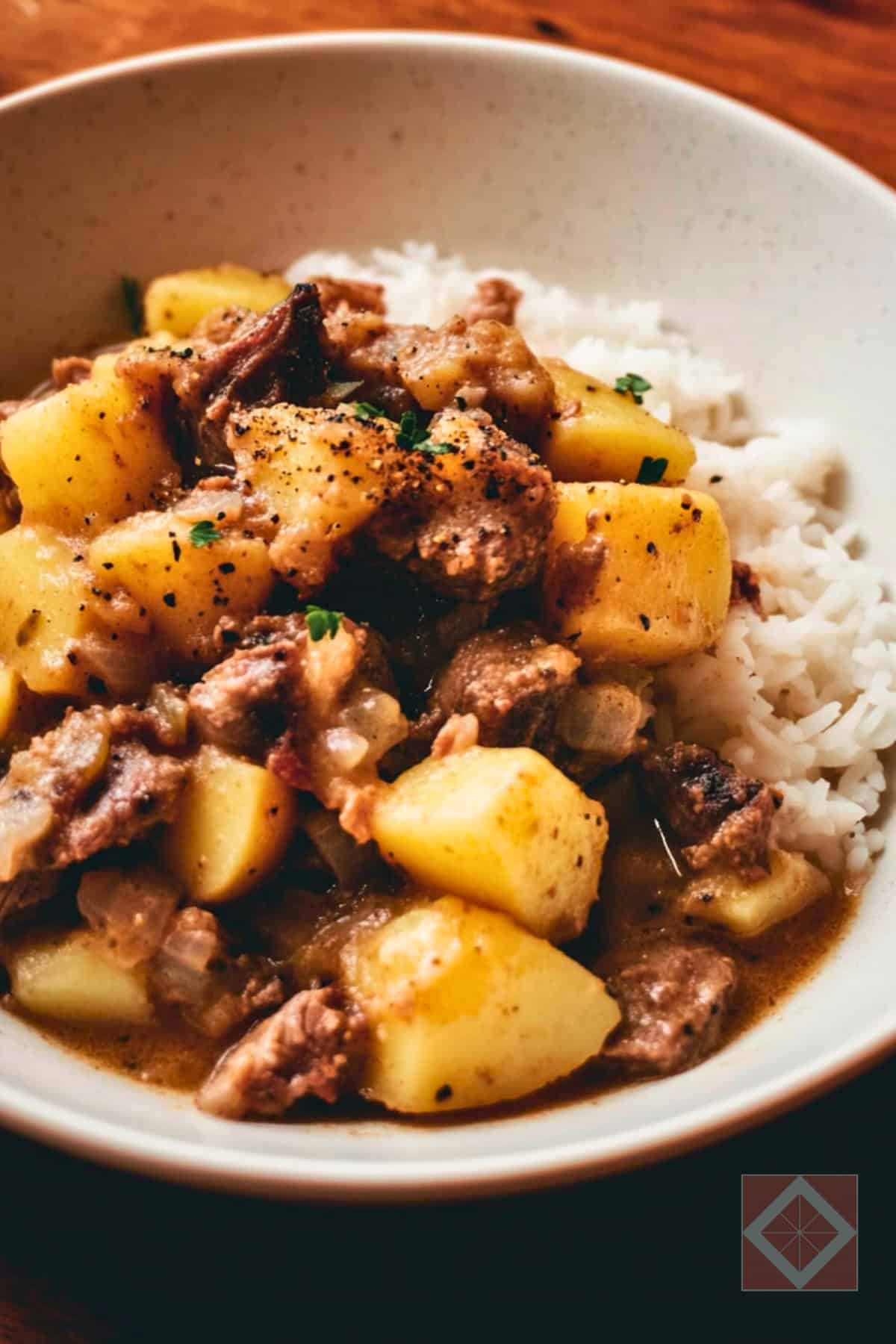
Stobhach Gaedhealach isn’t just a dish… it’s tradition in a bowl. It’s budget-conscious, incredibly filling, and endlessly adaptable.
Whether you’re honoring your Irish roots or just want something slow-cooked and satisfying, this stew delivers.

Easy Stobhach Gaedhealach (Irish Stew) Recipe
Equipment
- Large pot or 5–6 qt Dutch oven
Ingredients
- 3 pounds floury potatoes, such as russet peeled and chopped
- ½ pound trimmed lamb shank cut into bite-sized pieces
- ¼ pound Irish or Danish bacon (or Canadian bacon) chopped into ½-inch pieces
- 2 large yellow or white onions finely chopped
- 1½ teaspoons sea salt
- 1½ teaspoons black pepper freshly ground
- 10 ounces water
- Additional salt and pepper to taste
Instructions
- Wash and peel the potatoes, then chop them into large, bite-sized chunks.
- Place half of the potatoes in a layer on the bottom of a large pot or Dutch oven. Layer the lamb and bacon on top of the potatoes.
- Add a layer of the chopped onions over the meat. Sprinkle in the salt and pepper. Then add the remaining potatoes as a final top layer.
- Pour 10 ounces of water over the top. If your pot is small, layer ingredients in the same order. Avoid adding more water at this stage.
- Place the pot over high heat and bring to a boil. Once boiling, reduce to medium-low, cover, and simmer for 60 to 90 minutes, or until the potatoes are tender.
- Occasionally check the stew to ensure there’s still water bubbling up between the layers. Add a splash of water only if necessary to prevent sticking or drying out.
- When fully cooked, taste and adjust seasoning with additional salt and pepper if needed. Serve hot.
Notes
- This stew is meant to be thick with very little broth—more like a layered casserole than a soup.
- You can stir during cooking, but it’s not required for a good result.
- For a leaner version, use Canadian bacon; for smoky richness, stick with Irish or Danish varieties.
- Serve with crusty bread or soda bread for a classic Irish meal.

Nancy has been a plant person from an early age. That interest blossomed into a bachelor’s in biology from Elmira College and a master’s degree in horticulture and communications from the University of Kentucky. Nancy worked in plant taxonomy at the University of Florida and the L. H. Bailey Hortorium at Cornell University, and wrote and edited gardening books at Rodale Press in Emmaus, PA. Her interests are plant identification, gardening, hiking, and reading.