
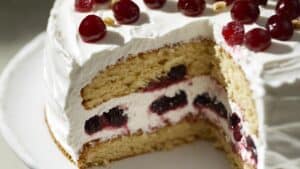
Not every cake sticks around for over a hundred years, but the Lady Baltimore cake has managed it—and for good reason.
With its light white layers, fruit-and-nut filling, and that unmistakable billowy frosting, this is one of those desserts that feels like it came straight out of a turn-of-the-century tea room.
It’s the kind of cake that wasn’t just made for dessert—it was made to impress.
A Filling You Won’t Find in Most Cakes
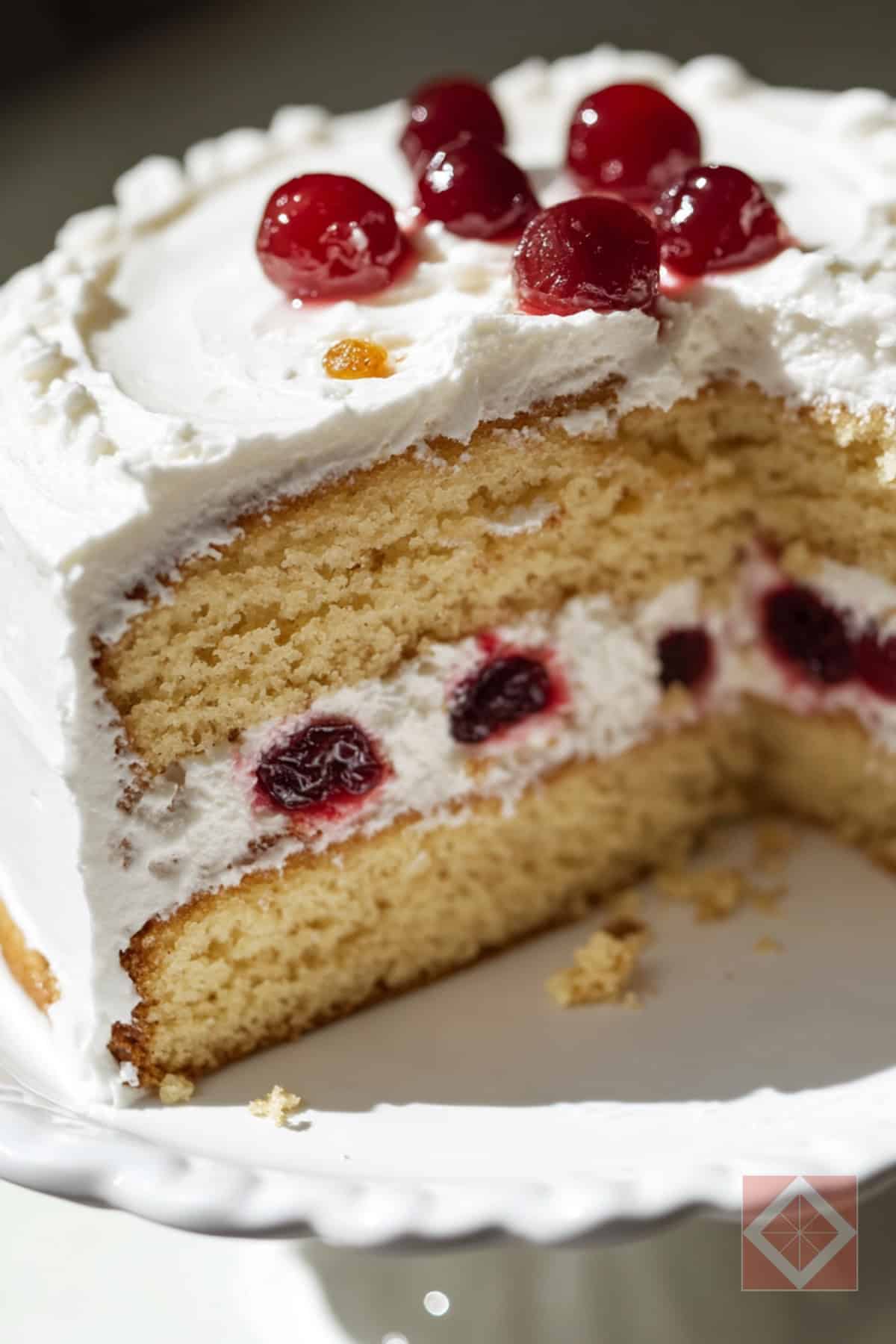
What sets this one apart from other vintage bakes is the filling. It’s not jam, and it’s definitely not buttercream.
It’s a mix of chopped dried figs, raisins, candied cherries, and walnuts—all folded into a portion of the frosting itself. That combo gives the cake a chewy, fruity, just-sweet-enough bite that plays off the soft sponge perfectly.
The cake layers are made mostly from whipped egg whites, which keeps them airy but structured. Add in some vanilla and a touch of lemon juice, and you’ve got a cake that’s both light and full of flavor.
Then there’s the frosting. It’s not for the faint of heart—boiled sugar syrup whisked into egg whites until it turns into something between marshmallow and meringue.
Glossy, fluffy, and just a little dramatic, it’s the kind of icing that makes the whole thing feel special.
Why It’s Still Worth Making
Lady Baltimore isn’t trendy. It’s not fast or fuss-free. But it’s a recipe that carries weight—it comes from a time when baking a cake meant something.
This one in particular showed up at weddings, fancy luncheons, and holiday tables, especially down South.
It’s a cake that rewards patience. And if you’re into old recipes and baking with a bit of history behind it, you’ll get why it’s stuck around.
Tips to Get It Right
If you’re going to try your hand at this vintage showstopper, a few things help it come together:
- Room-temp egg whites whip better and help keep the layers fluffy.
- Chop the filling finely so it spreads easily between the layers without clumping.
- Use a thermometer when boiling the sugar—soft-ball stage (about 240°F) is key for the frosting.
- Frost it fast. That boiled icing sets up quick, and it spreads best while it’s still warm.
If You Want to Play with the Recipe
Plenty of bakers have taken the original and made it their own. Here are a few ideas that still feel true to the spirit of the cake:
- Chocolate layers instead of white sponge
- Nut-free version for allergy-friendly baking
- Coconut twist by adding shredded coconut to the filling and frosting
- Orange zest for a little extra brightness in the cake batter
No matter how you tweak it, the heart of the recipe stays the same—a cake that’s soft, elegant, and just a little nostalgic.
Still a Showstopper After All These Years
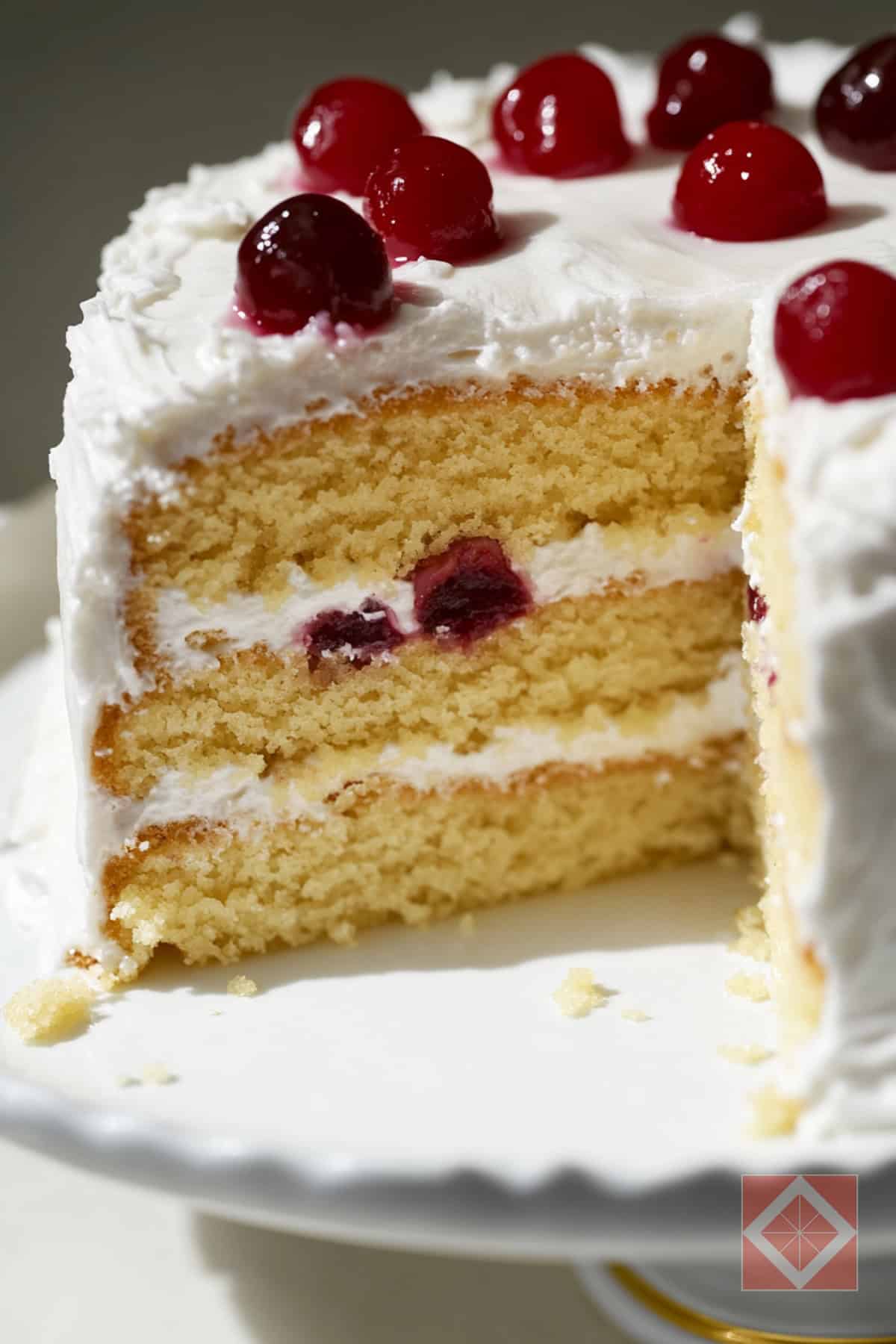
Baking the Lady Baltimore cake is like stepping into a different era. It’s not quick, and it’s not trendy, but it’s one of those recipes that reminds you why people fell in love with baking in the first place.
There’s pride in making something like this from scratch.
And when you slice into those white layers and see the fruit-and-nut filling peeking through, you get why people kept coming back to it, decade after decade.
Make it for a special occasion, or just because you’re curious. Either way, you’ll end up with a cake that tastes like history—and still holds up today.
The Lady Baltimore Cake – A Classic 1910 Recipe
Ingredients
Cake:
- ½ cup butter softened
- 1 ½ cups granulated sugar
- 2 ¼ cups all-purpose flour
- 2 teaspoons baking powder
- 1 teaspoon salt
- 1 cup whole milk
- 4 large egg whites
- 1 tablespoon lemon juice
Filling:
- ¾ cup finely chopped candied cherries or drained, dried, and chopped maraschino cherries
- ¾ cup finely chopped dried figs
- ½ cup finely chopped raisins
- ½ cup finely chopped walnuts
- ¼ cup prepared boiled frosting see below
Boiled Frosting:
- 2 cups granulated sugar
- ⅓ cup light corn syrup or golden syrup
- ⅓ cup water
- 2 large egg whites
- 1 teaspoon vanilla extract
Instructions
For the Cake:
- Preheat the oven to 350°F. Grease and flour two 9-inch cake pans.
- In a mixing bowl, cream the butter and sugar together until the mixture becomes light and fluffy.
- In another bowl, whisk together the flour, baking powder, and salt. Gradually add these dry ingredients to the creamed butter mixture, alternating with the milk.
- Using a stand mixer or hand mixer, beat the egg whites and lemon juice in a separate bowl until stiff peaks form. Gently fold the beaten egg whites into the batter in three additions.
- Divide the batter evenly between the prepared cake pans. Bake for 30 to 35 minutes, or until a toothpick inserted into the center comes out clean.
- Allow the cakes to cool in the pans for 10 minutes before transferring them to a wire rack to cool completely.
For the Filling & Boiled Frosting:
- In a bowl, mix together the candied cherries, figs, raisins, walnuts, and ¼ cup of the prepared boiled frosting. Set aside.
- In a saucepan over medium heat, combine the sugar, corn syrup, and water. Cook until the mixture reaches the soft-ball stage (240°F).
- While the syrup is cooking, beat the egg whites in a heatproof bowl with an electric mixer until stiff peaks form.
- Slowly pour the hot syrup down the side of the mixing bowl while continuing to beat the egg whites. Continue beating until the frosting thickens to a spreadable consistency, about 4 to 5 minutes. Stir in the vanilla extract.
- Quickly fold ¼ cup of the prepared frosting into the fruit and nut mixture for the filling. Add extra frosting if needed to coat the filling evenly.
- Spread the filling over the top of one cake layer, then place the second cake layer on top. Frost the entire cake with the remaining boiled frosting, decorating the top with additional candied cherries and walnuts.
Notes
- For a slight variation, try adding a hint of almond extract to the frosting for extra depth.
- Store the cake covered at room temperature for up to two days or refrigerate for longer freshness.

Nancy has been a plant person from an early age. That interest blossomed into a bachelor’s in biology from Elmira College and a master’s degree in horticulture and communications from the University of Kentucky. Nancy worked in plant taxonomy at the University of Florida and the L. H. Bailey Hortorium at Cornell University, and wrote and edited gardening books at Rodale Press in Emmaus, PA. Her interests are plant identification, gardening, hiking, and reading.