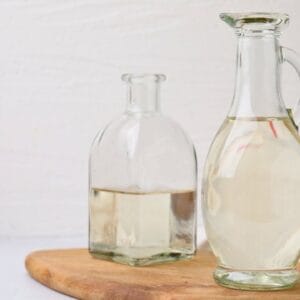
Homemade White Vinegar
Making white vinegar at home involves a fascinating two-step fermentation process that transforms simple sugar water into a versatile kitchen staple. This recipe guides you through creating your own vinegar from scratch using basic ingredients like sugar, water, yeast, and mother of vinegar. While it requires patience and attention to detail, the result is a pure, homemade vinegar that can be used for cooking, preserving, and household cleaning.
Equipment
- 1-gallon sterile glass jug or ½ to 1-gallon jar (must be thoroughly cleaned and sterilized)
- Air stopcock or large balloon (to allow gases to escape while preventing contamination)
- Medium-sized saucepan
- Candy thermometer
- Cheesecloth
- Coffee filters
- pH strips (optional but recommended)
Ingredients
- 4 cups filtered water
- 1 cup granulated white sugar
- 1 tablespoon Brewer's yeast or active dry bread yeast
- 2 tablespoons mother of vinegar from raw, unfiltered organic apple cider vinegar
Instructions
First Fermentation (Sugar to Alcohol):
- In a medium saucepan, combine 4 cups of filtered water with 1 cup of sugar
- Heat the mixture over medium heat, stirring occasionally until it reaches a gentle boil
- Continue boiling until sugar completely dissolves (about 2-3 minutes)
- Remove from heat and let cool to exactly 110°F using your candy thermometer
- While mixture cools, sterilize your glass jar by washing with hot, soapy water and rinsing thoroughly
- Once the sugar solution reaches 110°F, sprinkle the yeast into your sterilized jar
- Carefully pour in the cooled sugar solution
- Leave the jar open in a warm, dark place (70-80°F) for exactly 24 hours
- After 24 hours, attach your stopcock or balloon (if using a balloon, poke 2-3 tiny holes with a sterilized pin)
- Let this mixture ferment for 2 full weeks in a dark place at room temperature
Second Fermentation (Alcohol to Vinegar):
- After 2 weeks, carefully add 2 tablespoons of mother of vinegar to your fermented mixture
- Cover the jar opening with several layers of cheesecloth, securing with a rubber band
- Place in a dark, warm spot (70-80°F) for 5-7 days
- Check the mixture daily - you should see a film forming on top (this is good!)
- After 5 days, begin testing the acidity with pH strips if available (aim for 2.4)
- When desired acidity is reached, strain the vinegar through cheesecloth to remove the mother
- For extra clarity, strain again through coffee filters
- Transfer to clean, airtight bottles or jars for storage
Tried this recipe?Let us know how it was!