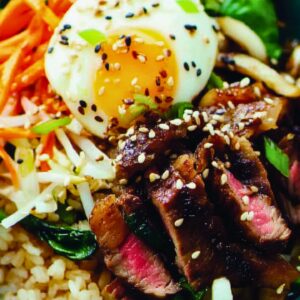
Anti-Inflammation Bibimbap Recipe
This anti-inflammatory bibimbap is a vibrant and healthful twist on the classic Korean dish, combining nutrient-packed vegetables, lean protein, and flavorful gochujang. Perfect for meal prepping or a wholesome dinner, this recipe is easily adaptable to suit vegetarian preferences or dietary sensitivities.
Equipment
- Large nonstick skillet
- Medium bowl
Ingredients
- 8 oz flank steak thinly sliced across the grain
- 6 ½ tsp tamari or low-sodium soy sauce
- 2 tsp minced garlic
- 3 tsp toasted sesame oil
- 2 ½ tsp raw cane sugar
- 9 tsp organic canola oil
- ½ yellow onion thinly sliced
- 1 carrot peeled and julienned
- Kosher salt to taste
- 1 red bell pepper seeded and thinly sliced
- 2 small zucchini cut into matchsticks
- 8 oz baby spinach
- 8 oz mung bean sprouts
- 8 oz shiitake mushrooms stemmed and thinly sliced
- 1 Tbsp sesame seeds
- 4 cups steamed short-grain brown rice
- 4 fried eggs
- Kimchi and gochujang for serving
Anti-Inflammatory Adaptations:
- Replace canola oil with avocado oil.
- Substitute tamari with coconut aminos for a soy-free option.
- Use turmeric and ginger to marinate the steak or enhance vegetable seasoning.
- Add cruciferous vegetables like broccoli for extra anti-inflammatory properties.
Instructions
- Prepare the Marinade for the Steak: In a medium-sized bowl, combine the steak slices with 4 ½ teaspoons of tamari, 1 teaspoon of garlic, 1 teaspoon of sesame oil, and 2 teaspoons of cane sugar. Mix well and let the steak marinate for 30 minutes at room temperature.
- Start with the Vegetables: Heat 1 teaspoon of oil in a large nonstick skillet over medium-high heat. Add the sliced onion and julienned carrot, sprinkle with a pinch of salt, and sauté, stirring occasionally, until they are tender but still crisp, about 4–6 minutes. Transfer these to a separate bowl.
- Cook Each Vegetable Individually:Bell Pepper: Heat 1 teaspoon of oil in the skillet, add the bell pepper strips, season with a little salt, and cook until softened. Remove and set aside.Zucchini: Cook the zucchini with 1 teaspoon of oil and add 1 teaspoon of garlic during the final minute of cooking. Remove from heat and set aside.Spinach: In the same pan, heat 1 teaspoon of oil and lightly wilt the spinach with a pinch of salt before transferring it to a bowl.Mung Bean Sprouts: Cook the sprouts in 1 teaspoon of oil, tossing with ½ teaspoon of sesame seeds for flavor. Remove and set aside.Shiitake Mushrooms: Heat 2 teaspoons of oil in the skillet and sauté the mushrooms until they begin to brown. Stir in 2 teaspoons of tamari and 1 ½ teaspoons of sugar, allowing the mushrooms to glaze slightly, about 1 minute. Set them aside.
- Cook the Steak: Add the remaining 2 teaspoons of oil to the skillet. Once hot, sear the marinated steak slices on both sides until browned and cooked through, about 3–4 minutes per side. Remove the steak and set aside.
- Assemble the Bowls: Divide the steamed brown rice evenly among four serving bowls. Arrange the sautéed vegetables and steak slices over the rice in an attractive layout. Add a fried egg on top of each bowl.
- Serve with Condiments: Serve the bibimbap with kimchi and gochujang on the side. Mix everything together before eating to ensure the flavors meld beautifully.
Notes
- This recipe is highly customizable; feel free to swap or add more anti-inflammatory vegetables like kale, sweet potatoes, or turmeric-seasoned chickpeas.
- If omitting the steak, substitute with tempeh or tofu marinated in a similar blend.
- The runny yolk from the fried egg ties the dish together and creates a luscious sauce when mixed with gochujang.
Tried this recipe?Let us know how it was!