
Most holiday desserts are a hassle—but liquor balls? They’re the one treat I make every year without fail. No baking, just bold flavor, a touch of nostalgia, and that boozy warmth that hits every time.
People forget about them, think they’re too old-school. But one bite—chocolate, bourbon, vanilla—and you get it. They’re fast, flexible, and somehow taste better the longer they sit.
If you ask me, they’re the underrated MVP of no-bake desserts.
A Sweet Bit of History (with a Bourbon Kick)
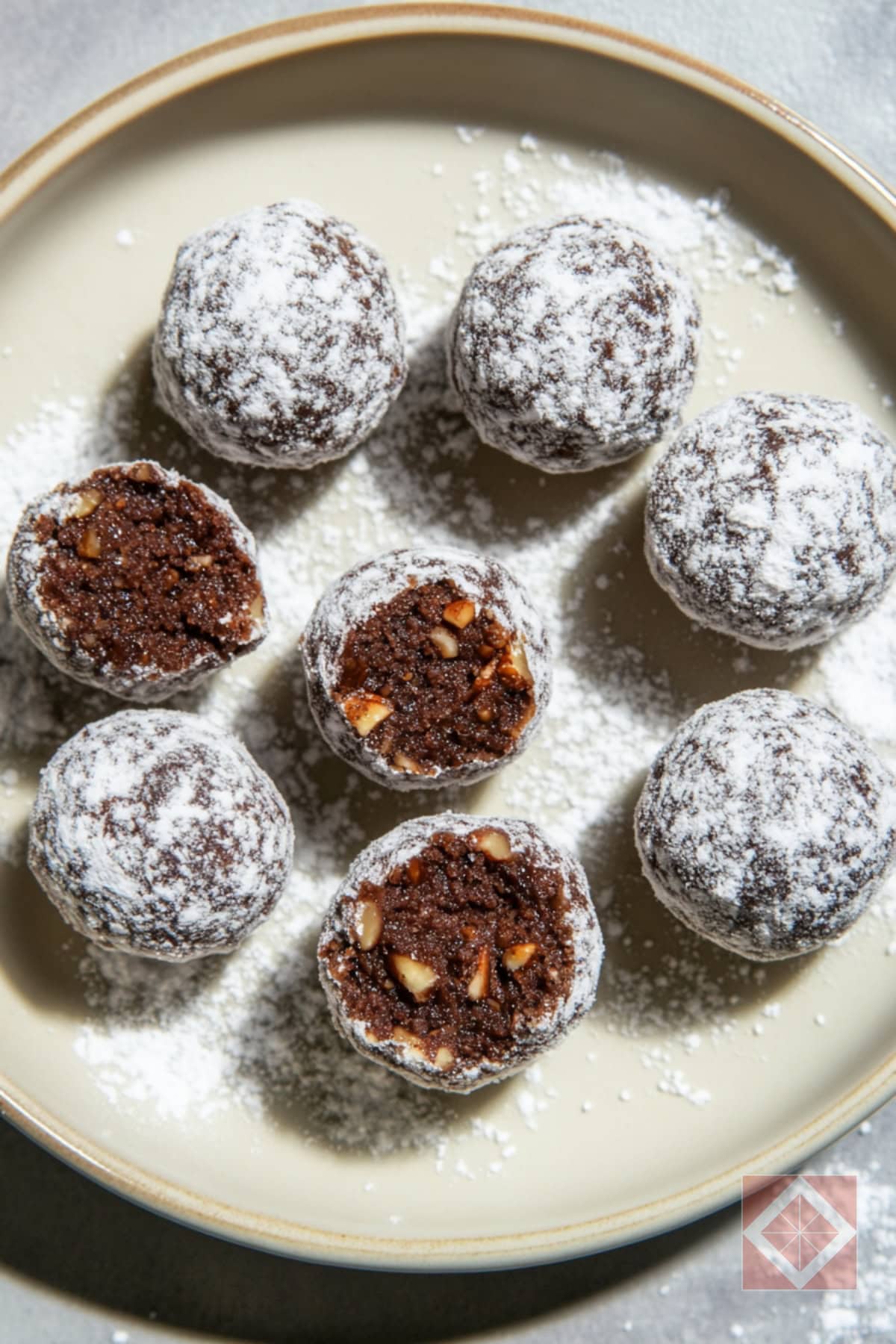
Liquor balls trace back to 1930s Kentucky, where bourbon balls became a staple at Southern gatherings.
Ruth Hanly Booe, a local candy maker, combined dark chocolate and Kentucky bourbon into a one-bite treat that quickly earned cult status. No-bake and shelf-stable, they were the perfect party dessert before refrigeration was everywhere.
Since then, these boozy treats have evolved far beyond bourbon. Rum balls, amaretto-infused versions, and even coffee liqueur twists have all carved out a place in modern holiday spreads.
What started as a humble whiskey dessert is now a customizable classic across kitchens everywhere.
Why They Just Work (Still)
There’s a reason liquor balls show up in almost every “easy holiday dessert” roundup. They check every box: minimal ingredients, no oven time, totally giftable, and packed with flavor.
The combo of vanilla wafer crumbs, cocoa, chopped nuts, and alcohol delivers a rich, soft bite with just the right amount of kick.
And let’s talk shelf life. Unlike frosted cookies or gooey bars, these keep beautifully at room temperature for days—actually improving as the flavors soak and settle.
That makes them ideal for holiday parties, cookie exchanges, or edible gifts you can prep ahead.
Pro Tips for the Best Texture and Flavor
I’ve made a lot of liquor balls over the years, and here’s what always makes a difference:
- Crush the base finely: A food processor works best for wafers, but a rolling pin and zip-top bag will do. You want a sand-like texture for the perfect bind.
- Let the mixture rest: After mixing, let it sit for 20–30 minutes. This allows the moisture to distribute evenly and makes rolling much easier.
- Adjust consistency: Too dry? Add a bit more liquor or corn syrup. Too wet? More crumbs or a dusting of powdered sugar can pull it together.
- Store smart: Keep them in an airtight container for at least a day before serving. The flavor deepens and the texture mellows out in the best way.
Custom Variations That Actually Work
One of the best things about liquor balls is how forgiving they are. You can change the flavor profile with almost no extra effort:
- Nut-free: Skip the pecans and try crushed cookies or shredded coconut for texture.
- Flavored liqueurs: Swap bourbon for coffee liqueur, hazelnut, orange, or spiced rum to suit different themes.
- Chocolate overload: Add mini chocolate chips or roll them in cocoa powder for a richer finish.
- Spiced holiday version: A pinch of cinnamon or nutmeg turns these into the perfect cozy seasonal treat.
- Naturally sweetened: For a slightly healthier spin, sub some powdered sugar with honey or maple syrup.
These swaps let you tailor your batch to fit different diets, preferences, or occasions—no extra baking required.
The Best Homemade Gift You’ll Actually Want to Give (and Keep)
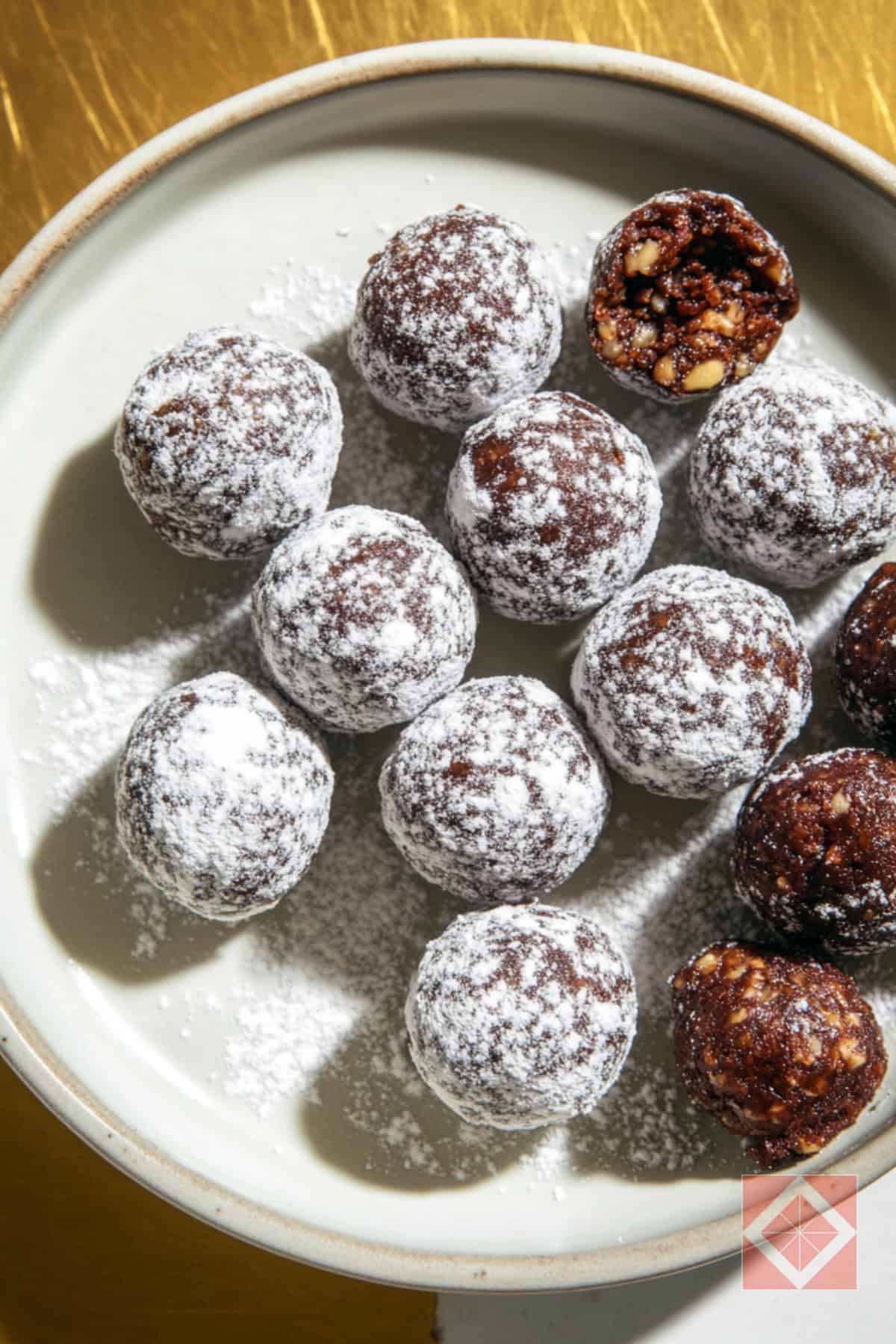
Want something thoughtful, easy, and delicious to give during the holidays? A batch of liquor balls checks every box. They’re quick to make, look impressive when dressed up in little paper cups or tins, and last long enough to ship or stash.
I’ve handed these out as client gifts, party favors, even tucked them into cookie boxes with a handwritten tag. They’re the kind of dessert people remember—simple, rich, and just unexpected enough to spark that “Wait, what are these?” moment.
Old-Fashioned Liquor Balls Recipe
Equipment
- Food processor or rolling pin
- Mixing bowl
- Spoon or spatula
- Airtight container for storage
Ingredients
- ½ lb vanilla wafers crushed fine
- 2 tbsp cocoa powder
- 1 cup powdered sugar plus extra for rolling
- 1 cup finely chopped pecans or any nuts
- 2 tbsp corn syrup or golden syrup
- 6 tbsp bourbon black rum, or any liquor or liqueur
Instructions
- If using a food processor, combine all ingredients and blend until a uniform mixture forms. If a food processor is unavailable, place the vanilla wafers in a sealed plastic bag and crush them with a rolling pin or bottle. Then, mix all the ingredients in a large bowl until evenly combined.
- Scoop small portions of the mixture and roll them between your palms to form balls about 1 to 2 inches in size.
- Roll each ball in powdered sugar until fully coated.
- Store the liquor balls in an airtight container at room temperature or in the refrigerator for a firmer texture.
Notes
- Bourbon is the traditional choice, but rum, hazelnut liqueur, or other spirits can be used for different flavor profiles.
- If the mixture feels too dry, add a little extra syrup or liquor to reach the desired consistency.
- For a deeper flavor, let the liquor balls sit overnight before serving.

Davin is a jack-of-all-trades but has professional training and experience in various home and garden subjects. He leans on other experts when needed and edits and fact-checks all articles. Also an aspiring cook we he researches and tries all kinds of different food recipes and shares what works best.