

I built my first dust bath on a Tuesday. By Thursday, the chickens were still bathing in the bare dirt next to it.
That’s when I realized chickens know something about dust baths that most guides don’t mention: location matters more than ingredients.
Why Chickens Take Dust Baths (And Why Yours Might Not)
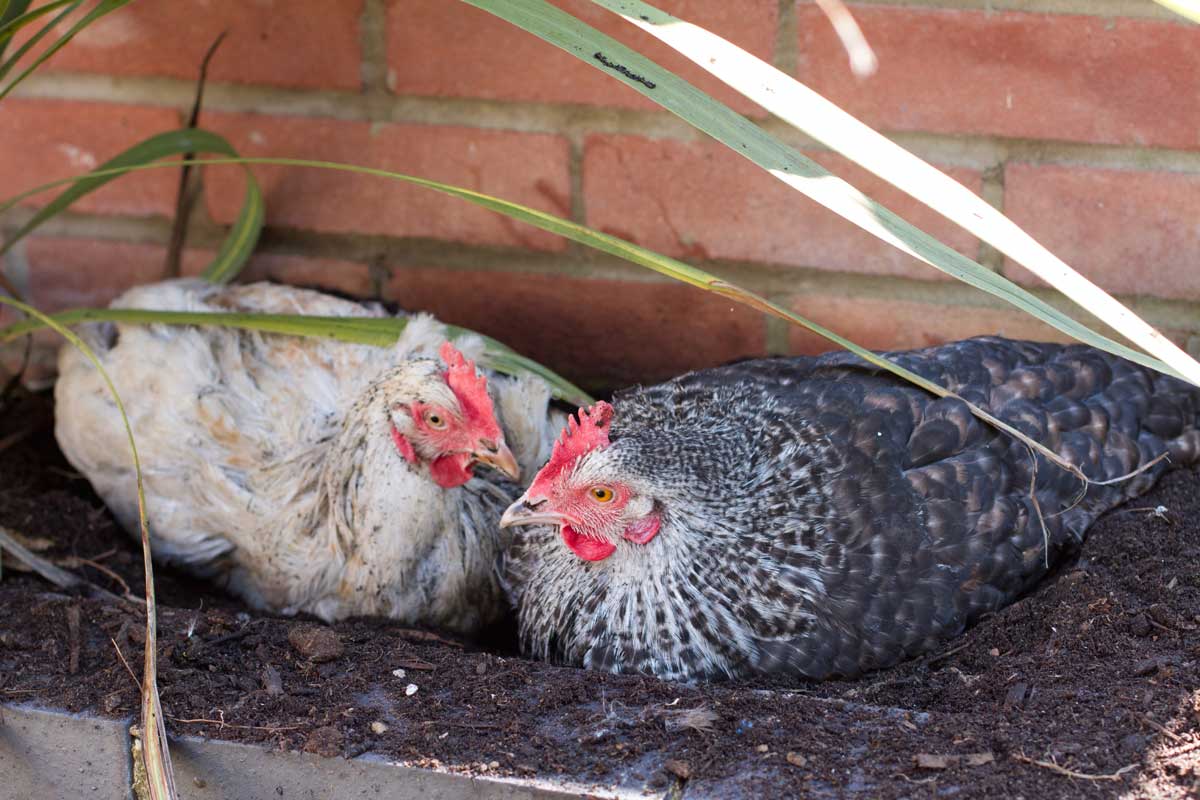
A dust bath isn’t grooming. It’s survival.
The fine particles coat their skin and feathers, smothering lice and mites by clogging their breathing pores.
The grit scrubs away excess oil from the uropygial gland, that small bump near their tail that waterproofs feathers.
Without regular bathing, those oils build up. The feathers mat. Parasites move in.
I’ve seen it happen. The four hens I inherited came with northern fowl mites because their previous owner thought chickens would “figure it out” without a proper dust bathing area.
They couldn’t. The run was too wet, too packed down. By the time I got them, they were miserable.
What surprised me: chickens spend 10 to 15 minutes in a dust bath, sometimes longer if other hens join. It’s social. They’ll wait their turn, fluff together, preen each other after.
When I finally got the location right, I’d find three of them in there at once, looking utterly pleased with themselves.
The Recipe No One Gets Right
Most chicken guides say “sand and dirt.” That’s half true.
Sand and dry dirt make the base, but if that’s all you use, it compacts into a hard pan within a week. I learned this the expensive way after hauling bags of construction sand that turned into concrete.
Here’s what actually works:
2 parts base (topsoil or construction sand) 1 part fluff (peat moss or coco coir) ½ part wood ash from untreated wood A light sprinkle of diatomaceous earth and dried herbs
The peat moss was the piece I was missing. It keeps everything loose and fluffy, lets the dust get down into those downy feathers against the skin where the mites hide.
Coco coir works the same way if you’ve got it around.
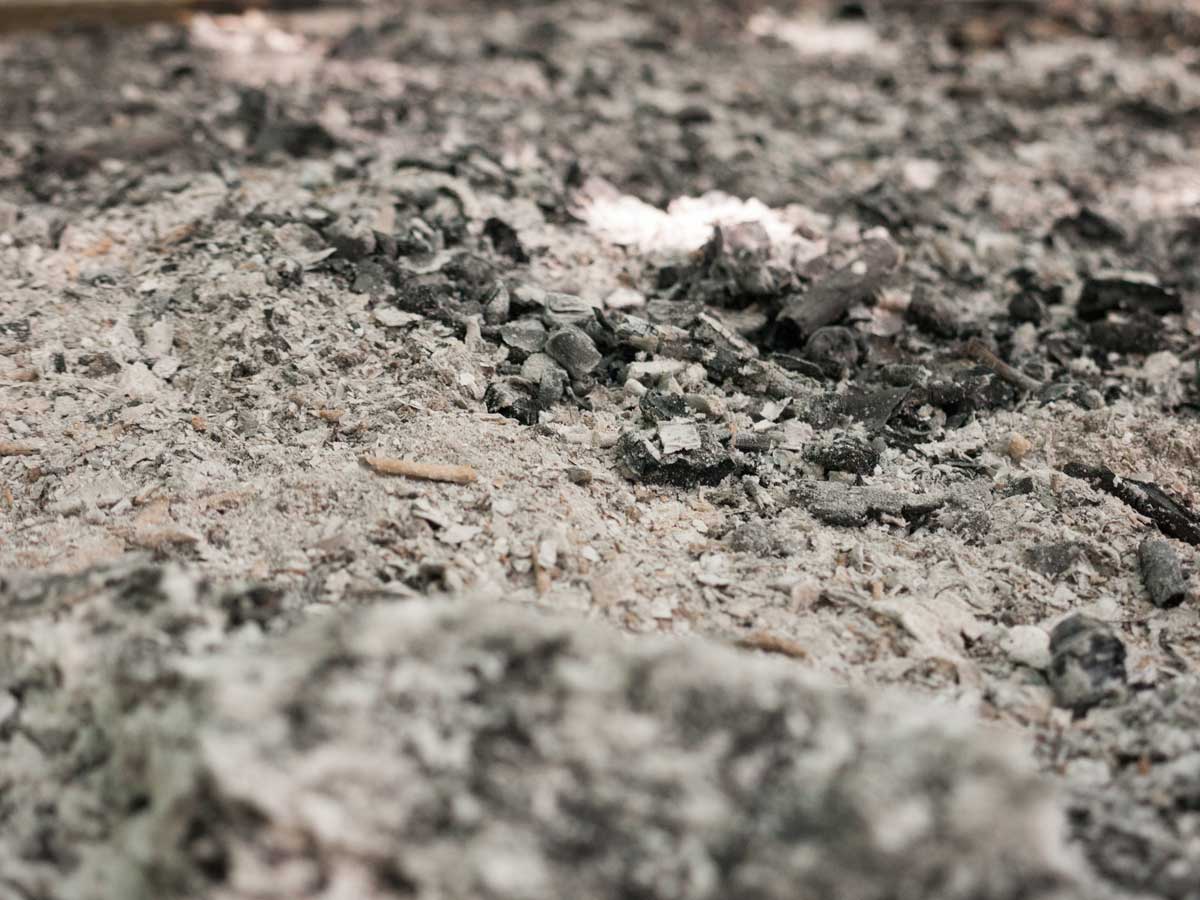
Wood ash adds calcium, potassium, and magnesium. The chickens will eat some of it. That’s fine. Just don’t use coal ash or anything from treated lumber, and definitely nothing that had plastic in the fire.
The Diatomaceous Earth Warning Everyone Ignores

Here’s where most instructions get dangerous: they tell you to add diatomaceous earth at a 2:1 ratio. Don’t.
DE is ground-up fossilized algae. Microscopically, it’s sharp as glass. In high concentrations, the dust cloud irritates chicken lungs and yours.
I made this mistake once, dumped too much in, and spent the next ten minutes coughing while my chickens looked at me like I’d lost my mind.
Use it as a light dusting, maybe 2 to 5% of your total mix. Wear a mask when you add it. The goal is pest control, not a silica storm.
Herbs That Actually Help
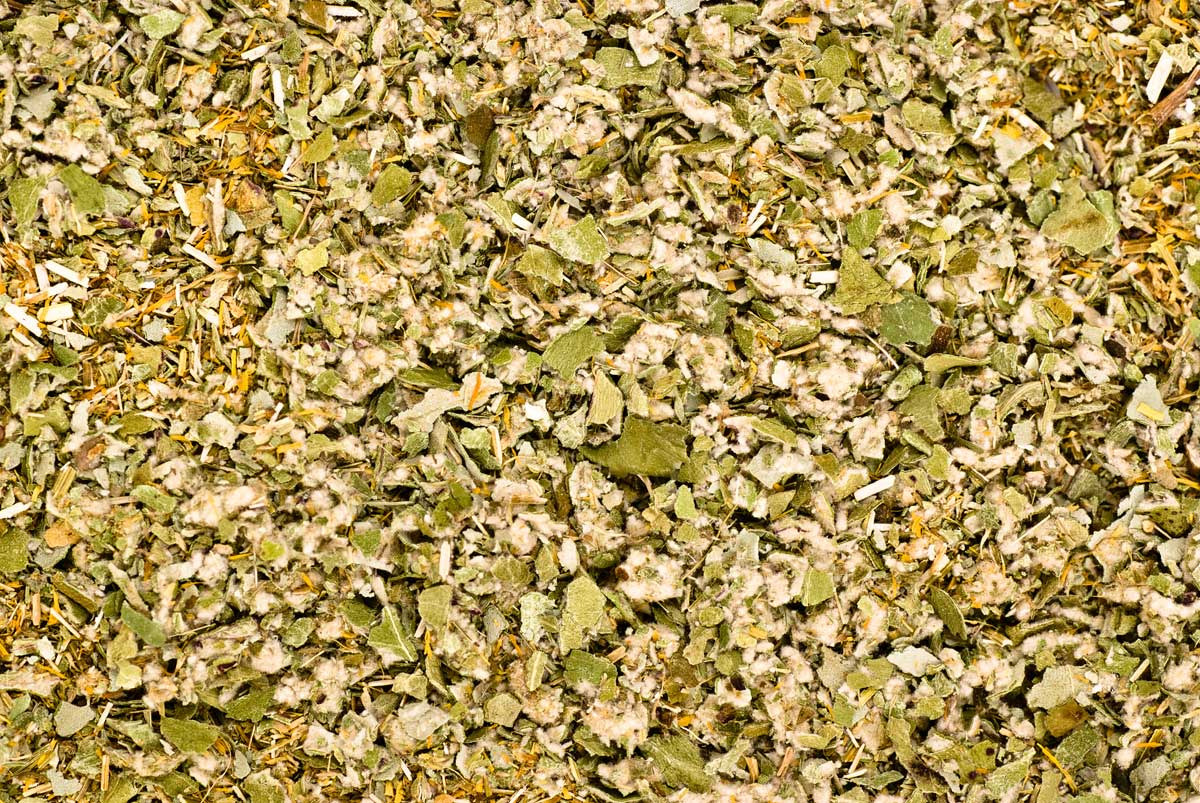
Dried lavender, rosemary, and mint smell nice, but they also repel parasites. Oregano and sage boost immune function.
I grow these anyway, so I clip them, let them dry on a screen in the garage, then crumble them into the bath every few weeks.
Mint is the one they go crazy for in summer. It has a cooling effect. On a 90-degree day, I’ll see them deliberately roll in the minty spots.
Other herbs worth adding: thyme, tarragon, bay leaves, cayenne, cinnamon, nasturtium, neem. Use what you have. Chickens aren’t picky.
Container Options That Don’t Look Terrible
I started with an old tire. It worked, but it looked like a tire full of dirt in my yard, which is exactly what it was.
Better options I’ve used or seen:
- A kids’ plastic pool (cheap, moves easily, drains if it rains)
- Half a whiskey barrel cut lengthwise
- An old cast-iron bathtub someone left by the curb
- A large wooden crate lined with hardware cloth on the bottom
- A sandbox from when the kids outgrew it
For full-size chickens, go at least 8 inches deep. For bantams, 6 inches. If you’ve got a flock, make it big enough for three birds at once. They like company.
Where to Put It (This Is Where I Went Wrong)
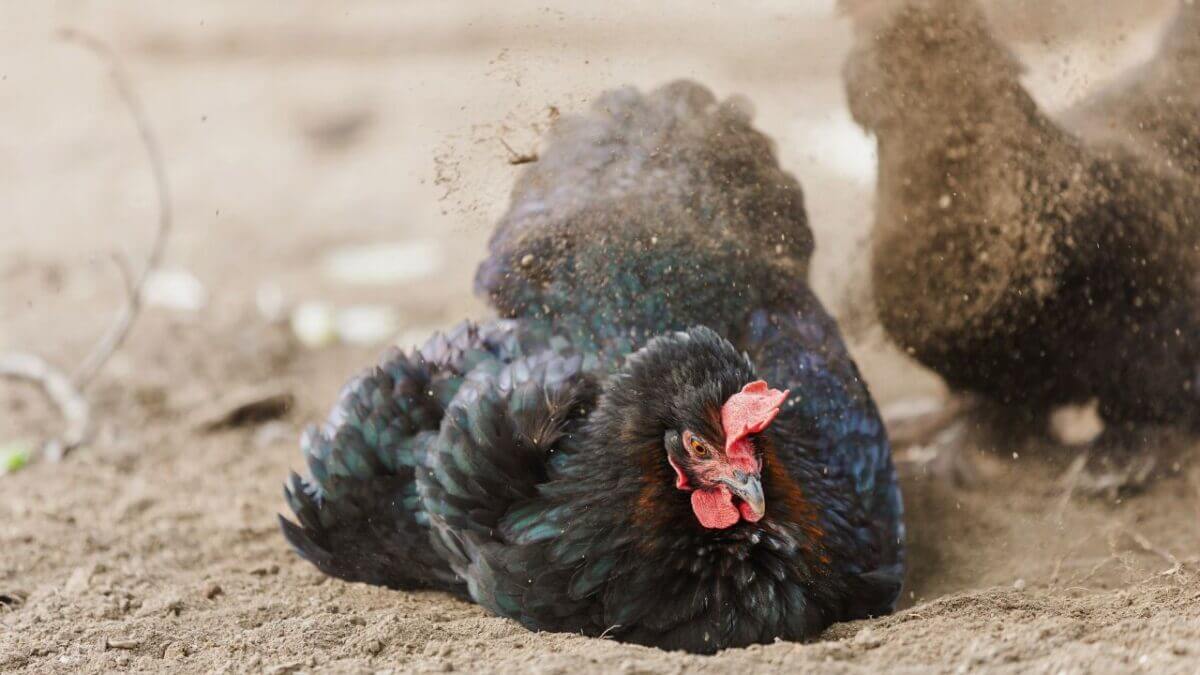
I put my first dust bath in full sun next to the coop. Convenient for me. The chickens never touched it.
Chickens feel vulnerable when they’re on their backs, flapping dirt everywhere. They want partial cover, something overhead or nearby they can duck under if a hawk shows up. That’s not paranoia. That’s instinct.
I moved the bath under a low-branched lilac bush. They were in it within an hour.
Partial sun is ideal. Too much shade and it stays damp. Full sun in August and they’ll avoid it during the heat of the day. Under a shrub, under the coop overhang, next to a shed—anywhere that feels like escape is close.
And keep it away from their food and water unless you enjoy sweeping grit out of everything daily.
Maintenance: The Kitty Litter Scoop Trick
Dust baths get nasty. Chickens poop while they bathe because chickens poop everywhere without shame or warning.
The best tool I’ve found: a metal kitty litter scoop. It sifts out the droppings and debris, keeps the good dust. Takes 60 seconds.
I do it every few days, add a fresh scoop of sand or peat moss, fluff it with my hands.
If the top layer crusts over, rake it with a garden hand fork. Chickens won’t dig through hardpan.
Winter Prep Nobody Mentions
In January, the ground freezes. If you haven’t stockpiled dry dirt and sand before that happens, you’re out of luck until spring.
I learned this in February when the dust bath turned into a block of frozen mud and I had nothing to refill it with. Now I dig up extra topsoil in November, store it in old feed bins in the garage.
Same with sand. When the bath needs refreshing in winter, I’ve got material ready.
Things to Keep Out
Don’t use:
- Straw (doesn’t break down, just sits there)
- Cat litter (clumping or not, it’s not made for this)
- Coal ash (toxic)
- Play sand or paver sand (too fine, causes silica dust, risk of crop impaction if they eat it)
Construction sand is coarser, safer, cheaper. It’s the only sand I use now.
What to Do When They Still Won’t Use It
If you built it and they’re ignoring it, check three things:
It’s too exposed. Add a roof, move it under cover, put a pallet leaned against it for visual security.
It’s wet. Wet dust doesn’t fly. Add a tarp, check drainage, move it to higher ground.
The surface is crusty. Loosen the top few inches with your hands or a rake. Chickens want loose, billowy material they can fling.
I’ve also noticed: sometimes one bossy hen will claim the bath and chase others off. If that’s happening, build a second one. Problem solved.
The Part About Sulfur Dust
I don’t use sulfur dust myself, but I know people who swear by it for northern fowl mites.
There’s a study from Entomology Today that compared sulfur to permethrin for treating mites and lice. Researchers hung gauze bags of sulfur near feeders so chickens brushed against them.
The sulfur worked better than the chemical treatment and cleared mites within a week.
If you’re dealing with a bad infestation, you can try hanging sulfur bags near food, water, or nest boxes. The chickens bump into them, the sulfur dusts their feathers, the mites die.
I haven’t needed it since I got the dust bath right, but it’s worth knowing about.
What I’d Do Differently Now
If I were starting over, I’d skip the cute Pinterest version and just give them what works: a kid’s plastic pool under a tree, filled with construction sand, peat moss, wood ash, and a handful of whatever dried herbs I had around.
I’d make it big enough for the whole flock. I’d check it twice a week, scoop out the mess, fluff it up. I’d dig extra dirt in the fall.
And I’d put it where the chickens wanted it, not where I thought it should go.
That last part took me the longest to learn.
Does the Dust Bath Need a Roof?
It’s a good idea to protect your dust bath when it rains, even though it’s impossible to build an enclosure.
A roof will prevent it from becoming slushy and wet (precisely the kind of thing chickens do not want). If you have time, you can construct corrugated roofing over the area.
Videos
The video above does a great job of highlighting a chicken dust bath made out of an old tire. Along with some of the ingredients we discussed.

Davin is a jack-of-all-trades but has professional training and experience in various home and garden subjects. He leans on other experts when needed and edits and fact-checks all articles. Also an aspiring cook we he researches and tries all kinds of different food recipes and shares what works best.