
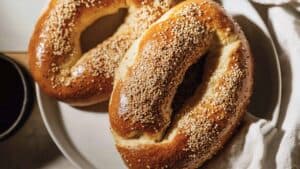
Chewy, crisp, and utterly distinct from their boiled cousins, Jerusalem bagels deliver a one-of-a-kind bread experience that is both rustic and elegant.
With their long oval shape, sesame-crusted exteriors, and slightly sweet depth from pomegranate molasses, these bagels bring a twist that sets them apart from most traditional bread recipes.
What Makes Jerusalem Bagels Different?
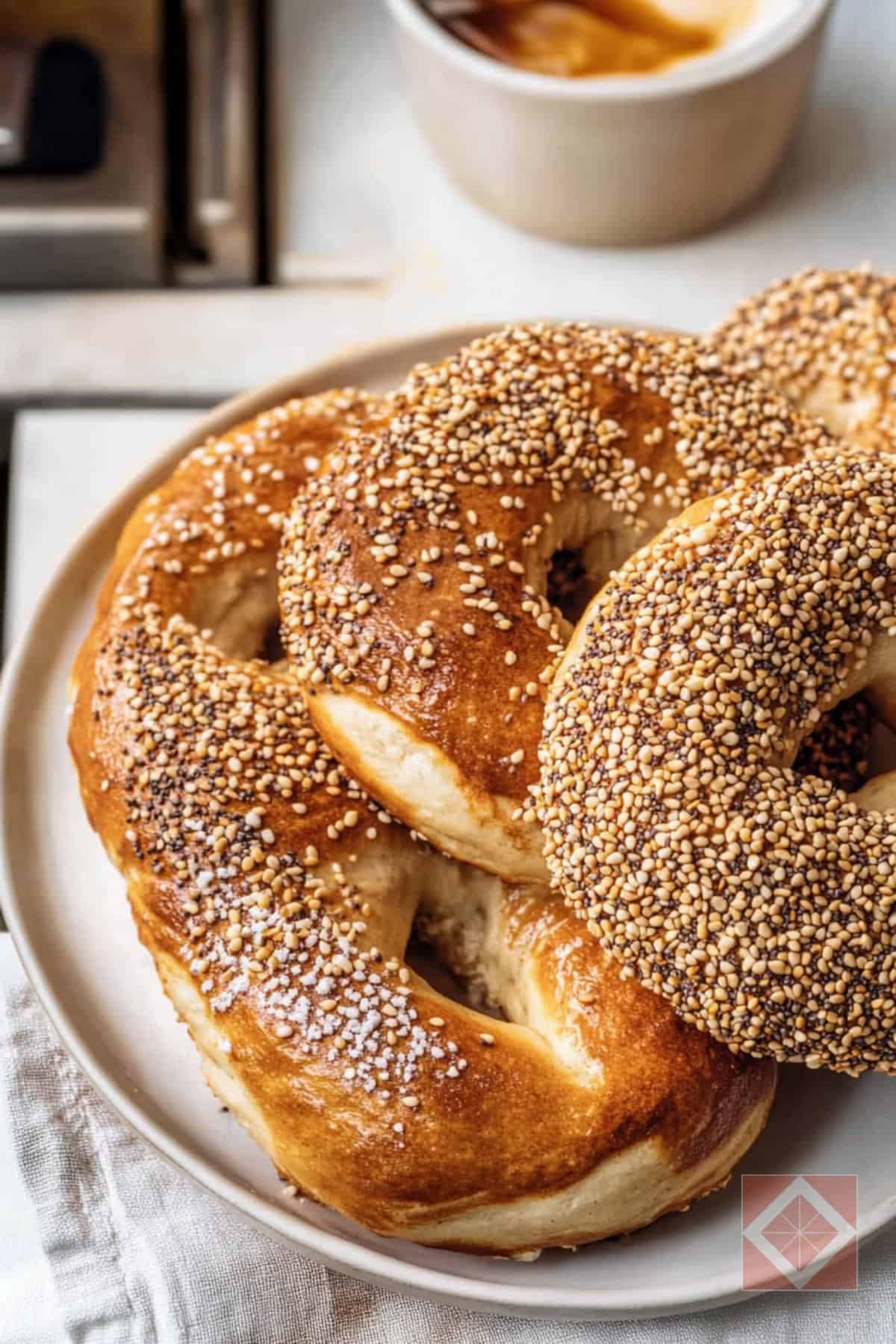
Jerusalem bagels break the mold in both shape and preparation. Instead of the dense, ring-shaped structure associated with most bagel recipes, these are shaped into elongated ovals.
There’s no boiling step—something that dramatically changes the final texture. Instead of a heavy crust and chewy interior, the result is lighter and airier, with a tender crumb and a crisp, golden exterior.
The dough is enriched with olive oil, sugar, and warm milk, making it softer and more pliable than many bread doughs.
Once shaped, each piece is dipped in a blend of pomegranate molasses and water before being rolled in sesame seeds. This coating caramelizes in the oven, creating a deep, nutty flavor profile with just a hint of sweetness.
The Texture & Flavor Profile
Expect a gentle contrast in every bite. The outer layer is thin and crisp, thanks to the pomegranate glaze and a high-heat bake.
Inside, the crumb is springy and fluffy, making these bagels incredibly easy to eat on their own or as a base for toppings. The sesame seeds offer a nutty crunch that complements both sweet and savory spreads.
Unlike denser bagel recipes, the Jerusalem version leans toward being more bread-like—ideal for those who enjoy soft artisan loaves but still crave the satisfying bite of a well-baked crust.
Tips for Perfect Results
Patience is key when working with this type of dough. The rest periods—particularly the 1½ to 2 hour bulk fermentation—are crucial for developing that springy texture without the need for excessive kneading.
If using a stand mixer, pay close attention to the mixing times and speed. Overmixing can make the dough too stiff, while undermixing leaves it sticky and hard to shape.
To avoid dry dough, resist the urge to add too much flour during kneading. Instead, use a bench scraper or slightly damp hands to help manage stickiness. The dough will firm up as it rests and rises.
When shaping the bagels, ensure the log is rolled to a consistent 18-inch length. This guarantees even baking and makes it easier to pinch and seal the ends into a smooth oval.
Nesting two baking sheets while baking helps protect the bottoms from overbaking and adds even browning across the crust.
Serving Ideas & Storage Tips
These bagels are best eaten fresh—ideally within a few hours of baking. The crisp crust and delicate interior are most noticeable when still warm.
For brunch, pair them with labneh, whipped feta, or tahini, and accompany them with olives and fresh herbs. As part of a larger meal, they make a striking side to lentil soups or Middle Eastern salads.
Leftovers store well in an airtight container at room temperature for up to two days. To bring back their freshness, a quick warm-up in a low oven or toaster helps restore the crust’s texture.
Recipe Variations to Explore
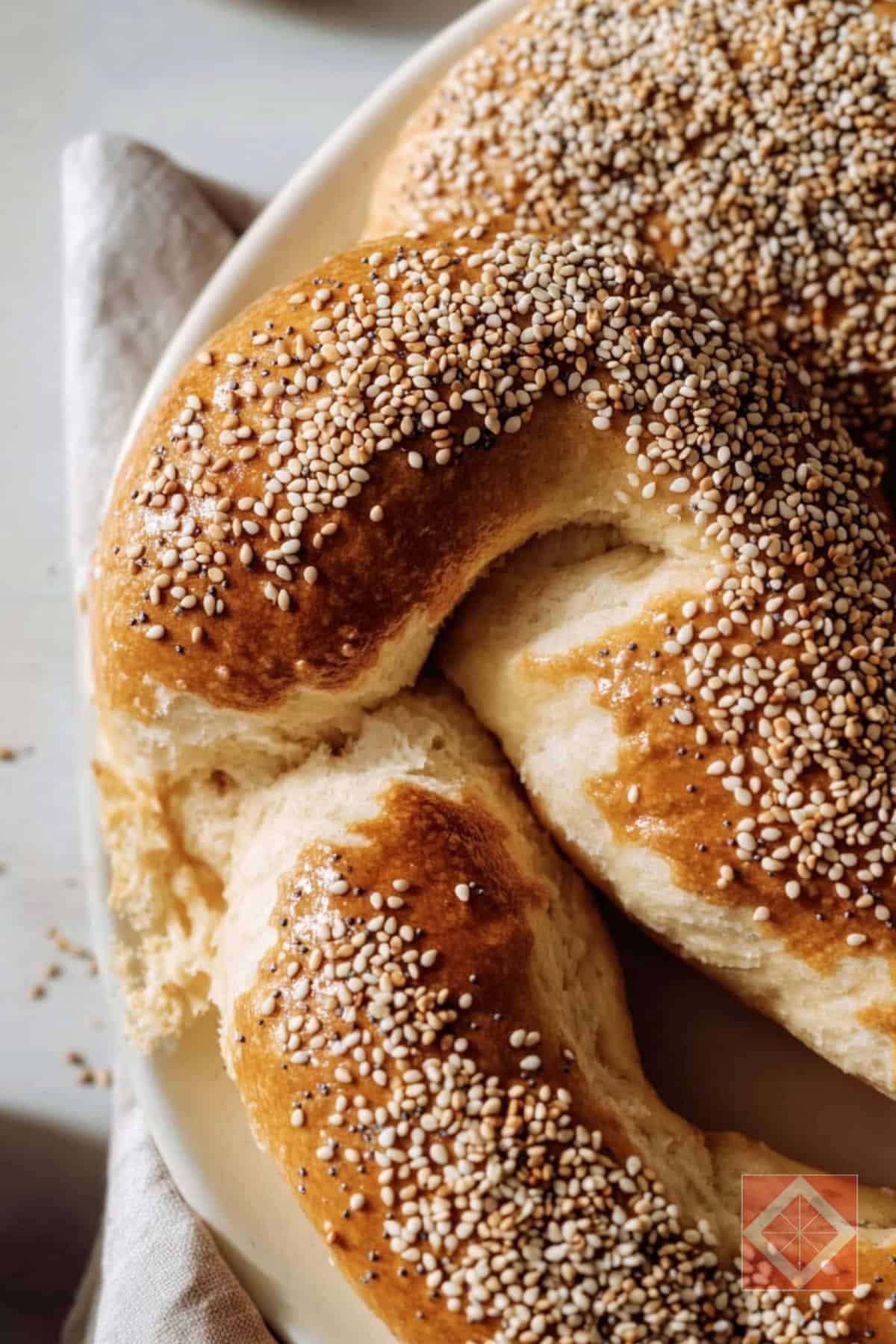
The base recipe is versatile and can be adapted with a few creative tweaks. Swap sesame seeds for poppy seeds, nigella, or a za’atar blend for a flavor twist.
For a slightly richer version, use a bit more olive oil or try a honey-water glaze in place of the pomegranate molasses.
Those avoiding dairy can replace warm milk with a non-dairy alternative, while gluten-free bakers may experiment with bread flour substitutes—though adjustments in hydration and rise time may be necessary.
For home bakers who love experimenting with bread and want a recipe that offers both visual appeal and satisfying depth of flavor, Jerusalem bagels are a rewarding project. They’re unique, flexible, and surprisingly straightforward once the steps are broken down.
This is a bread that invites both tradition and personalization—an easy addition to any collection of standout recipes.

Jerusalem Bread Bagel Recipe
Equipment
- Large mixing bowl or stand mixer with dough hook
- Bench scraper or plastic bowl scraper
- Rimmed baking sheet and parchment paper
- 9-inch round or square baking pan
- Kitchen towel or damp cloth
- Wire cooling rack
Ingredients
Dough:
- 4½ cups plus 2 tablespoons unbleached bread flour plus more for dusting
- 2 tablespoons sugar heaping
- 2 teaspoons fine salt
- 1 teaspoon instant yeast
- ¼ cup olive oil heaping
- 1¾ cups plus 1 tablespoon warm milk whole preferred
Topping:
- ¼ cup pomegranate molasses
- 2 tablespoons warm water
- 1 cup plus 1 tablespoon sesame seeds preferably unhulled
Instructions
- Prepare the Dough: In a large bowl or stand mixer, combine the flour, sugar, salt, yeast, olive oil, and warm milk. Stir or mix on medium-low speed until the dough comes together into a sticky, uniform mass. Let rest for 10 minutes to hydrate the flour.
- Knead the Dough: Knead by hand on a floured surface for 5–8 minutes until smooth and springy (or mix in the stand mixer until elastic, about 5 minutes). Return dough to the bowl, cover, and allow it to rise until puffed—about 1½ to 2 hours. It will not rise dramatically in volume.
- Divide and Pre-shape: Dust your work surface lightly. Divide the dough into 6 equal parts (about 6.25 ounces each). Roll each into a 5-inch tube. Place seam-side down on the floured surface, cover, and let rest for 20 minutes.
- Preheat Oven: Arrange racks in the top and bottom third of your oven. Line two baking sheets with parchment paper and preheat oven to 450°F.
- Make the Topping: Mix pomegranate molasses and warm water in a shallow pan. Spread sesame seeds evenly on a rimmed baking sheet or parchment-lined tray.
- Shape the Bagels: Roll each dough tube into a log about 18 inches long. Pinch the ends together, then roll the seam smooth with your palm. Stretch each into a 7- to 8-inch oval shape.
- Coat and Rest: Dip one side of each bagel into the molasses mixture, then into sesame seeds. Transfer seed-side up onto baking sheets, three per tray. Let them rest for 20–30 minutes; they won’t puff much.
- Bake: Bake for 20–25 minutes until the crust is a deep golden brown. Switch trays from top to bottom and rotate halfway through baking. If needed, double-stack baking sheets to protect the bottoms from overbaking.
- Cool and Store: Let cool on a wire rack. Enjoy the same day, or store in an airtight container for up to 2 days. Reheat in the oven or toaster before serving.
Notes
- Dough will be sticky at first but becomes easier to handle quickly.
- Use a bench scraper to assist in kneading and shaping.
- These are best served fresh and pair well with spreads like hummus or labneh.

Davin is a jack-of-all-trades but has professional training and experience in various home and garden subjects. He leans on other experts when needed and edits and fact-checks all articles. Also an aspiring cook we he researches and tries all kinds of different food recipes and shares what works best.