

There’s nothing quite like a rich, comforting bowl of beef stew, especially when it’s packed with layers of deep, savory flavors. This easy recipe elevates a traditional beef stew to something extraordinary, thanks to a slow simmer and the addition of harissa, Parmesan, and garlicky croutons.
Whether you’re making it for a cozy family dinner or meal-prepping for the week, this dish is guaranteed to impress.
Why This Beef Stew Stands Out
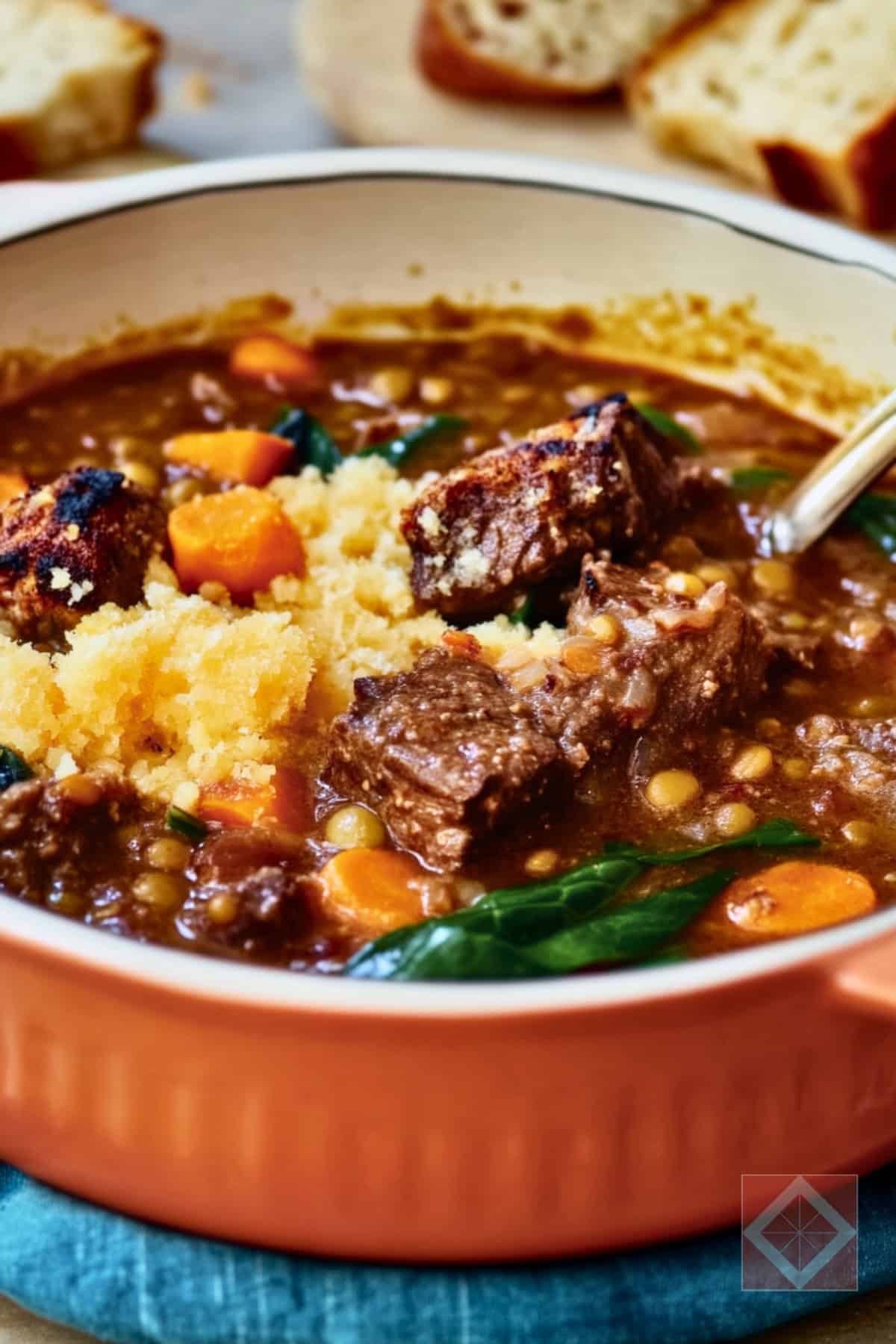
Unlike standard beef stews, which rely solely on meat and vegetables for flavor, this recipe incorporates bold Mediterranean-inspired ingredients. Harissa adds a gentle heat that enhances the richness of the beef, while Parmesan rind infuses the broth with umami depth.
Lentils and farro contribute a hearty texture, making every spoonful satisfying and nourishing. The final touch—crispy, garlicky croutons—provides the perfect contrast to the velvety broth.
Tips for Making the Best Beef Stew
For maximum flavor, take your time when building the base of this recipe. Sautéing the onions, fennel, and garlic before adding the rest of the ingredients allows their natural sweetness to develop.
Using beef stew meat ensures that the dish stays tender after hours of cooking, but if you prefer, chuck roast cut into small cubes also works well.
Another key to success is allowing the stew to simmer slowly. Two hours of low and slow cooking helps the ingredients meld together, resulting in a thick, rich broth that coats every bite.
If you have a slow cooker, this stew is an excellent candidate for an effortless, hands-off meal—just set it to low for six hours and let it do all the work.
Customizing the Recipe
This beef stew is versatile, so you can easily tailor it to suit your preferences. If you’re looking for a gluten-free version, simply replace the farro with extra lentils or a grain-free alternative like diced potatoes.
For a spicier kick, increase the amount of harissa or add a pinch of red pepper flakes. Want to make it vegetarian? Swap the beef for mushrooms and chickpeas, and use vegetable stock instead.
Collard greens add a touch of earthiness and color, but you can substitute them with kale, Swiss chard, or even spinach for a milder taste. The garlicky croutons are optional, but they bring an irresistible crunch that complements the stew’s richness.
Feel free to experiment with different types of bread for the croutons—sourdough, ciabatta, or even a rustic whole-grain loaf all work beautifully.
Meal Prep & Storage Tips
This beef stew is an excellent make-ahead meal, as the flavors only improve with time. Store leftovers in an airtight container in the refrigerator for up to four days.
Reheat gently on the stove, adding a splash of broth or water if needed to loosen the consistency.
For longer storage, freeze portions in individual containers for up to three months. Thaw overnight in the refrigerator before reheating.
The croutons, however, are best enjoyed fresh, so if you’re planning to meal prep, make them just before serving for the best texture.
The Perfect Pairings
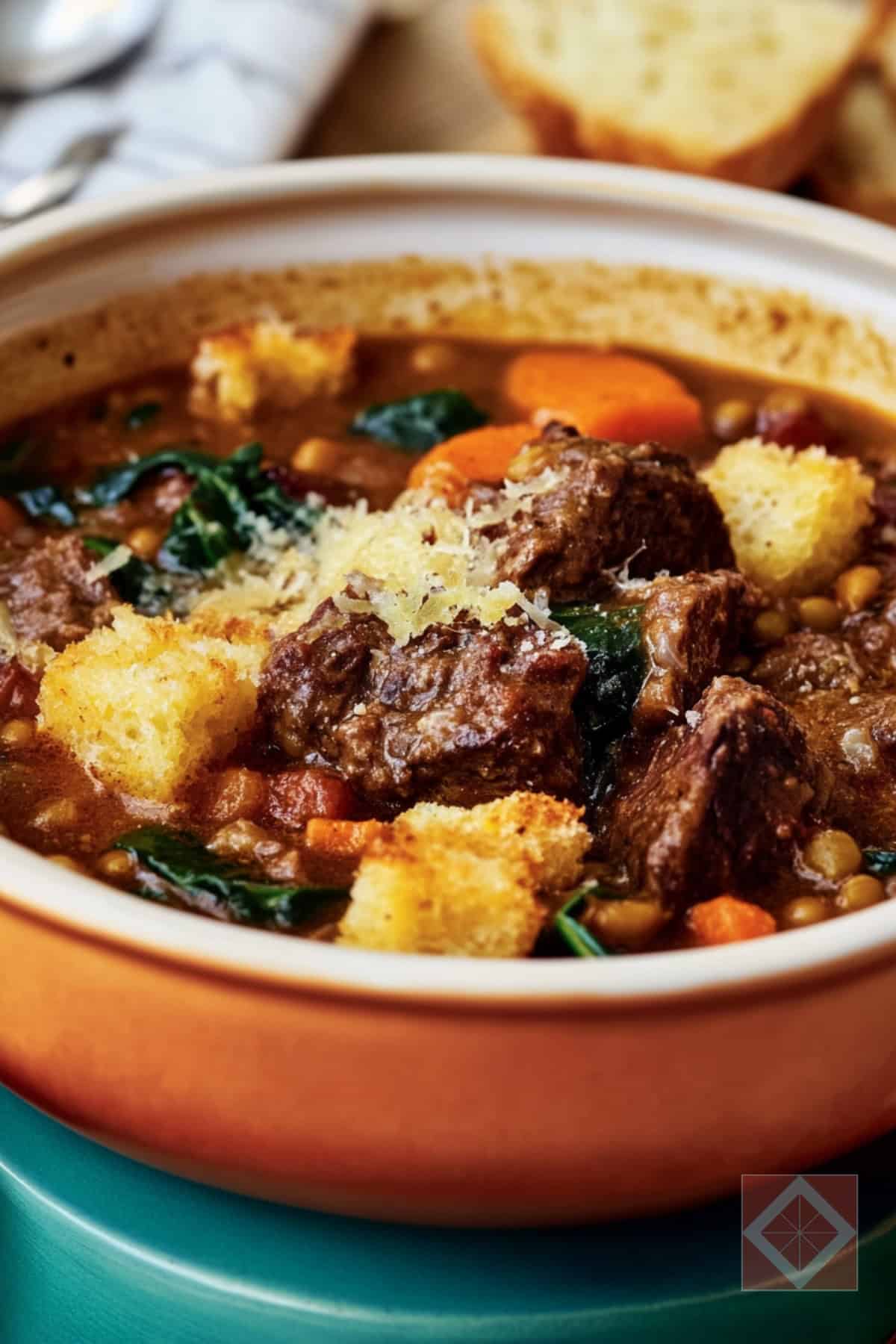
Serve this beef stew with a side of crusty bread to soak up every drop of the flavorful broth. A simple green salad with a lemon vinaigrette makes a refreshing contrast to the rich, hearty stew.
If you’re in the mood for something extra indulgent, top your bowl with freshly grated Parmesan for an added boost of umami.

Easy Beef Stew Recipe with Garlicky Croutons
Ingredients
For the Stew
- 3 large carrots
- 1 fennel bulb
- 1 large yellow onion
- 4 garlic cloves
- 1 cup dried French green lentils
- 10 cups low-sodium beef stock three 1-quart containers
- 2 pounds beef stew meat
- 1 cup farro
- 2 dried bay leaves
- 1 to 2 tablespoons mild harissa 1 tbsp for flavor, 2 tbsp for a spicier kick
- 2 tablespoons tomato paste
- ¾ teaspoon ground cumin
- 1 lemon zest and juice
- 1 8-ounce block Parmesan cheese
- Kosher salt to taste
- 1 teaspoon freshly ground black pepper
- 1 large bunch collard greens
For the Garlicky Croutons
- 4 thick or 6 thin slices of any quality bread
- Extra-virgin olive oil
- Kosher salt to taste
- ¼ teaspoon garlic powder
Instructions
Prepare the Vegetables
- Roughly chop the carrots, fennel, and onion.
- Add them to a food processor with the garlic and pulse until finely chopped (about 10-15 pulses). If preferred, chop everything finely by hand.
Cook the Stew
- Transfer the chopped vegetables to a large stockpot.
- Stir in the lentils, beef stock, beef, farro, bay leaves, harissa, tomato paste, and cumin.
- Grate the lemon zest directly into the pot and set the remaining zested lemon aside.
- Cut off the rind of the Parmesan cheese and add it to the pot (set the cheese aside for serving).
- Season with salt and black pepper. Bring to a boil over high heat, then reduce to low, cover, and simmer for about 2 hours. Stir every 20 minutes.
- During the last 30 minutes of cooking, chop the collard greens and stir them into the stew.
Make the Croutons
- Cut the bread into ½-inch cubes, making about 4 cups.
- Heat a large skillet over medium-high heat and add a generous amount of olive oil.
- Toss the bread in the hot oil, stirring to coat evenly.
- Spread the bread out in a single layer and sprinkle with salt and garlic powder.
- Let cook undisturbed for 3-5 minutes until golden brown on one side. Stir and cook for another 3-4 minutes until all sides are golden.
- Remove from heat and let cool.
Final Touches
- If a layer of fat forms on the stew’s surface, skim it off with a spoon.
- Remove the Parmesan rind and bay leaves.
- Halve the zested lemon and squeeze its juice into the stew, then stir to combine.
Serve and Enjoy
- Ladle the stew into bowls.
- Top generously with the garlicky croutons and plenty of freshly grated Parmesan cheese.
- Enjoy warm!
Notes
- Combine all stew ingredients in a slow cooker.
- Cover and cook on low for 6 hours.
- Follow the same steps for the croutons and serving.

Nancy has been a plant person from an early age. That interest blossomed into a bachelor’s in biology from Elmira College and a master’s degree in horticulture and communications from the University of Kentucky. Nancy worked in plant taxonomy at the University of Florida and the L. H. Bailey Hortorium at Cornell University, and wrote and edited gardening books at Rodale Press in Emmaus, PA. Her interests are plant identification, gardening, hiking, and reading.