
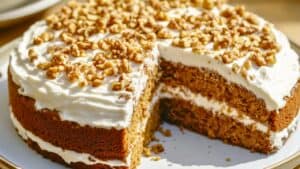
There’s just something cozy about old recipes. Maybe it’s how they feel like a story passed down, or how they somehow taste like memories—even if you’ve never had ‘em before.
The cream spice cake is one of those gems. Rich, warm, a little spicy in all the right ways… and it totally feels like something your great-grandma might’ve baked on a chilly afternoon.
When Cakes Were More Than Just Dessert
Back in the early 1900s, cakes weren’t just sweet things you ate after dinner. They were events. Made for Sunday dinners, birthdays, holidays—you name it.
And this cream spice cake? It’s a perfect example. All those pantry staples—cinnamon, nutmeg, cloves, maybe a pinch of mace—came together in a cake that smelled amazing even before you baked it.
Every bite kind of wraps you up like a warm blanket.
People back then didn’t have mixers with ten attachments or pre-measured spice blends. They took their time.
Creaming butter and sugar by hand, folding things gently, keeping a close eye on the oven because thermometers weren’t exactly reliable. It was a whole process. But worth it.
All About Flavor, Not the Fancy Stuff
Unlike the big, multi-tiered cakes we see now, covered in neon frosting and glitter (not that there’s anything wrong with that), old cakes were more about taste than looks.
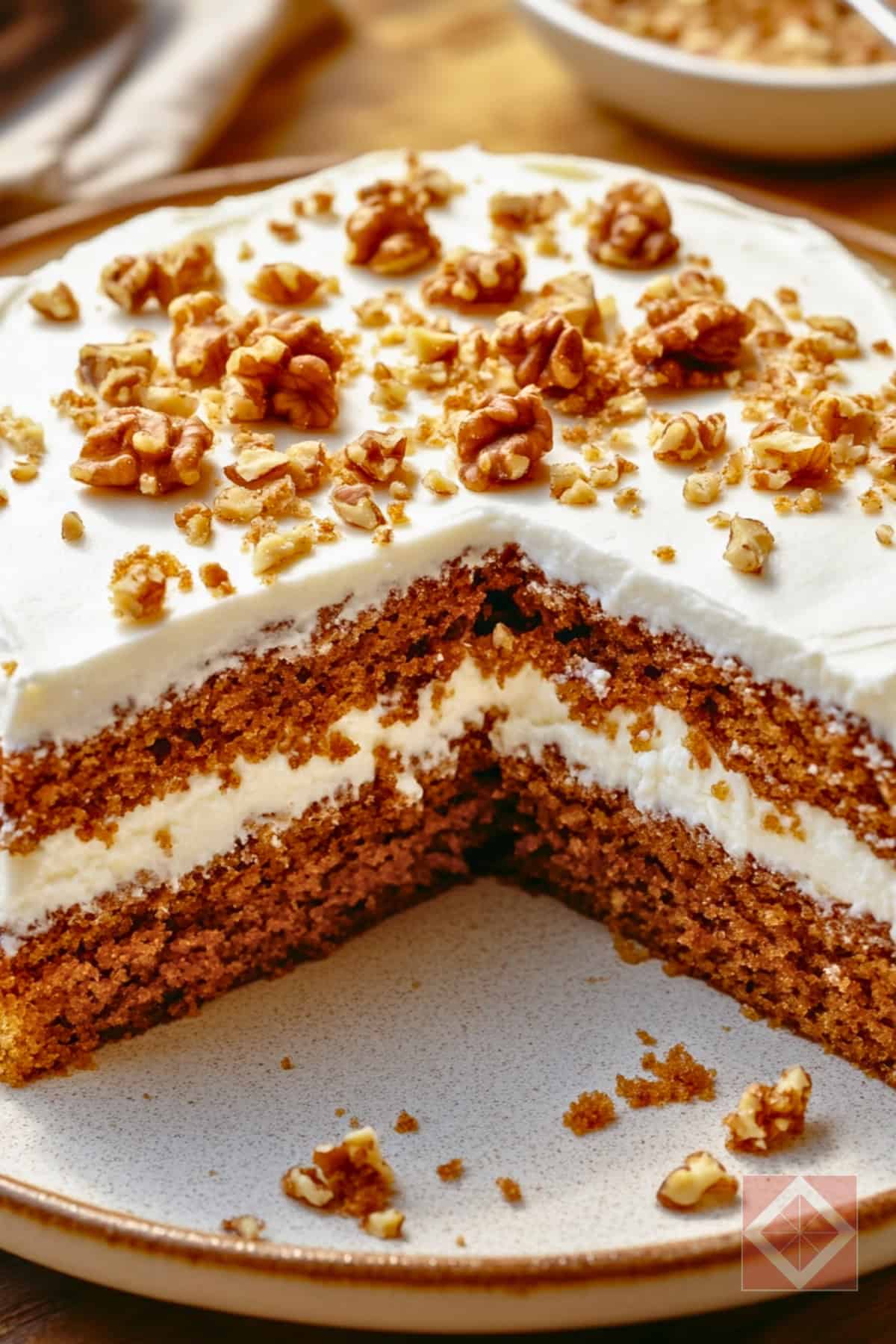
This one’s no different. It’s not showy, but it delivers big. The crumb is soft and dense in a good way, and the flavor—spicy and just sweet enough—does all the talking.
Then there’s the frosting, which isn’t your usual buttercream. It’s a boiled sugar kind of thing—light, a little old-school tricky, but when you get it right? Dang, it works.
Walnuts bring that little extra something too. Not too crunchy, just enough texture to keep things interesting. Plus, they play real nice with those spices.
Why Bother With a Cake This Old?
Because it still works. That’s the thing. Even with all the new baking trends and shortcuts and cake mixes that come out every year, recipes like this one still hold up.
They’re a reminder that you don’t need 20 ingredients or a stand mixer the size of a toddler to make something great. Just a few solid ingredients, a little time, and some care.
Baking this kind of cake today kinda feels like saying, “Hey, some things don’t need changing.” And honestly? That’s a pretty comforting thought.
Want to Tweak It? Here’s How
Even though the original version’s a classic, you can totally play with it depending on what you’ve got or how you like to bake:
- Swap some sugar for honey or maple syrup for a softer sweetness and a little extra depth.
- Try different nuts like pecans or almonds if you’re out of walnuts—or if you just like ‘em better.
- Skip the boiled frosting and go for a cream cheese one if you want something easier (and maybe a little tangy to balance the spices).
- Going gluten-free? A mix of almond and rice flours works surprisingly well.
- Dairy-free folks can sub in plant-based butter and coconut yogurt and still end up with a super moist cake.
So yeah, you can totally make this recipe your own and still keep its old soul intact.
Old Recipes Are More Than Just Instructions
They’re kind of like little time capsules. You can almost see the wood-fired ovens, the handwritten index cards, the flour dusted over a well-worn apron.
This cake, it’s not just dessert—it’s part of a tradition. One that says, “Let’s slow down and bake something that means something.”
If you’ve never made a cake like this before, give it a go. It’s simple in the best way, full of flavor, and feels like a hug from the past.
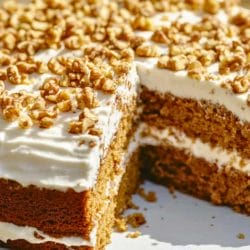
Old-Fashioned Cream Spice Cake Recipe (1900s Classic)
Ingredients
Cake:
- ½ cup butter softened
- 1 cup packed dark brown sugar
- Yolks of 5 large eggs
- 2¼ cups all-purpose flour
- 2 teaspoons ground cinnamon
- 1 teaspoon ground cloves
- 1 teaspoon ground allspice
- 1 teaspoon ground mace or substitute nutmeg
- ¾ teaspoon salt
- 1 cup sour cream
- ½ teaspoon baking soda
Frosting:
- 1¾ cups granulated sugar
- ⅓ cup light corn syrup or golden syrup
- ½ cup water
- Whites of 2 large eggs
Decoration:
- 1 cup chopped walnuts
Instructions
Cake Preparation:
- Preheat the oven to 325°F and prepare two 9-inch round cake pans by greasing them with butter and lightly dusting with flour.
- In a mixing bowl, cream the butter and brown sugar until the mixture is light and fluffy. Gradually add the egg yolks, beating well after each addition.
- In a separate bowl, whisk together the flour, cinnamon, cloves, allspice, mace (or nutmeg), and salt to evenly distribute the spices.
- In another small bowl, combine the sour cream with the baking soda and mix well.
- Alternating between the two, fold the flour mixture and the sour cream mixture into the creamed butter mixture, stirring gently just until combined.
- Pour the batter evenly into the prepared cake pans and bake for 35 to 40 minutes, or until a toothpick inserted in the center comes out clean.
- Let the cakes cool in their pans for about 10 minutes, then carefully transfer them to a wire rack to cool completely.
Frosting Preparation:
- In a saucepan, heat the sugar, corn syrup, and water until the mixture reaches the soft-ball stage (240°F). Stir occasionally to ensure even heating.
- While the syrup is cooking, use an electric hand mixer or stand mixer to beat the egg whites until they form stiff peaks.
- Once the syrup reaches the proper temperature, carefully and gradually pour it down the side of the mixing bowl while continuing to beat the egg whites. Keep mixing until the frosting thickens and becomes spreadable.
Assembly:
- Spread a generous layer of frosting over the top of the first cake layer. Place the second cake layer on top and frost the entire cake with the remaining frosting.
- Sprinkle the top of the cake with chopped walnuts for a classic finishing touch.
Notes
- This 1900s recipe features a traditional boiled frosting, but for a simpler option, vanilla buttercream can be used instead.
- The combination of warming spices and rich brown sugar makes this an excellent cake for fall gatherings or holiday celebrations.
- Store the cake in an airtight container at room temperature for up to 2 days, or refrigerate for longer freshness.

Nancy has been a plant person from an early age. That interest blossomed into a bachelor’s in biology from Elmira College and a master’s degree in horticulture and communications from the University of Kentucky. Nancy worked in plant taxonomy at the University of Florida and the L. H. Bailey Hortorium at Cornell University, and wrote and edited gardening books at Rodale Press in Emmaus, PA. Her interests are plant identification, gardening, hiking, and reading.