
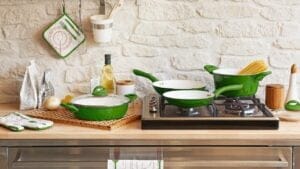
stop wasting money on cookware sets that look good on your shelf but cook like garbage.
here’s what nobody tells you when you’re standing in the aisle staring at $800 all-clad versus $200 tramontina wondering if you’re an idiot for even considering the cheap one.
the expensive set isn’t always better. the celebrity endorsed set is usually worse. and that “lifetime warranty” probably doesn’t cover the thing that’s actually going to break.
let’s cut through the marketing garbage and tell you what actually matters when metal meets heat meets food.
we’re talking thermal conductivity, why your pans warp, why nonstick is a lie, and which brands give you restaurant performance without the restaurant markup.
jump to a section:
the one thing that matters more than brand names
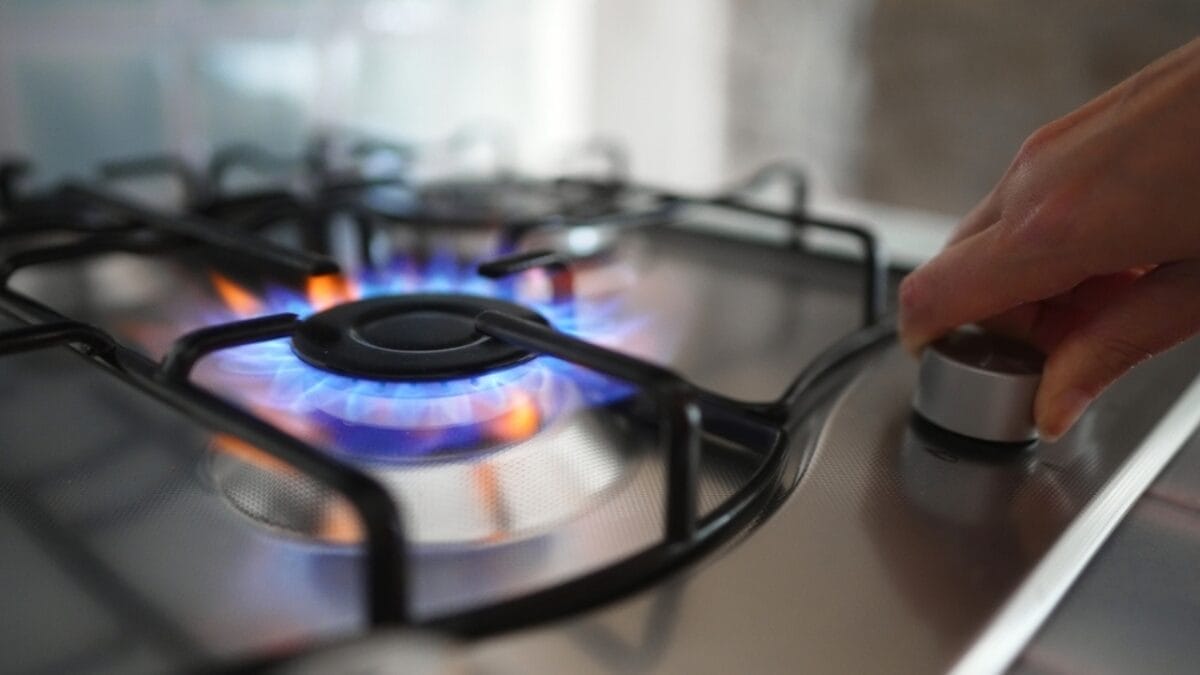
cookware is a heat exchanger. that’s it. everything else is aesthetics and marketing.
thermal conductivity is how fast heat moves through the metal. heat capacity is how much heat the pan holds once it gets there. you need both. no single metal does both perfectly which is why good pans are made of layers.
the hierarchy of metals that actually work:
copper (401 W/m·K): responds instantly to temperature changes. professional kitchens use it for sauces and sugar work. but it’s heavy, expensive, reacts with acidic food, and needs constant polishing.
unless you’re making candy or hollandaise every day, you don’t need it.
aluminum (237 W/m·K): this is the workhorse. lightweight, cheap, highly conductive. it’s the core layer in basically every good stainless steel pan. the thickness of this aluminum layer is the single biggest factor in whether your pan cooks evenly or has hot spots.
stainless steel (16 W/m·K): this is basically an insulator not a conductor. if a pan was pure stainless it would be unusable. stainless exists to protect the aluminum core and give you a non-reactive cooking surface that doesn’t corrode.
cast iron (52 W/m·K): terrible conductor. heats super unevenly with hot spots right over the burner. but it’s dense and heavy so once it’s hot it stays hot. great for searing steaks.
terrible for delicate sauces.
clad vs disc bottom (this actually matters)
fully clad (tri-ply, 5-ply, 7-ply):
the layers go all the way up the sides of the pan. heat travels up the walls. this is better for reducing sauces without burning a ring at the bottom. brands: all-clad, tramontina, cuisinart multiclad pro, made in.
more plies doesn’t mean better. a 3-ply pan with a thick aluminum core (2mm) beats a 5-ply pan with a thin core (1mm) every time.
more layers can actually slow down heat transfer if they add stainless steel instead of aluminum.
disc bottom (impact bonded):
thick disc of aluminum or copper stuck to the bottom. thin stainless walls. the disc can be way thicker than clad construction (up to 7mm). great for boiling water and stews.
bad for sauces because heat doesn’t go up the sides. you get a ring of scorching where the disc ends. brands: demeyere atlantis stockpots, fissler.
the brands that actually matter
tramontina tri-ply clad (brazil): the value king
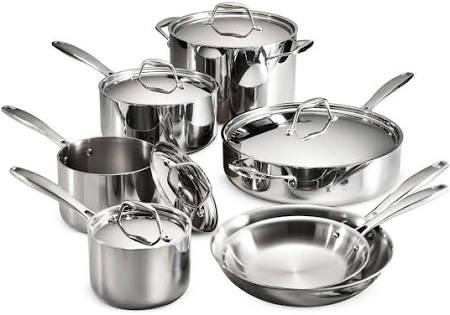
this is the answer for most people. made in brazil. performs identically to all-clad d3 in thermal tests. costs 30 to 40% less.
why it’s good: 18/10 stainless interior, aluminum core, magnetic exterior for induction. heats evenly. responds fast. nearly indestructible. oven safe to 500°F. comfortable rounded handles that don’t dig into your palm like all-clad’s do.
the catch: it’s not made in america if that matters to you. resale value is lower than all-clad. but the food tastes exactly the same.
who should buy it: basically everyone who wants professional performance without professional prices.
all-clad d3: the brand name everyone knows
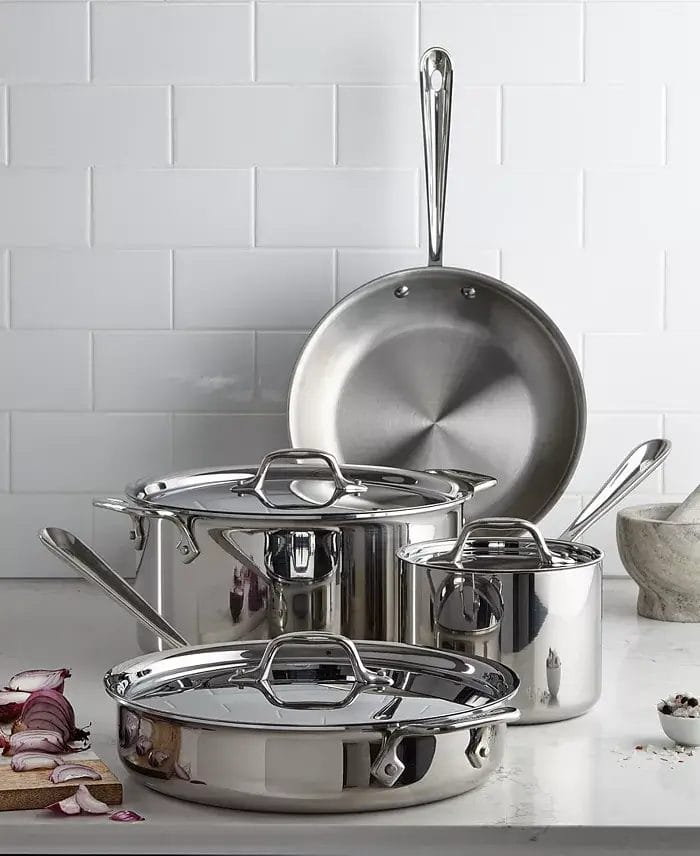
made in pennsylvania. this is the industry standard. if you say you have all-clad, people assume you’re serious about cooking.
why it’s good: proven track record. high resale value. made in usa. performs exactly as well as tramontina in blind tests.
the catches: expensive. the handles are uncomfortable for a lot of people. and here’s the big one: they have a defect.
the sharp rim problem: all-clad marketed their pans as dishwasher safe for years. but the manufacturing process leaves the aluminum core exposed at the rim. dishwashers corrode that aluminum.
over time it recedes and leaves the stainless steel layers sticking out like razor blades. people have gotten genuinely cut handling pans after long term dishwasher use. there was a class action lawsuit. they settled. they now say hand wash only despite decades of saying dishwasher safe.
if you hand wash, it’s fine. if you want to use a dishwasher, this is a problem.
the d3 vs d5 debate: d3 is three layers. d5 is five layers with an extra stainless steel core that supposedly prevents warping. in reality, that extra stainless layer slows down heat transfer. d3 heats faster and responds quicker. d5 is heavier and slower. most pros prefer d3.
factory seconds: all-clad sells scratched or dented pans at their outlet sales for 40 to 70% off. since you’re going to scratch them anyway, this is the smart way to buy all-clad if you want the brand.
cuisinart multiclad pro: the budget sleeper
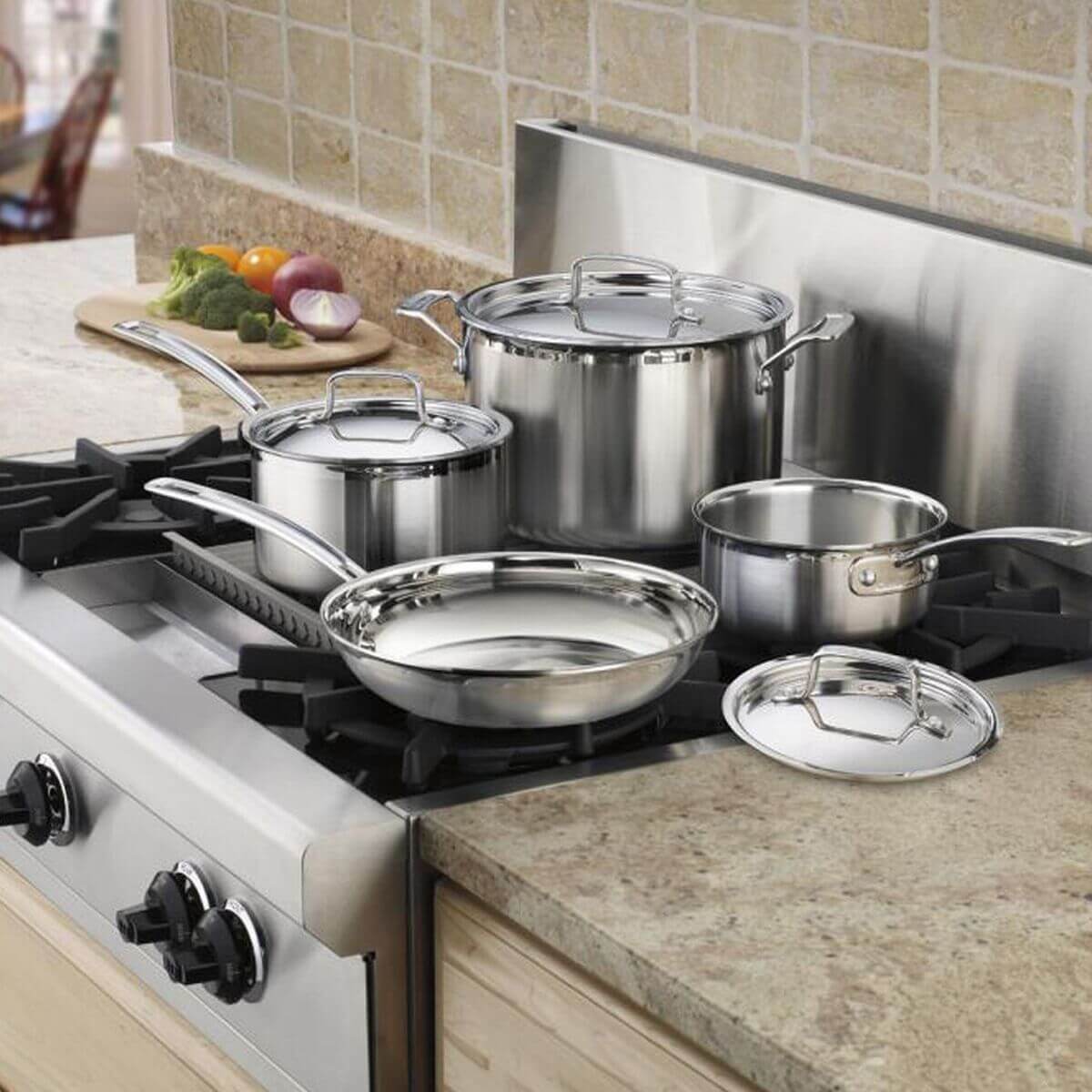
made in china but quality controlled well. competes directly with tramontina.
why it’s good: 2.6mm total thickness just like all-clad d3. rolled rims so you can pour without dripping. some newer versions have sealed rims which prevent the corrosion issue that plagues all-clad. induction compatible.
the catch: made in china bothers some people. earlier batches had exposed aluminum rims like all-clad. check that yours has sealed rims.
who should buy it: anyone who wants the rolled rim feature for pouring and doesn’t care about country of origin.
demeyere: the engineering nerds
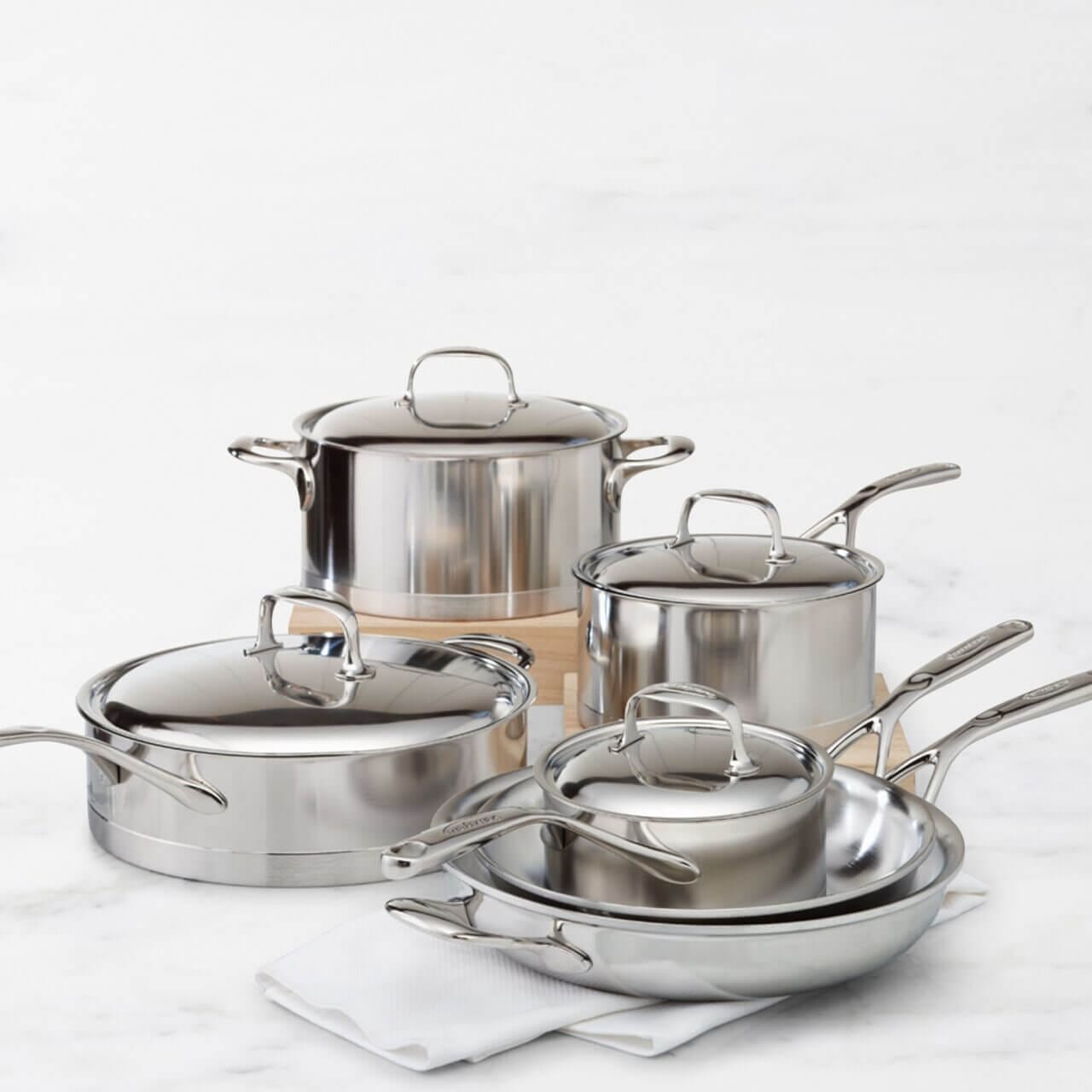
made in belgium. this is what happens when europeans overthink cookware in the best way possible.
why it’s different:
silvinox surface treatment: they use an electrochemical process to remove iron from the surface of the steel. makes it silver-white, resistant to fingerprints and discoloration. it’s not a coating. it’s permanent. your pans stay looking new forever.
rivetless welding: handles are welded not riveted. no rivets inside the pan means no crevices for food and bacteria to hide. some people worry welds will break but they’re backed by a 30 year warranty.
different pans for different jobs: their stockpots use a thick copper disc on the bottom for efficient boiling. their skillets (proline line) are fully clad and 4.8mm thick compared to 2.6mm for all-clad. that massive thickness makes them heat like cast iron but evenly like aluminum.
who should buy it: people who want the absolute best and don’t mind paying for it. the proline skillet is the last skillet you’ll ever buy.
our place: the instagram brand
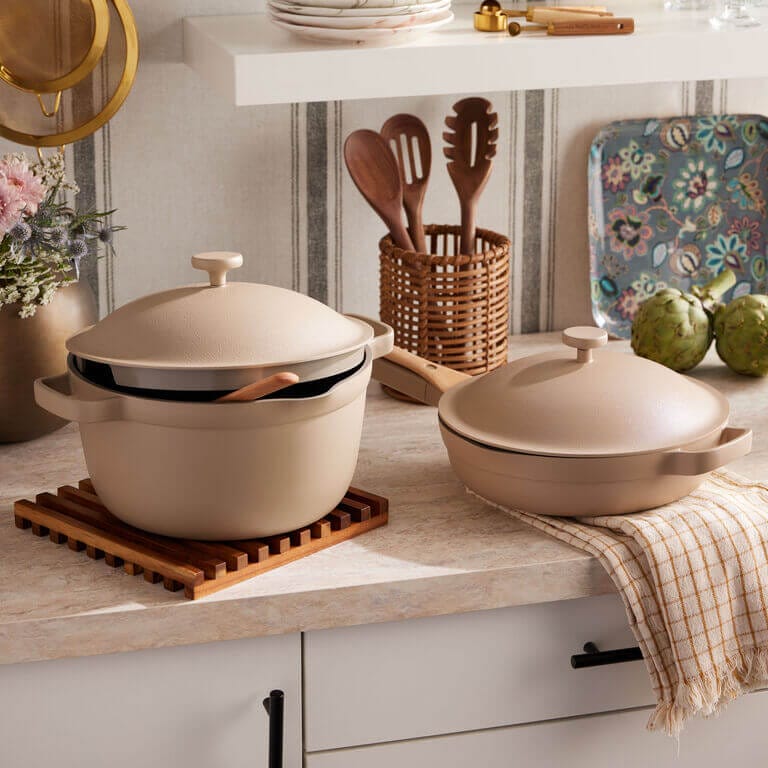
direct to consumer. made in usa and italy. 5-ply construction.
why it exists: chef partnerships and social media marketing. they position as “professional quality for home cooks.”
the reality: performs like all-clad d3 and demeyere industry 5. standard 2.7mm thickness. good pans. but often more expensive than tramontina while performing the same. the “value” proposition is questionable.
who should buy it: people who like the branding and want to support a newer american company.
the nonstick trap (don’t fall for it)
here’s the truth about nonstick that brands don’t want you to know. all nonstick coatings fail. all of them. it doesn’t matter if it’s $20 or $200. it will stop being nonstick within 2 to 5 years.
nonstick is a consumable product like tires or toothbrushes. buy cheap. replace when it stops working.
teflon (ptfe)
traditional nonstick. uses fluoropolymers.
pros: actually works for eggs and fish. lasts longer than ceramic. modern versions are pfoa-free so the main health concern is gone.
cons: degrades above 500°F and releases fumes. can’t sear in it. can’t use metal utensils. will eventually scratch and peel no matter how careful you are.
recommended cheap option: tramontina professional or t-fal. both under $40. throw them away when they stop working.
ceramic (sol-gel)
brands like caraway, greenpan, our place market these as “non-toxic” and “chemical free.”
the truth: these aren’t ceramic like a clay pot. they’re silica-based polymers that form a glass-like coating.
why they fail fast: the coating is smooth, not chemically nonstick. thermal cycling causes micro-cracks. oils build up in the cracks. the pan gets sticky. heavy users report failure in 6 to 12 months.
caraway specifically: beautiful aesthetic. horrible longevity. the nonstick dies right after the 1 year warranty. the warranty excludes “normal wear and tear” which covers the coating failure. you’re paying for instagram aesthetics not performance.
greenpan: keeps releasing new “generations” of their thermolon coating (they’re on version 8 or 9 now). the valencia pro line is hard anodized and rated for metal utensils but it’s still ceramic. it will still fail.
the verdict: if you must buy ceramic, get greenpan valencia pro. but expect to replace it every 2 to 3 years.
hexclad: the hybrid scam
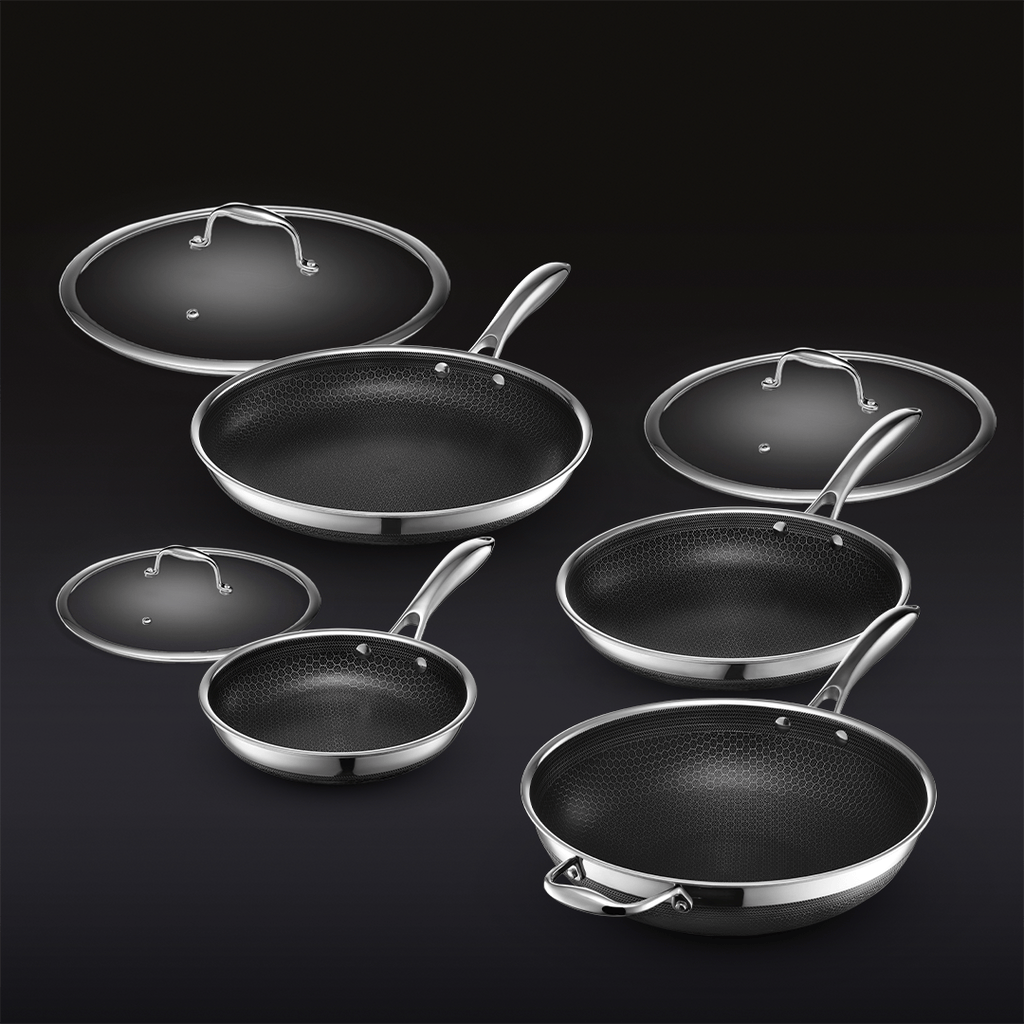
laser etched stainless steel grid with teflon in the valleys.
the pitch: sear like stainless, clean like nonstick, use metal utensils.
the reality: eggs stick to the steel peaks. you can’t sear at high heat or you’ll wreck the teflon. the teflon still degrades and peels. “lifetime warranty” excludes wear and tear which is what actually happens.
the math: one hexclad pan costs as much as a good stainless pan plus a good nonstick pan. buy both separately and each will perform its job better.
enameled cast iron (the one thing worth splurging on)
dutch ovens are different. these actually last forever if you don’t drop them.
le creuset (france): the best there is
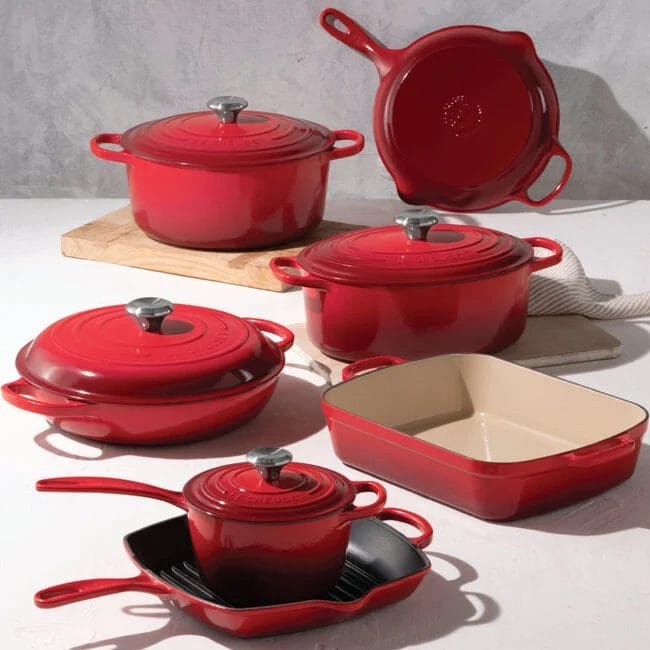
why it’s the best: sand colored interior lets you see the browning on the bottom so you don’t burn. thinner cast iron than competitors so it’s lighter to lift. enamel is engineered to resist thermal shock.
vintage pieces retain resale value.
the catch: expensive as hell.
staub (france)
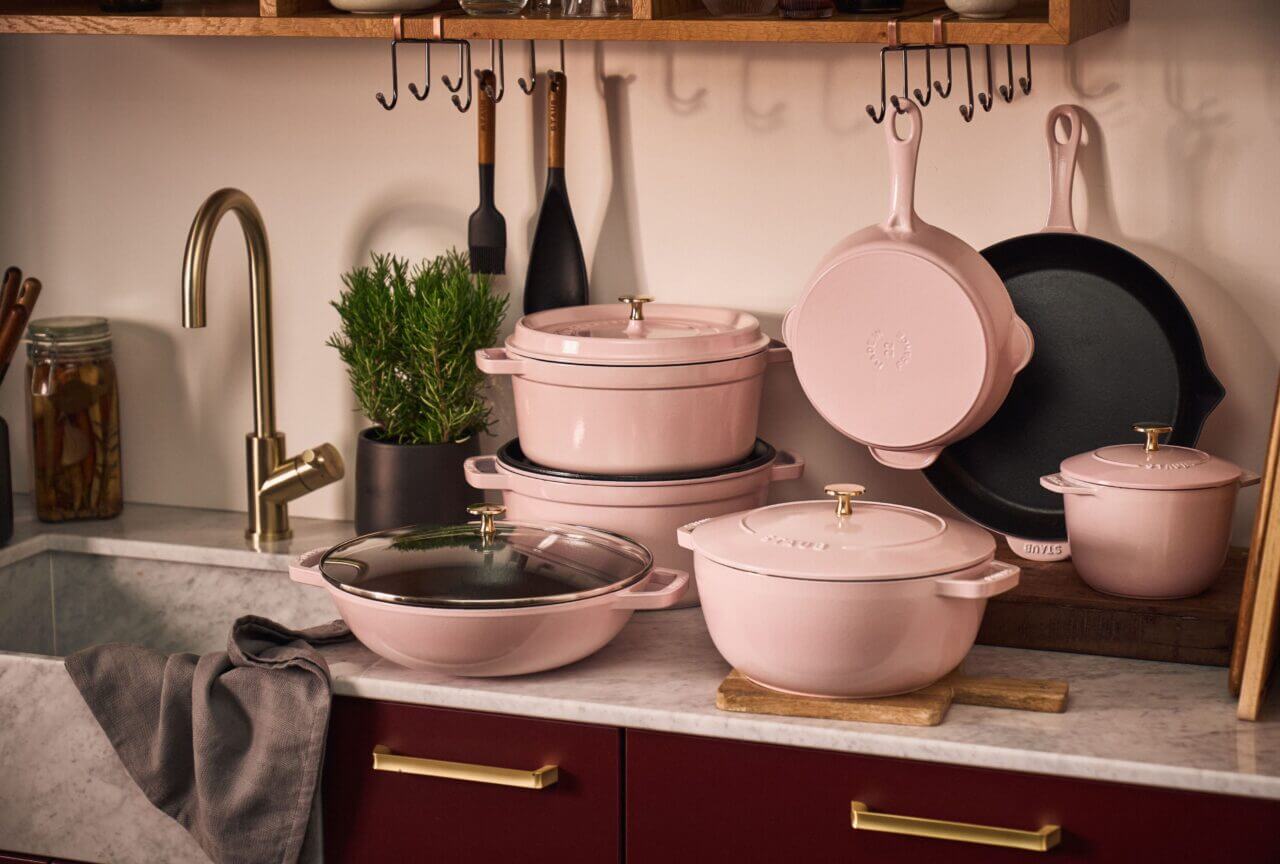
different approach: matte black interior hides staining but makes it harder to judge browning. heavier lids with spikes (picots) on the underside that drip condensation back onto food for self-basting.
who should buy it: people who braise a lot and want that rainfall effect.
lodge enamel (china)
NOTE: this line has been discontinued.
the budget option: cooks identically to le creuset in heat retention tests. enamel is less durable. chips more easily around the rim. costs 20% of le creuset.
who should buy it: anyone who wants dutch oven performance but will accept cosmetic imperfections and shorter lifespan.
copper (only if you’re rich or insane)
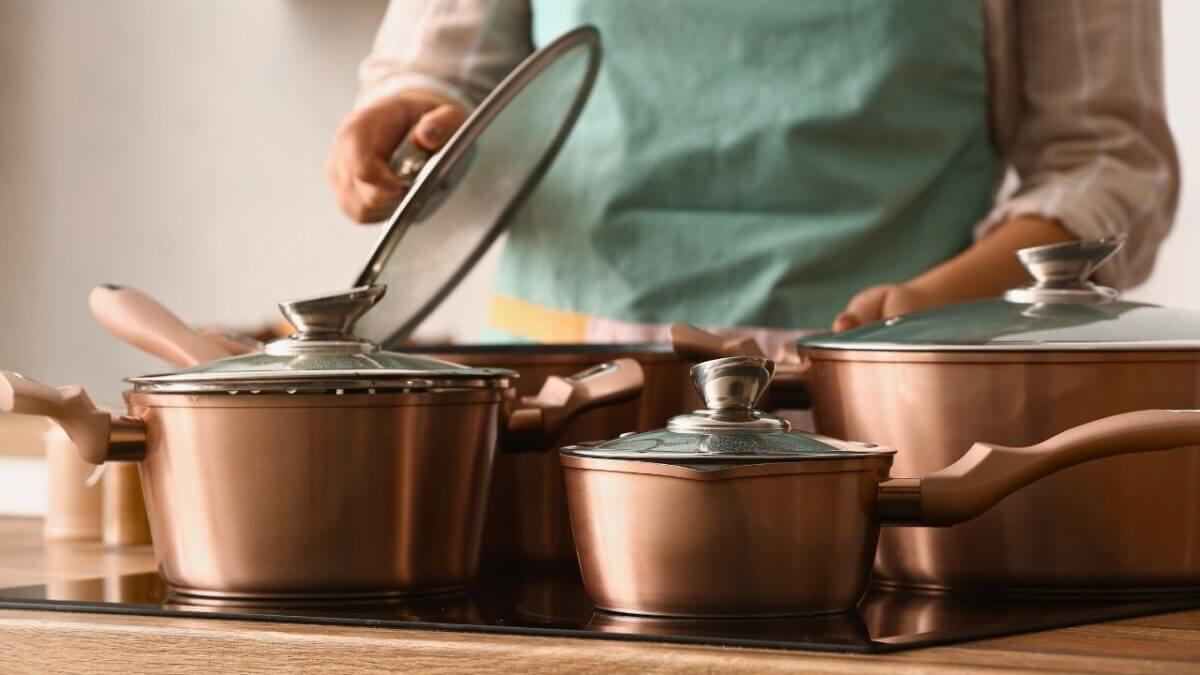
true copper pans react instantly to heat changes. this matters for candy making and delicate sauces.
the requirements: needs to be lined with tin (melts at 450°F, needs re-tinning every 10-20 years) or stainless (permanent but slightly less responsive). needs to be 2.5mm thick or it’s just decorative.
all-clad copper core: this is 5-ply with a thin copper layer inside. it’s heavier and way more expensive than d3. most testers say the performance boost doesn’t justify the price.
who should buy it: pastry chefs. rich people. nobody else needs it.
what to actually buy (by situation)
best value for most people
tramontina tri-ply clad set. full stop. 95% of all-clad’s performance for 35% of the price.
buy it for life (money no object)
skillets: demeyere proline
saucepans: all-clad d3 or demeyere atlantis
dutch oven: le creuset 5.5 or 7.25 qt
budget conscious but serious
core set: cuisinart multiclad pro (if you want rolled rims) or tramontina tri-ply clad
dutch oven: lodge enamel
nonstick: tramontina professional (replace every 2 years)
the “non-toxic” person
don’t buy nonstick at all. learn to cook eggs in stainless steel. preheat the pan properly, use enough fat, and they won’t stick. or use carbon steel which seasons naturally.
if you absolutely must have nonstick, buy the cheapest teflon you can find and replace it every year. it’s less wasteful than buying $200 ceramic that fails in 12 months.
care tips so your pans don’t die
don’t thermal shock them. never run a hot pan under cold water. it warps the metal regardless of brand.
hand wash everything good. dishwashers will corrode exposed aluminum, dull enamel, and scratch coatings.
don’t overheat nonstick. medium-low heat only. high heat kills the coating instantly.
use bar keepers friend on stainless. it’s oxalic acid. removes burnt oil and rainbow heat stains. makes old pans look new.
preheat stainless properly. drop water in the pan. if it forms a mercury ball that rolls around, the pan is ready. this is the leidenfrost effect. food won’t stick at this temp.
the truth nobody wants to hear
the perfect cookware set doesn’t exist. the best kitchen has specialized tools. a heavy demeyere for searing. a responsive all-clad for sauces. a cheap nonstick for eggs. a le creuset for braises.
but if you need one set that does everything pretty well, tramontina tri-ply clad is the objectively correct answer. anyone telling you otherwise is selling you something.

Davin is a jack-of-all-trades but has professional training and experience in various home and garden subjects. He leans on other experts when needed and edits and fact-checks all articles. Also an aspiring cook we he researches and tries all kinds of different food recipes and shares what works best.