
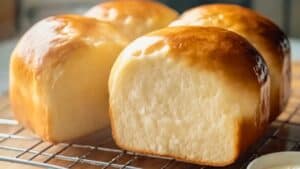
Soft, cloud-like texture. Slightly sweet, buttery flavor. The kind of loaf that turns a basic breakfast into something comforting and worth waking up for.
This milk bread delivers all that and more—without requiring complex techniques or ingredients.
It’s the kind of Chinese food recipe that finds a permanent place in the weekly rotation, no matter how full the cookbook already is.
Why This Milk Bread Stands Out
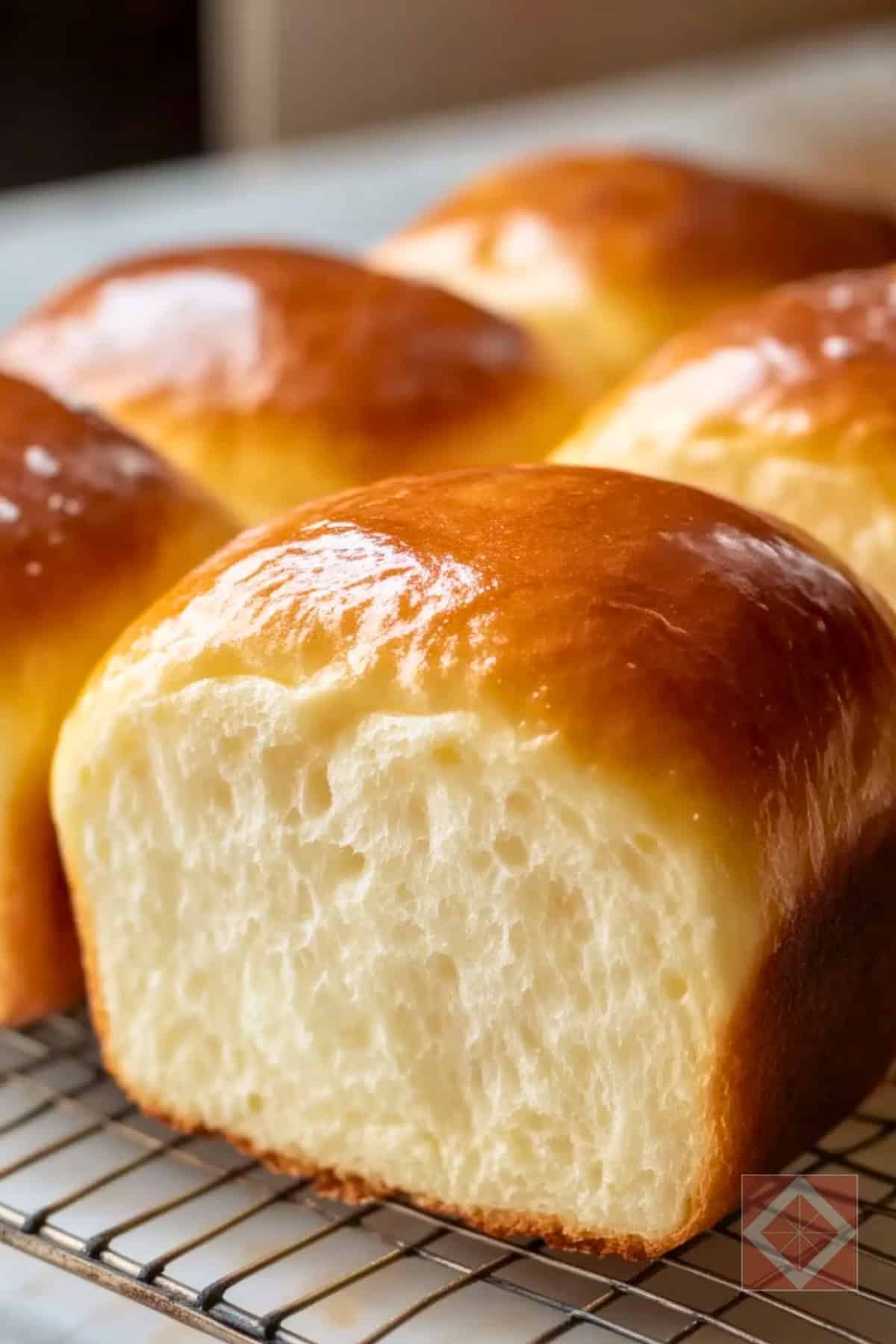
This is not your average homemade loaf. It’s unbelievably tender, with a delicate pull-apart structure that feels more like a pastry than standard sandwich bread. Unlike many traditional Asian-style bread recipes that use tangzhong, this version skips the stovetop paste entirely—making it much more beginner-friendly without losing the signature softness.
The recipe uses common pantry staples but manages to produce a texture that’s surprisingly luxurious. The dough is forgiving and flexible, making it ideal for home bakers of all levels.
The inclusion of heavy cream and whole milk results in a rich flavor and fluffy interior, while a final sugar water glaze gives it that shiny, bakery-style finish.
Ideal for Loaves, Buns, or Meal Prep Ideas
This milk bread dough is versatile enough for different baking formats. It yields either two classic loaves or a batch of 16 pillowy pull-apart buns—perfect for brunch spreads, weekday lunches, or even sliders for gatherings.
The buns can be formed into individual rolls, making this a go-to recipe for entertaining or freezing in advance.
One clever trick: use this dough as a base for other sweet or savory adaptations. Try adding red bean paste for a traditional Chinese twist, or shape it into mini rolls for a family-friendly dinner side.
It’s also perfect for sandwich-style meal prep ideas throughout the week, especially if paired with eggs, ham, or even peanut butter and jam.
What to Expect from the Process
The steps are simple yet satisfying. After mixing the dough—ideally with a stand mixer, though hand-kneading works too—a long knead develops a stretchy, elastic texture.
The first proof takes around 1 to 2 hours, depending on the kitchen temperature.
Once the dough has doubled, it’s time to shape it. If making loaves, each dough piece is rolled into a rectangle, then shaped like a cigar and tucked into the pan seam-side down.
If making buns, divide the dough into smaller pieces, roll them into balls, and place them in round cake pans. Both shapes proof again before baking.
A quick egg wash gives them that golden, glossy crust, and the final step—brushing with sugar water right out of the oven—locks in moisture and adds a hint of sweetness.
Helpful Tips for Best Results
- Always let ingredients come to room temperature before starting. This ensures the dough comes together evenly.
- Avoid over-flouring the dough. If it sticks slightly during kneading, that’s normal. Only add extra flour sparingly.
- To check if the yeast is still active, mix a portion of the warm milk with sugar and yeast and let it sit for 10 minutes. It should foam. If it doesn’t, start over with fresh yeast.
- For even baking, position the rack in the center of the oven and keep an eye on the loaves after the 22-minute mark.
Storage & Serving Ideas
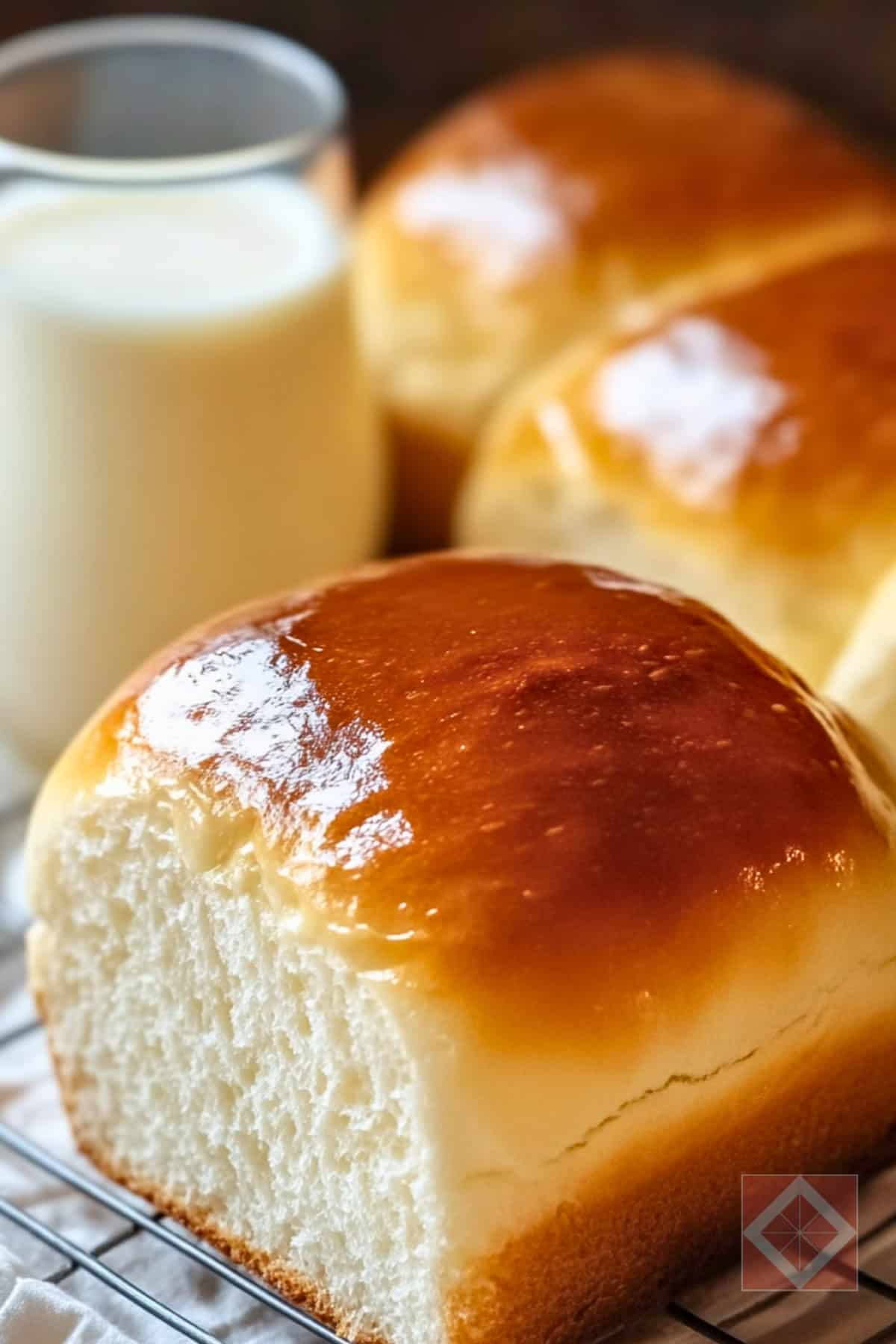
Milk bread tastes best warm, fresh from the oven, but it stores surprisingly well.
Keep loaves or buns in an airtight container at room temperature for up to three days, or refrigerate for four to five. Reheat gently in the microwave or oven to restore its soft texture.
This recipe pairs beautifully with both sweet and savory toppings. Serve it toasted with jam and butter for breakfast, or use it as a base for sandwiches.
It’s also fantastic dipped into soups or served alongside Asian-style mains like braised pork or crispy tofu.
Chinese Milk Bread Recipe
Equipment
- Stand mixer with dough hook (or large mixing bowl and wooden spoon)
- Two 9×5-inch loaf pans or two 9-inch round cake pans
- Rolling Pin
Ingredients
- ⅔ cup heavy cream room temperature
- 1 cup whole milk room temperature
- 1 large egg room temperature
- ⅓ cup sugar
- 4 cups all-purpose flour plus more if needed
- 1 tablespoon active dry yeast or instant yeast
- 1½ teaspoons fine sea salt
- Unsalted butter for greasing pans
Egg Wash:
- 1 egg beaten with 1 tablespoon water
Sugar Water Glaze:
- 2 teaspoons sugar dissolved in 2 teaspoons hot water
Instructions
- Make the Dough: In a stand mixer bowl with the dough hook attached, combine the heavy cream, milk, egg, sugar, flour, yeast, and salt in that order.
- Knead: Set the mixer to the lowest speed to bring the dough together. Once combined, continue mixing at low speed for 15 minutes, pausing to scrape the bowl as needed. The dough should feel slightly tacky. If overly sticky, add extra flour 1 tablespoon at a time until it pulls away from the bowl. (If mixing by hand, stir ingredients in a bowl, then knead for 20 minutes until smooth and stretchy.)
- First Rise: Shape the dough into a ball and place in a bowl covered with a damp towel or overturned plate. Let it rise in a warm area until doubled in size—this will take 1 to 2 hours depending on your kitchen environment. (Tip: a microwave with a mug of hot water creates a great warm space.)
- Degas and Divide: Punch the dough down in the bowl to release air. Butter two 9×5-inch loaf pans (or two 9-inch round pans if making buns). Place the dough on a floured surface and divide it into 6 even portions for loaves (about 180g each) or 16 pieces (about 65–70g each) for buns.
- Shape: For loaves, roll each of the 6 pieces into a 4×8-inch rectangle and roll tightly into a cigar shape. Place 3 cigars seam-side down in each loaf pan. For buns, roll each piece into a ball and arrange 8 per round cake pan, spaced evenly.
- Second Rise: Cover the pans with a towel and let rise again for 1 hour at room temperature.
- Bake: Preheat oven to 350°F and position a rack in the center. Brush risen dough with egg wash. Bake for 22 to 24 minutes, or until tops are golden.
- Finish: Once out of the oven, immediately brush tops with sugar water for shine and a touch of sweetness. Move bread to a wire rack to cool.
Notes
- This bread is especially good served warm.
- You can test yeast activity by warming part of the milk, dissolving some sugar in it, and adding the yeast to bloom. Let sit 10 minutes until foamy before using.

Davin is a jack-of-all-trades but has professional training and experience in various home and garden subjects. He leans on other experts when needed and edits and fact-checks all articles. Also an aspiring cook we he researches and tries all kinds of different food recipes and shares what works best.