
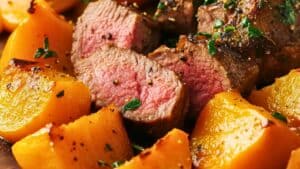
Bison is one of the few lean meats that can pull off a true Italian roast. It cooks fast, absorbs herbs intensely, and stays naturally tender when you control the temperature.
Melted tallow helps form a crisp, aromatic crust, while roasted butternut squash adds the sweet, caramelized balance you’d expect from a rustic Italian kitchen.
The flavors are bold, clean, and surprisingly effortless for a high-protein dinner that looks like you spent hours on it.
The Science Behind Cooking Bison
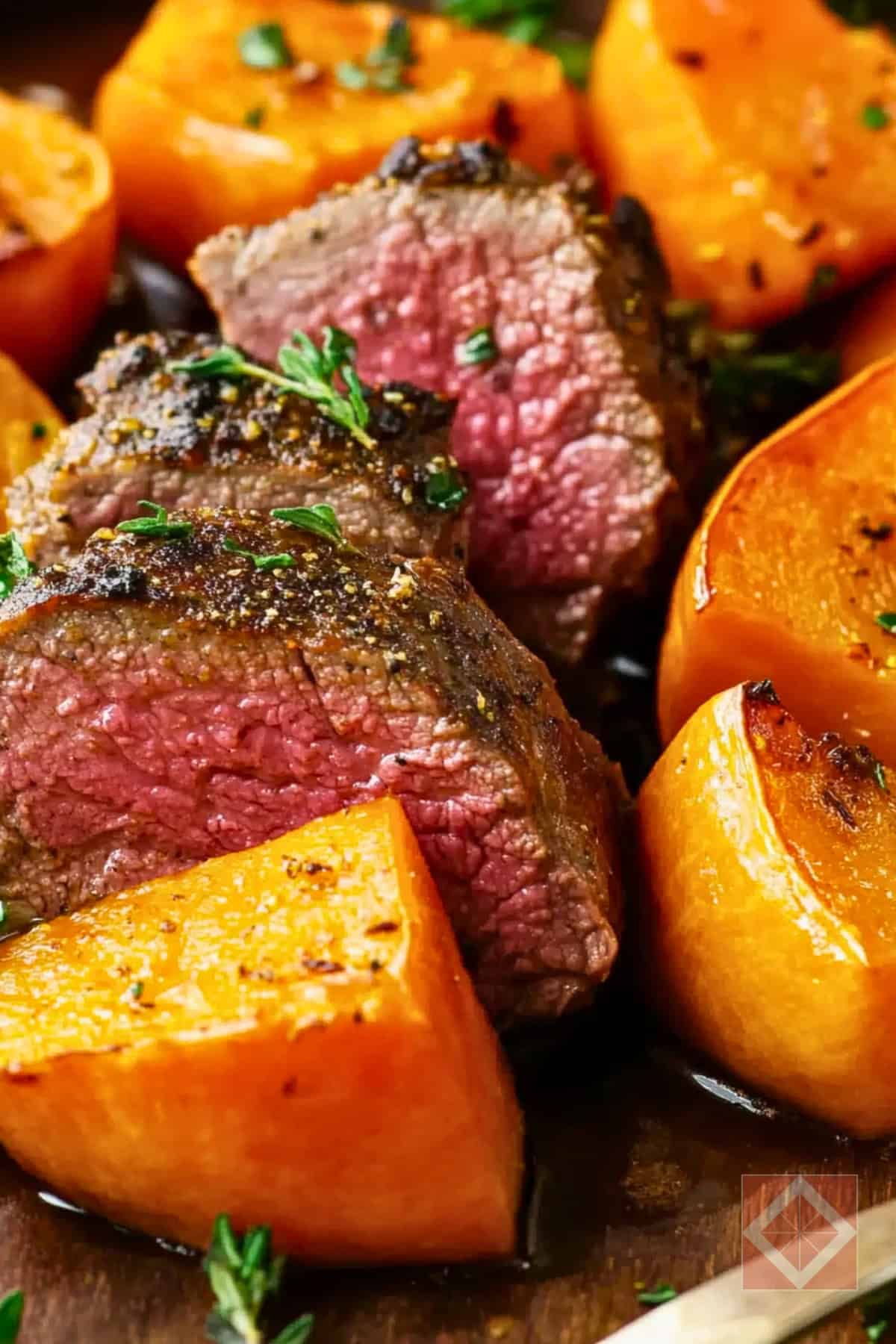
If you’ve only cooked beef roasts, bison behaves differently in a few important ways. Its lower fat content means it heats faster and doesn’t self-baste as much. This is why temperature control matters.
Bison reaches its ideal doneness quickly, and pulling it at the right moment keeps it tender instead of firm.
Bison also maintains a deep red color even when it’s perfectly cooked to medium rare. This is because it contains more myoglobin than beef, the same protein that gives grass-fed meats their vibrant color.
Many home cooks assume this means the meat is underdone, but relying on color leads to overcooking. A thermometer is the only accurate way to know when it’s ready.
Resting the meat is also more important with lean proteins. Without enough intramuscular fat, juices can escape faster when sliced.
A short rest redistributes moisture and keeps the slices juicy.
Why Butternut Squash Belongs on the Plate
Italian kitchens often pair savory roasts with naturally sweet vegetables because sweetness balances herbal, fatty, and umami flavors. Butternut squash fits this pattern perfectly.
When roasted hot, its surface undergoes mild caramelization, deepening both the color and the sweetness. That makes it a perfect contrast to the herb crust on the bison.
Butternut squash also holds its texture well at high heat, which makes it ideal for sheet-pan roasting. It doesn’t collapse or turn watery, and its earthy sweetness brings out the richness of the meat without overwhelming it.
Even if you follow a high-protein or animal-focused way of eating, this is one vegetable that supports the dish rather than diluting it.
Tools That Guarantee Better Results
A roasting rack may seem optional, but it’s one of the easiest ways to elevate a lean roast. It allows heat to circulate evenly so the herb coating crisps rather than steams.
A properly crisp exterior is essential for Italian-style roasts, which rely on textures and crust rather than sauces.
An instant-read thermometer is essential for bison. Because lean meat rises in temperature quickly during the final stages of roasting, accuracy matters more than with beef. A good thermometer prevents the roast from overshooting that ideal medium-rare range.
A sharp slicing knife also makes a surprising difference. Bison muscles are long and dense, and when you slice across the grain with a clean, thin edge, the texture feels more tender.
Even budget-friendly slicing knives can dramatically improve your final presentation.
A Meal That Fits Multiple Eating Styles
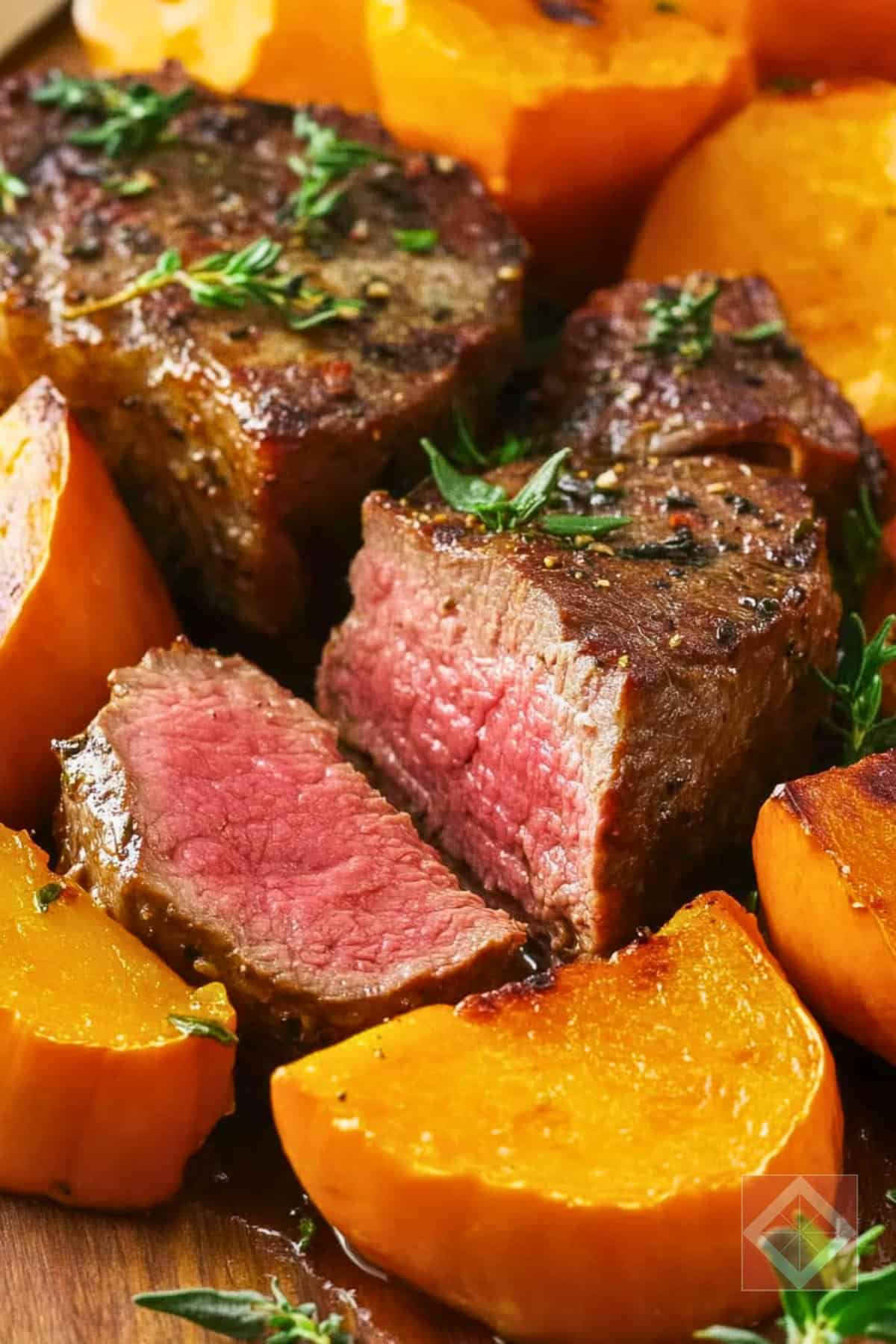
This roast fits naturally into clean, protein-focused eating (think carnivore diet) without sacrificing comfort. It’s hearty but not heavy, flavorful but not fussy.
The Italian herb crust doesn’t rely on flour, sugar, or dairy, which keeps the dish accessible to many diets. If you prefer strict animal-based meals, you can simply skip the squash without changing the main preparation.
As a bonus, bison keeps its moisture better than people expect when stored properly. Slices stay tender for several days and reheat gently without drying out.
It also tastes excellent cold, making it ideal for meal prep plates, salads, and quick lunches.
Classic Italian Flavor With Minimal Effort
The beauty of this dish is how much flavor you get for so little work. The herb mixture does most of the heavy lifting, and the tallow helps lock it in place so it bakes into a fragrant crust.
The squash roasts on a separate pan and finishes while the meat rests. It’s the kind of recipe that feels like a special dinner but fits seamlessly into everyday cooking.
Bison Sirloin Tip Roast with Butternut Squash
Equipment
- Oven-safe meat thermometer
- Roasting pan with rack
- 15 x 10-inch baking pan
Ingredients
For the Roast:
- 3 teaspoons kosher salt
- 2 teaspoons dried thyme crushed
- 1 teaspoon dried oregano crushed
- 1 teaspoon dried basil crushed
- 1 teaspoon dried rosemary
- 2 tablespoons tallow melted
- 1 boneless bison sirloin tip roast 3 to 3½ pounds
For the Squash:
- 1 butternut squash about 1½ to 2 pounds, peeled, seeded, and cut into ¾-inch pieces
- 2 tablespoons butter melted
Instructions
- Preheat your oven to 375°F. In a small bowl, mix together 2 teaspoons of salt, 1 teaspoon of thyme, oregano, basil, and rosemary. Combine these herbs with the melted tallow until thoroughly blended. Rub the herb mixture evenly over the surface of the bison roast.
- Set the roast on a rack inside a shallow roasting pan. Insert an oven-safe meat thermometer into the center of the roast to monitor doneness.
- Place the roast in the oven and cook uncovered for 15 minutes. Lower the oven temperature to 300°F and continue roasting until the internal temperature reaches 135°F for medium-rare, which typically takes between 60 to 65 minutes. Remove the roast from the oven, cover it with foil, and allow it to rest for 15 minutes. The internal temperature will rise to around 145°F as it rests. During this time, increase the oven temperature to 450°F.
- While the meat is resting, spread the butternut squash in a 15 x 10-inch baking pan. Drizzle the melted butter over the squash and sprinkle with the remaining 1 teaspoon of salt and 1 teaspoon of thyme. Toss everything together to coat the squash evenly.
- Roast the squash in the oven, stirring once during cooking, until it becomes tender and lightly golden, about 20 minutes.
- Once rested, slice the bison thinly against the grain. Serve with the roasted squash on the side.
- Any leftovers can be stored tightly covered in the refrigerator for up to 4 days.
Notes
- Using a meat thermometer is essential when cooking bison, as it is leaner than beef and can dry out if overcooked.
- The butternut squash adds a slight sweetness that balances the savory herb coating of the bison.
- This dish aligns with carnivore diet principles by emphasizing quality animal protein and fats while incorporating minimal, complementary carbs from squash.
Nutrition

Davin is a jack-of-all-trades but has professional training and experience in various home and garden subjects. He leans on other experts when needed and edits and fact-checks all articles. Also an aspiring cook we he researches and tries all kinds of different food recipes and shares what works best.