
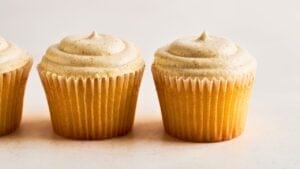
I made vanilla cupcakes seven times before they turned out right.
Some batches were dense like cornbread. Some had oily bottoms that soaked through the paper liners. One batch sank in the middle and I threw them all away.
The problem wasn’t me. It was understanding what actually makes cupcakes light instead of heavy.
Why Vanilla Cupcakes Are Harder Than They Should Be
Vanilla is a simple flavor. There’s nowhere to hide mistakes.
If the crumb is too tight, you notice. If they’re greasy, you notice. If the texture is off by even a little bit, it shows up immediately.
That’s why a truly good vanilla cupcake recipe is hard to find.
What I Learned From Other People’s Failures
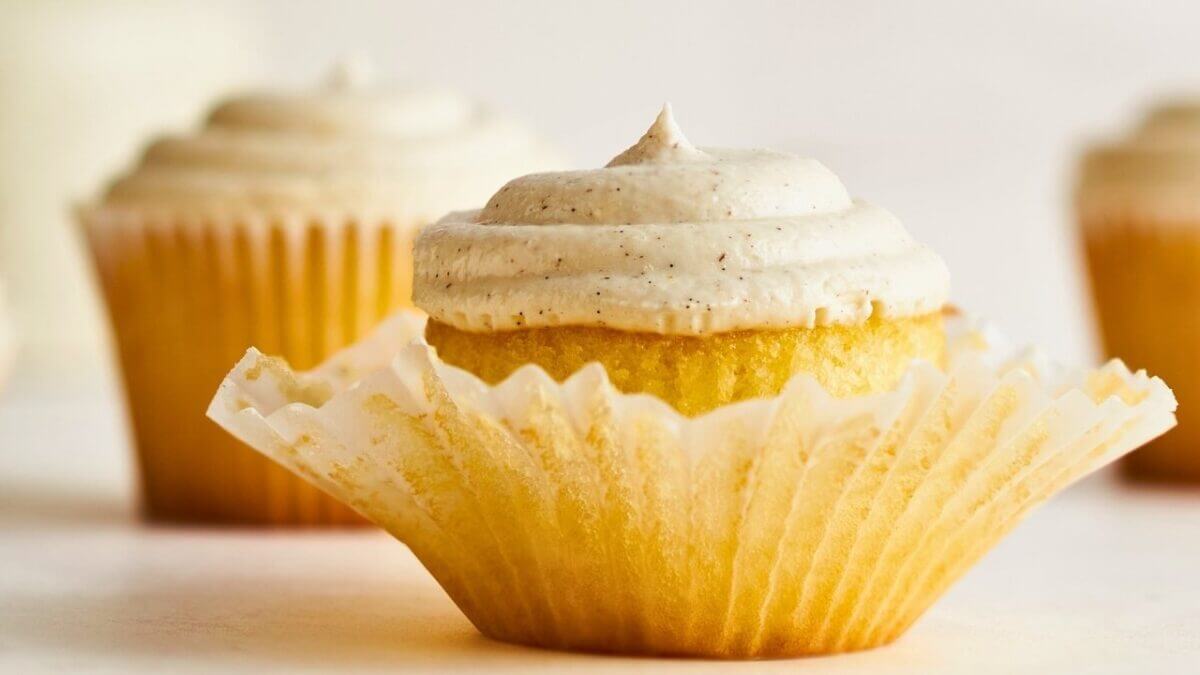
I started reading through comments on popular cupcake recipes. Hundreds of people were having the same problems I was.
Too dense. Oily liners. Not enough flavor. Sinking in the middle.
The issues weren’t random. They came from specific things in the method and the ratios.
The Fix for Dense, Cornbread Texture
Most quick recipes use melted butter because it’s easier.
Melted butter gives you a tighter, more compact crumb. It’s fine for muffins. For cupcakes, it makes them too heavy.
The fix is creaming softened butter with sugar first. You beat them together for three to four minutes until the mixture turns pale and fluffy.
That beating traps tiny air pockets in the batter. Those air pockets are what make cupcakes rise light and tender instead of dense and tight.
It takes a few extra minutes. The difference is obvious when you bite into them.
The Fix for Oily Bottoms
Some recipes use too much butter for the amount of flour. The fat has nowhere to go so it pools at the bottom and makes the liners greasy.
The fix is using less butter but a richer liquid. Half a cup of butter with heavy whipping cream instead of milk gives you moisture without grease.
Someone named Tessa mentioned in a comment section that she tried heavy cream instead of milk and called them the best cupcakes she’d ever made. She was right.
The Upgrade That Changes Everything
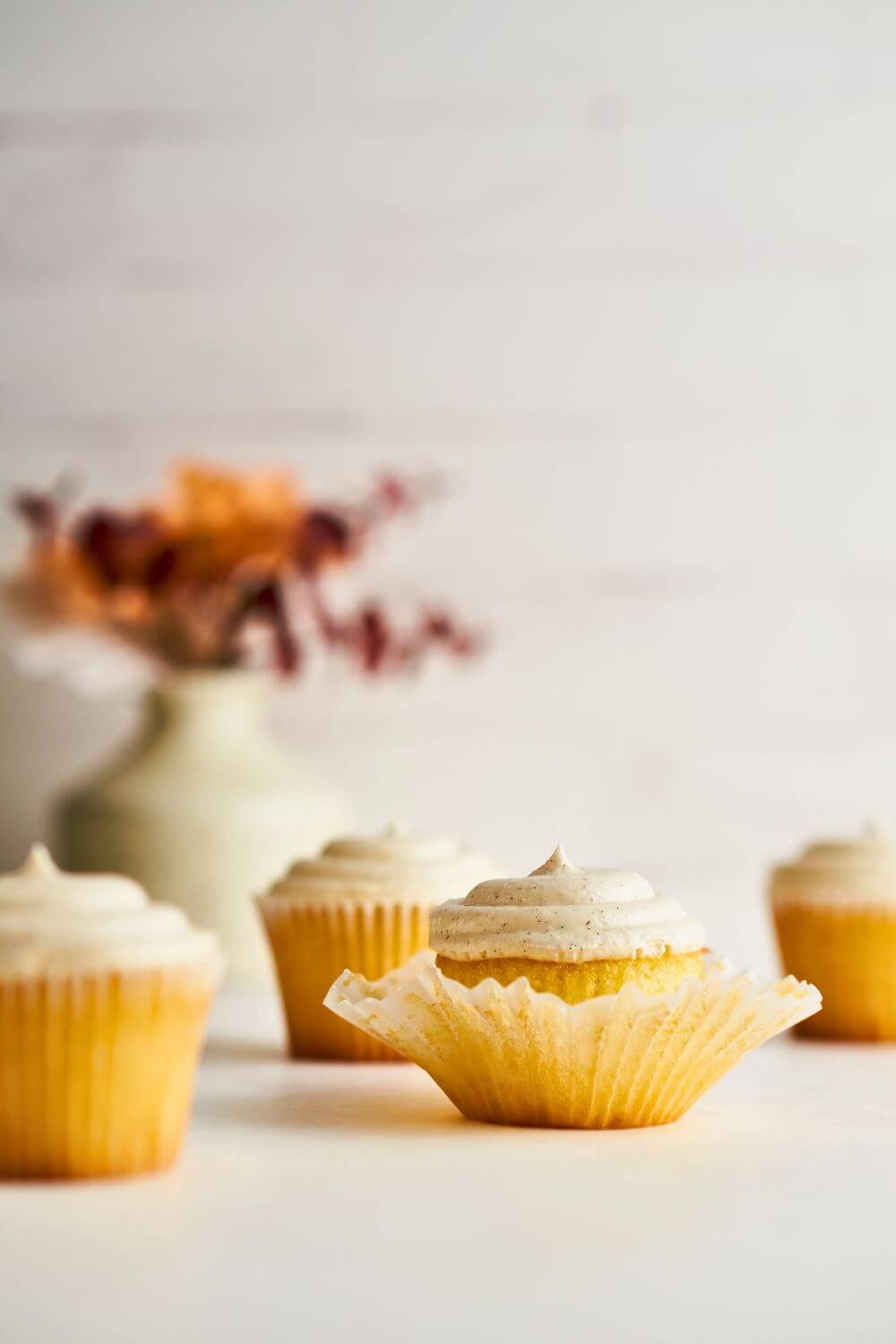
Standard vanilla extract works fine. But if you want cupcakes that taste expensive and look professional, you need real vanilla bean.
Not just for the black specks, though those are nice. Real vanilla bean has a depth of flavor that extract can’t match.
The Sugar Rub Technique
Most people scrape vanilla bean seeds into the wet ingredients and call it done.
That doesn’t work as well as you’d think. The fat in the batter can coat the seeds and mute the flavor.
The better method is rubbing the vanilla seeds into the sugar before you start baking.
Put your granulated sugar in a small bowl. Scrape the seeds from one vanilla bean right onto the sugar. Use your fingertips to rub the vanilla into the sugar for about a minute.
The sugar will turn the color of wet sand and smell incredible. The friction releases the vanilla oils directly into the sugar crystals. When you cream that sugar with butter, the vanilla flavor gets baked into the structure of the cake itself.
You can also use one tablespoon of vanilla bean paste instead of a whole bean. Same technique, easier to measure.
The Actual Recipe
Ingredients
Dry ingredients:
- 1 ½ cups cake flour (see notes for substitute)
- 1 ½ tsp baking powder
- ¼ tsp fine sea salt
Wet ingredients:
- ½ cup unsalted butter, softened to room temperature
- ¾ cup granulated sugar (vanilla-rubbed if using bean)
- 2 large eggs, room temperature
- 2 tsp vanilla extract (omit if using vanilla bean)
- ½ cup heavy whipping cream, room temperature
Instructions
Preheat oven to 350°F. Line a standard muffin tin with 12 cupcake liners.
If using vanilla bean, prepare the sugar first. Scrape seeds from one vanilla bean (or use 1 tablespoon vanilla bean paste). Add to the sugar in a small bowl. Rub the seeds into the sugar with your fingers for one minute until fragrant. Set aside.
Sift the dry ingredients. Cake flour, baking powder, salt. Sift them together into a bowl and set aside.
Do not skip sifting. It’s what keeps the texture delicate instead of compact.
Cream butter and sugar. Put softened butter and sugar (vanilla sugar if using bean) in a large bowl. Beat on medium high speed for three to four minutes.
At one minute it’s still grainy. At three minutes it’s pale, almost white, and fluffy. Scrape down the bowl halfway through.
This step is what makes them light. Don’t rush it.
Add eggs one at a time. Beat well after each addition. Scrape the sides of the bowl. Beat in the vanilla extract (if using) and heavy cream until just combined.
The mixture might look slightly curdled. That’s okay. It’ll come together.
Add dry ingredients in two batches. Turn the mixer to low. Add half the flour mixture. Mix until almost incorporated but you still see white streaks. Add the second half. Mix until you still see a few flour streaks, then stop the mixer.
Finish by hand. Take the bowl off the mixer. Use a rubber spatula to gently fold the batter, scraping the bottom of the bowl, just until the last flour streaks disappear.
Stop as soon as you don’t see dry flour. Overmixing develops gluten and makes cupcakes tough.
Fill liners two thirds full. You can use a piping bag or a ziplock bag with the corner cut off to fill them cleanly. Less mess than spooning.
Optional: sprinkle a tiny pinch of sugar on top of each cupcake before baking. It creates a thin sweet crust under the frosting.
Bake for 16 to 18 minutes. The tops should spring back when you touch them gently. A toothpick should come out clean or with just a few moist crumbs.
Here’s important: don’t open the oven door until at least 12 minutes have passed. Opening it early lets cold air in and can make them sink.
Let them sit in the pan for exactly five minutes. Then move them immediately to a wire rack to cool completely.
Leaving them in the hot pan too long makes the bottoms soggy. Moving them too early and they might fall apart.
The Frosting
This vanilla buttercream uses salted butter to cut the sweetness. Most buttercream frosting is so sweet it makes your teeth hurt. This one tastes balanced.
Ingredients
- 1 cup salted butter, softened
- 3 to 3 ½ cups powdered sugar, sifted
- 2 tablespoons heavy cream
- 1 tablespoon vanilla extract (or 1 teaspoon vanilla bean paste for specks)
Instructions
Whip the softened butter alone on high speed for five minutes until it’s nearly white and doubled in volume.
Add powdered sugar in two batches, mixing on low until incorporated.
Add heavy cream and vanilla. Increase speed to high and whip for another two to three minutes until light and airy.
The long whipping time is what makes it smooth and fluffy instead of grainy and dense.
What Makes These Actually Work
Room temperature ingredients are not optional. Cold eggs don’t incorporate properly. Cold cream can make the butter seize up. Cold butter won’t cream right.
Take everything out of the fridge 30 minutes before you start. Or put eggs in warm water for five minutes if you forget.
Cake flour matters. It has less protein than all-purpose flour. Less protein means less gluten develops. Less gluten means softer, more tender cupcakes.
If you don’t have cake flour, measure 1 ½ cups all-purpose flour. Remove 2 tablespoons and replace them with 2 tablespoons cornstarch. Sift the mixture twice before using it.
The stopping point when mixing is critical. When you add the flour, stop while you still see streaks. Finish by hand. This is the difference between light cupcakes and dense ones.
How to Frost Them
You can spread frosting with a knife, but a piping bag looks better and is actually easier.
Fill a piping bag with frosting. Use a large star tip or round tip. Hold the bag perpendicular to the cupcake, about half an inch above the surface.
Start squeezing at the outer edge. Move in a circular motion toward the center while keeping steady pressure. When you reach the center, stop squeezing and give a small twist to cut off the frosting.
The first few won’t look perfect. By the fifth one you’ll have it down.
The Mistakes I Used to Make
I thought vanilla cupcakes were supposed to be plain. Just a base for frosting.
Then I made them with real vanilla bean and realized good vanilla cupcakes taste like vanilla. Rich, buttery, with actual depth of flavor instead of just sweetness.
That comes from using quality vanilla, whether extract or bean. And from not skimping on the butter or cream.
The second mistake was opening the oven too early. I’d get impatient and check at 10 minutes. They’d deflate and never quite recover.
Now I wait until at least three quarters of the baking time before I even think about opening the door.
The third mistake was not letting the butter and sugar cream long enough. I’d stop at one or two minutes thinking it was good enough.
It’s not. The full three to four minutes makes a real difference in the final texture.
When to Use Vanilla Bean vs Extract
Use extract for everyday cupcakes, birthday parties, casual desserts. It’s less expensive and still tastes good.
Use vanilla bean for weddings, special occasions, or when you want to impress someone. The black specks look professional. The flavor is noticeably richer.
Vanilla bean paste splits the difference. Easier to use than a whole bean, better flavor than extract, and you still get the specks.
Storage
Store frosted cupcakes in an airtight container at room temperature for up to two days. In the fridge they’ll last four days.
If you refrigerate them, let them come to room temperature before eating. Cold cupcakes don’t taste as good and the texture is off.
You can freeze unfrosted cupcakes for up to a month. Thaw them on the counter and frost right before serving.
What Actually Makes the Biggest Difference
The creaming method. That’s the single thing that changed everything for me.
Beating butter and sugar until pale and fluffy traps air in the batter. Those tiny air pockets expand in the oven and create a light, tender crumb.
Melted butter doesn’t do that. You can make decent cupcakes with melted butter, but they’ll never be as light.
The other thing is not overmixing once you add the flour. Gluten develops when you stir. Too much gluten makes baked goods tough and chewy.
For cupcakes you want just enough gluten to hold them together but not so much that they’re dense.
That’s why you stop the mixer early and finish folding by hand.
Why These Are Worth the Extra Steps
Most vanilla cupcake recipes take shortcuts. Melted butter because it’s faster. Regular milk because it’s cheaper. Minimal mixing time because people are impatient.
Those shortcuts give you okay cupcakes. Dense, a little greasy, nothing special.
The extra few minutes of creaming butter and sugar, the upgrade to heavy cream, the careful folding at the end—those things turn okay cupcakes into bakery-quality ones.
The kind people ask for the recipe for. The kind that taste expensive even though they’re not.

Davin is a jack-of-all-trades but has professional training and experience in various home and garden subjects. He leans on other experts when needed and edits and fact-checks all articles. Also an aspiring cook we he researches and tries all kinds of different food recipes and shares what works best.