
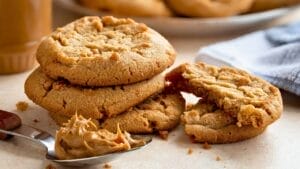
most peanut butter cookie recipes lie to you. they promise soft chewy cookies and then you pull them out the oven and theyre dry crumbly sad little disks that taste like sandy peanut dust.
ive been there so many times i almost gave up on peanut butter cookies entirely. but heres the thing – getting that perfect soft chewy texture isnt hard you just need to understand what actually makes cookies chewy instead of following recipes that dont explain anything.
this recipe uses a specific ratio of ingredients and one crucial baking technique that guarantees soft chewy centers every single time,no more disappointment.
why this recipe works (the science of chew)
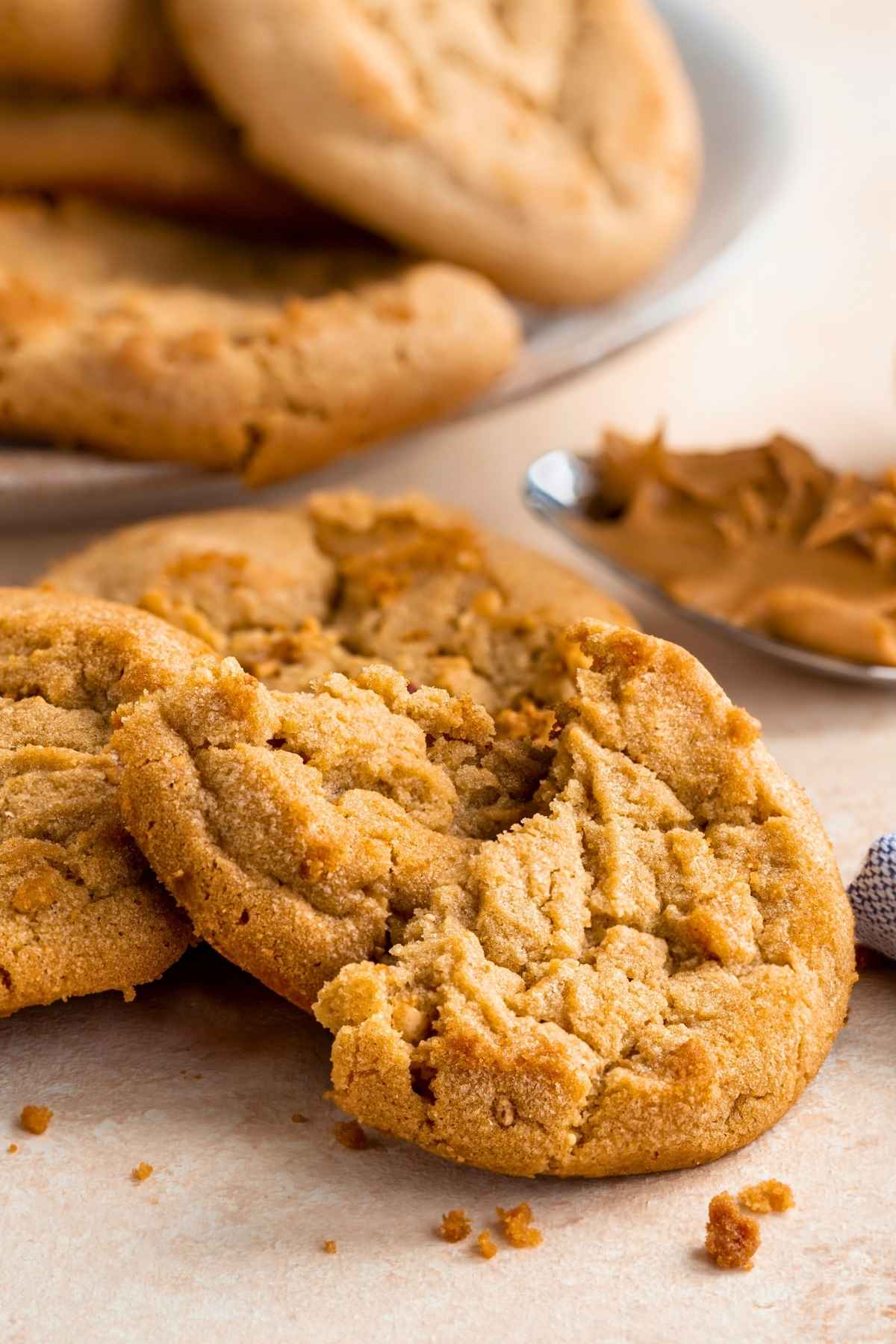
theres actual reasons why some cookies turn out chewy and others dont. once you understand these three things youll never bake a dry peanut butter cookie again.
brown sugar is your friend
were using way more brown sugar than white sugar here and thats on purpose. brown sugar contains molasses which adds moisture and acidity that creates a softer chewier texture than white sugar alone.
white sugar makes cookies crispy and crunchy, brown sugar makes them soft and chewy. so if you want chewy cookies you need more brown sugar, its that simple.
most recipes do like 50/50 or even more white sugar which is why they turn out dry.
you need commercial peanut butter (not the natural stuff)
okay so i know natural peanut butter seems healthier and better but it will absolutely wreck these cookies, the kind that separates with oil on top doesnt have stabilizers and will make your cookies greasy and crumbly at the same time.
stick to creamy no stir brands like jif or skippy for consistent results, the stabilizers in commercial peanut butter actually help the cookie structure and prevent them from falling apart.
i tested this recipe with both and natural peanut butter was a disaster every time.
carryover cooking is the secret
this is the most important thing and where most people mess up. you have to pull these cookies from the oven when they look underdone, like almost raw in the center.
they finish cooking on the hot baking sheet after you take them out. if you bake them until they look done in the oven theyll be overdone and dry when they cool.
the centers should still look soft and slightly puffed when you pull them out,they’ll flatten and set as they cool. trust the process even though every instinct tells you to leave them in longer.
ingredient notes and substitutions
butter: needs to be softened to room temperature not melted, melted butter causes cookies to spread into thin greasy disks. leave it out for like an hour before baking or microwave it for 5 second bursts until soft but not melted.
peanut butter: gonna say it again – creamy no stir commercial brands only. jif skippy or peter pan all work great, natural peanut butter will ruin the texture.
brown sugar: we use mostly brown sugar (3/4 cup brown to 1/4 cup white) for maximum chewiness.
flour: measure correctly using the spoon and level method. scooping directly from the bag packs too much flour and makes the dough heavy and dry, spoon flour into your measuring cup then level it off with a knife.
egg: just one whole egg plus one egg yolk. the extra yolk adds richness and chewiness without making them cakey.
pro tips for success
dont skip the chill
chilling the dough for 30 minutes solidifies the butter which prevents the cookies from spreading too much in the oven, this helps them stay thick and chewy instead of flat and crispy.
i know waiting sucks but its worth it. put the dough in the fridge while you clean up your kitchen or watch an episode of something.
the fork press technique
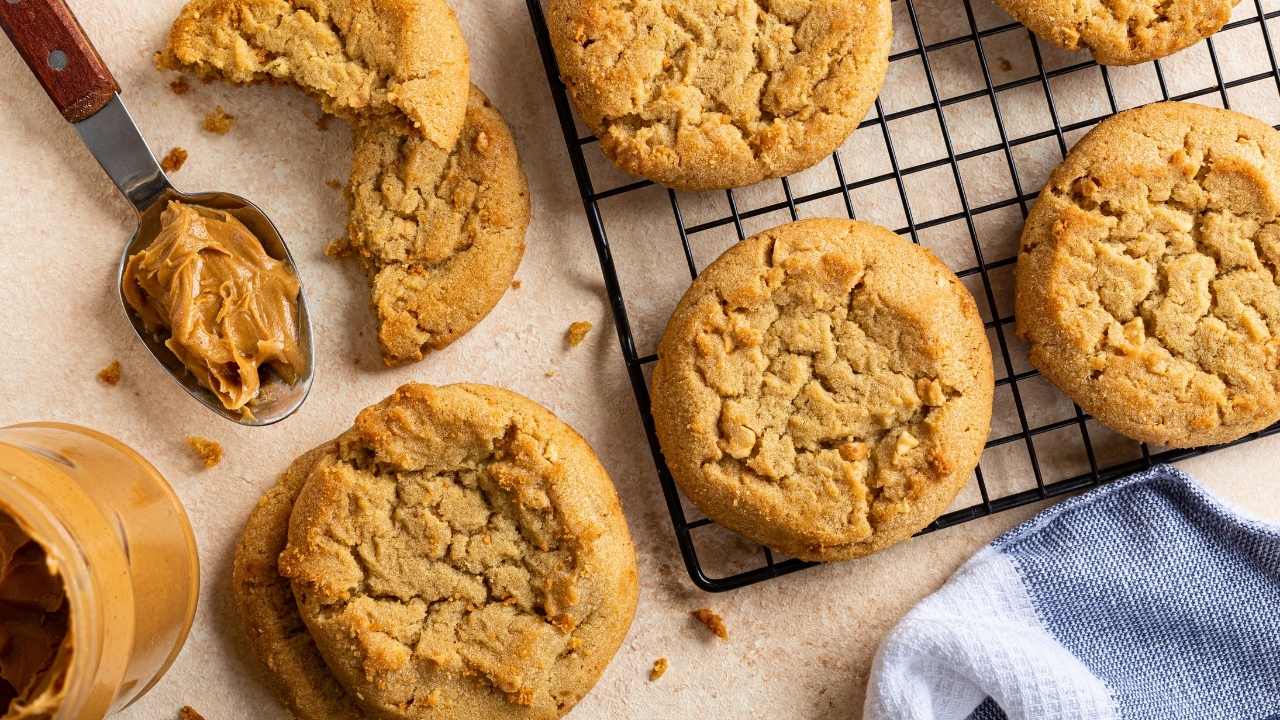
that classic crosshatch pattern isnt just for looks, it helps the dense peanut butter dough bake evenly. without it the centers stay raw while the edges burn.
press down with a fork in one direction then turn 90 degrees and press again, but dont press too flat if you want thicker cookies. just enough to flatten them to about 1/2 inch thick.
storage hack for keeping them soft
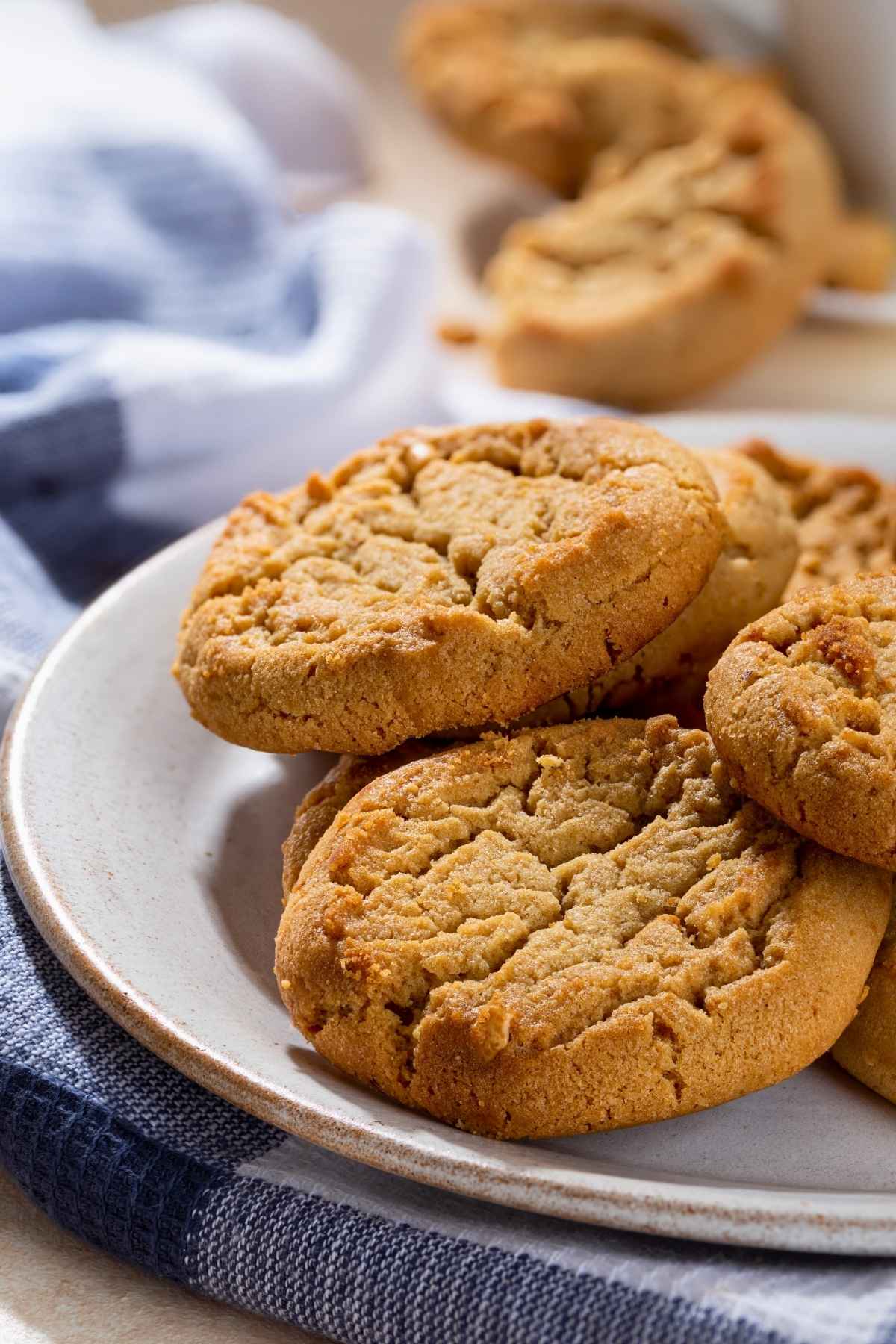
store cooled cookies in an airtight container with a slice of sandwich bread, the cookies will absorb moisture from the bread and stay soft for days.
replace the bread slice every 2-3 days if its getting hard. this trick works for any cookies you want to keep soft.
freezing and make ahead instructions
freezing dough:
scoop dough into balls press with the fork crosshatch and freeze solid on a baking sheet. once frozen transfer to a freezer bag for up to 3 months.
bake from frozen just add 1-2 minutes to the bake time. no need to thaw which makes this perfect for when you want fresh cookies without making a whole batch.
freezing baked cookies:
let them cool completely then freeze in an airtight container for up to a month, thaw at room temperature for like 20 minutes before eating.
honestly though these never last long enough to freeze in my house.
the actual baking process
oven temp: 350°F, no hotter or theyll brown too fast on the outside before the inside cooks.
baking time: 10-12 minutes for chewy cookies. theyll look underdone when you pull them out with soft puffy centers,this is correct. let them cool on the baking sheet for 5 minutes before moving to a wire rack.
spacing: leave 2 inches between cookies cause they do spread a little even with chilled dough.
pan matters: use light colored baking sheets. dark pans absorb more heat and will overbake the bottoms before the tops are done.
troubleshooting common problems
cookies turned out dry and crumbly:
- you overbaked them (pull them earlier next time when they still look slightly underdone)
- you used natural peanut butter instead of commercial
- you packed too much flour into your measuring cups
cookies spread too flat:
- you didnt chill the dough
- your butter was too soft or melted
- oven temp is too low (get an oven thermometer to check)
cookies are greasy:
- you used natural peanut butter
- you overmixed the dough after adding flour
centers are raw:
- you didnt press them flat enough with the fork
- oven temp is too high (again get a thermometer)
why these are better than other recipes
most peanut butter cookie recipes use equal parts white and brown sugar which makes them crunchy not chewy, and they tell you to bake until golden brown which is way too long.
this recipe fixes both those problems with more brown sugar and pulling them early. the commercial peanut butter requirement is something a lot of recipes dont mention and then people wonder why their cookies failed.
the extra egg yolk and chilling step arent in most basic recipes either but they make a huge difference in final texture.
the whole secret
chewy peanut butter cookies arent hard you just need the right ratio of ingredients and the confidence to pull them out when they still look underdone,thats literally the whole secret.
once you nail that carryover cooking thing youll never go back to dry crumbly peanut butter cookies again. the first time you bite into one thats actually soft and chewy in the center youll understand why this recipe is worth following exactly.
make sure you use commercial peanut butter chill the dough and pull them early. those three things are non negotiable if you want the texture right.
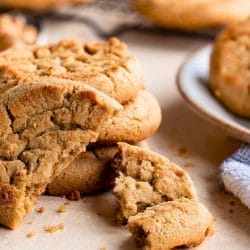
Chewy Peanut Butter Cookies
Equipment
- Baking Sheets (Light-colored recommended to prevent over-browning)
- Parchment paper
- electric hand mixer or stand mixer
- Mixing bowls
- Measuring cups/spoons
- Cookie Scoop (Size #40 or 1.5 Tablespoon works best)
- Wire cooling rack
Ingredients
- 1/2 cup 1 stick unsalted butter, softened to room temperature
- 3/4 cup creamy peanut butter commercial style like Jif/Skippy recommended
- 3/4 cup packed light brown sugar
- 1/4 cup granulated white sugar
- 1 large egg room temperature
- 1 1/2 tsp pure vanilla extract
- 1 1/3 cups all-purpose flour spoon & leveled
- 3/4 tsp baking soda
- 1/2 tsp baking powder
- 1/4 tsp sea salt optional: flaky sea salt for topping
Instructions
- Cream: In a large bowl, beat softened butter, peanut butter, brown sugar, and white sugar on medium-high speed until light and fluffy (2-3 mins).
- Combine: Beat in egg and vanilla until just combined.
- Mix Dry: In a separate bowl, whisk flour, baking soda, baking powder, and salt.
- Make Dough: Gradually add dry ingredients to wet, mixing on low just until combined. Do not overmix.
- Chill: Cover and refrigerate dough for at least 30 minutes.
- Prep: Preheat oven to 350°F (175°C). Line baking sheets with parchment.
- Shape: Scoop 1.5 Tbsp balls of dough, roll smooth, and place 2 inches apart.
- Pattern: Gently press a crisscross pattern with a fork. Optional: sprinkle with flaky salt.
- Bake: Bake 8-10 mins. Pull when edges are barely set and centers look soft/underbaked.
- Cool: Let sit on the hot baking sheet for 10 mins to finish setting, then move to a wire rack.
Notes
Nutrition

Davin is a jack-of-all-trades but has professional training and experience in various home and garden subjects. He leans on other experts when needed and edits and fact-checks all articles. Also an aspiring cook we he researches and tries all kinds of different food recipes and shares what works best.