
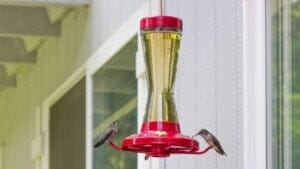
The first time a hummingbird shows up at a feeder you put out, it feels a little like magic. Then it shows up again the next day. Then five more start fighting over the perches.
And suddenly you’re the person who makes hummingbird food twice a week and watches them from the kitchen window like a small, slightly obsessed wildlife reporter.
Here’s the thing nobody really tells you: the nectar you make at home is better for them than anything you buy in a bottle. It’s also cheaper, faster, and uses two ingredients you already own.
No red dye, no preservatives, no mystery powders. Just sugar and water in the ratio that matches the wildflowers they evolved to drink from.
This is the recipe I keep coming back to, the science behind the ratio, and the small handful of things that actually matter once your feeder is up.
The Recipe (4 Parts Water to 1 Part White Sugar)
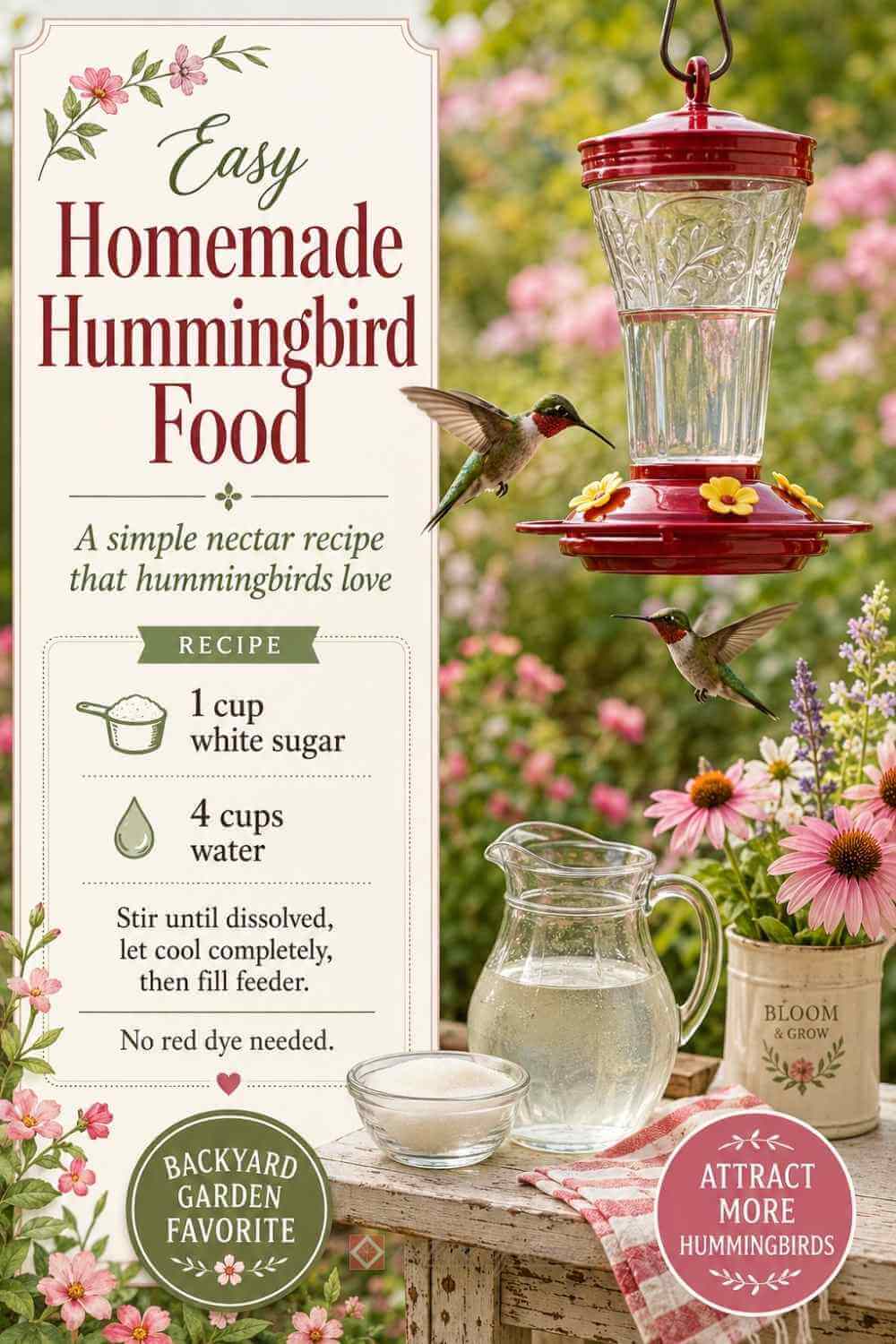
Makes about 4 cups of nectar — enough to fill most feeders 1-2 times.
Ingredients:
- 4 cups water (tap is fine in most areas — see note below)
- 1 cup plain white granulated sugar
That’s it. No food coloring. No honey. No brown sugar. No “natural” sugar substitutes. Just regular white sugar and water in a 4:1 ratio by volume.
Instructions:
- Bring the 4 cups of water to a gentle boil in a saucepan.
- Remove from heat. Stir in the 1 cup of sugar until it’s fully dissolved — usually 30 seconds of stirring.
- Let the nectar cool completely to room temperature before you fill your feeder. Pouring warm sugar water into a glass feeder can crack it, and warm nectar at the feeder spoils faster.
- Fill your feeder. Refrigerate any leftover nectar in a clean glass jar for up to 2 weeks.
Scaling: the ratio is what matters, not the volume. 1 cup water + ¼ cup sugar for a small batch. 8 cups water + 2 cups sugar for a big one.
As long as you stay 4:1, you’re matching what flowers naturally produce.
Why 4:1 — A Quick Bit of Hummingbird Science
This isn’t a ratio someone made up. Researchers have measured the sugar content of the wildflowers hummingbirds prefer — bee balm, salvia, trumpet vine, columbine — and the nectar in those flowers averages around 20-25% sugar.
A 4:1 water-to-sugar mix lands almost exactly in that range. It’s the concentration their bodies are built to process.
Stronger ratios (3:1, or the syrupy stuff you sometimes see suggested online) aren’t a treat — they’re harder on a hummingbird’s kidneys, which have to work to filter out the excess sugar.
Weaker ratios (5:1, 6:1) don’t give them enough calories to justify the trip. Tiny birds with the fastest metabolism on earth can’t afford a bad ROI on a meal.
Stick to 4:1. They know.
 For tips on when to hang your feeder, my “6-Steps for Perfectly Timing” post might be useful.
Do You Have to Boil the Water?
Short answer: not really. Long answer: it depends what you’re solving for.
Boiling does two useful things — it dissolves the sugar faster, and it kills any microbes already in your tap water. But the nectar is going to be exposed to airborne yeast and bacteria the moment your feeder goes outside, so boiled nectar doesn’t actually stay fresh longer once it’s in the feeder.
The honest practical answer:
- If you boil: the sugar dissolves in seconds and the cooled nectar stores cleaner in the fridge.
- If you don’t: room-temperature tap water with vigorous stirring will dissolve the sugar eventually. Some people use warm tap water as a middle path.
Either way is fine. I boil because it’s faster and the nectar keeps better in the fridge between feeder refills.
Why No Red Food Coloring (This Part Matters)
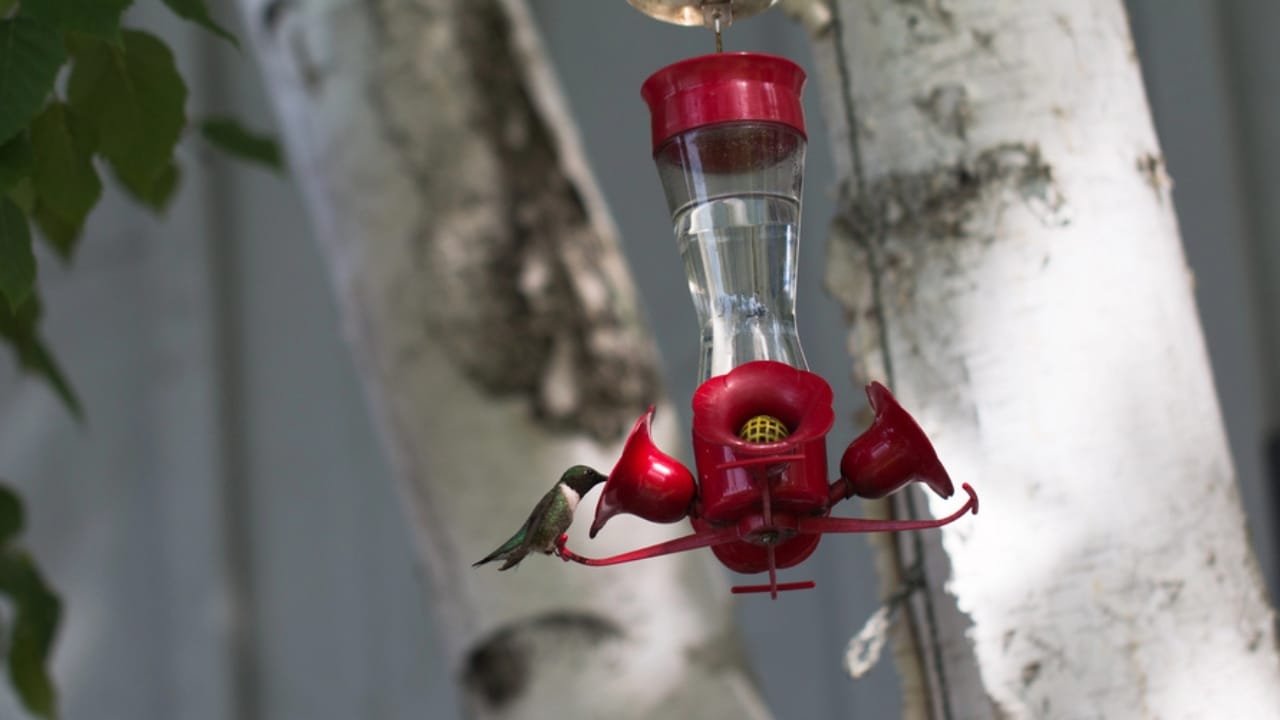
You’ll see red nectar for sale at every hardware store. Skip it.
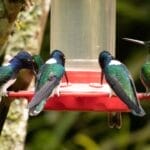
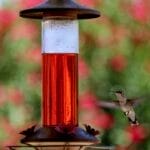
Red dye does nothing helpful — hummingbirds are drawn to your feeder, not the liquid inside it. Most feeders already have red plastic flowers or red glass, which is plenty of signal.
The dye, on the other hand, may be harmful. There’s no good evidence it’s safe for a bird that drinks half its body weight in sugar water every day, and there’s some suggestive evidence (mostly from rehabbers seeing health issues in heavily dye-fed populations) that it isn’t.
Audubon, Cornell, and every serious bird organization recommend clear nectar. That’s good enough for me.
 For more on keeping your nectar fresh, see my roundup on “Changing Hummingbird Sugar Water Regularly.”
How Often to Change the Nectar
This is where most well-meaning hummingbird hosts go wrong. Sugar water spoils, and warm sugar water spoils fast.
A cloudy or fermented feeder isn’t just unappetizing — it can grow mold that genuinely harms the birds.
Rough guide, by temperature:
- Under 70°F: change every 5-7 days
- 70-80°F: change every 3-4 days
- 80-90°F: change every 2 days
- Over 90°F or full sun: change every day
If the nectar looks cloudy, has black specks, or smells fermented — change it immediately regardless of how recent the fill was.
Rinse the feeder with hot water (no soap, no bleach for routine cleaning) and a bottle brush before refilling.
 For more on why red nectar is a bad idea, see my roundup on the “7 Perils of Feeding Red Nectar.”
Why Hummingbirds Aren’t Coming to Your Feeder (Yet)
If your feeder’s been up a week and nothing has shown up, don’t panic. The most common reasons, in order:
- It’s early in the season for your area. Hummingbirds migrate north on a roughly predictable schedule. In the upper Midwest and northern states, that’s mid-to-late May. In the South, March-April. Patience.
- They haven’t found you yet. A single feeder in a new spot can take 2-3 weeks to be discovered. Once one bird finds it, the rest follow.
- Your feeder is hidden. Hummingbirds find feeders by sight from a distance. Hang yours where it’s visible from the air — near a tree they can perch in, but not buried in foliage.
- There’s a better food source nearby. If your neighbor has a yard full of bee balm and you don’t, that’s the competition.
- The nectar’s been out too long. They’ll skip a feeder with spoiled nectar and remember to avoid it.
Pair the feeder with nectar-rich plants — bee balm, salvia, cardinal flower, trumpet honeysuckle, columbine — and the feeder becomes the shortcut to a yard they want to be in anyway.
A Few Things I’ve Learned Hosting Hummingbirds
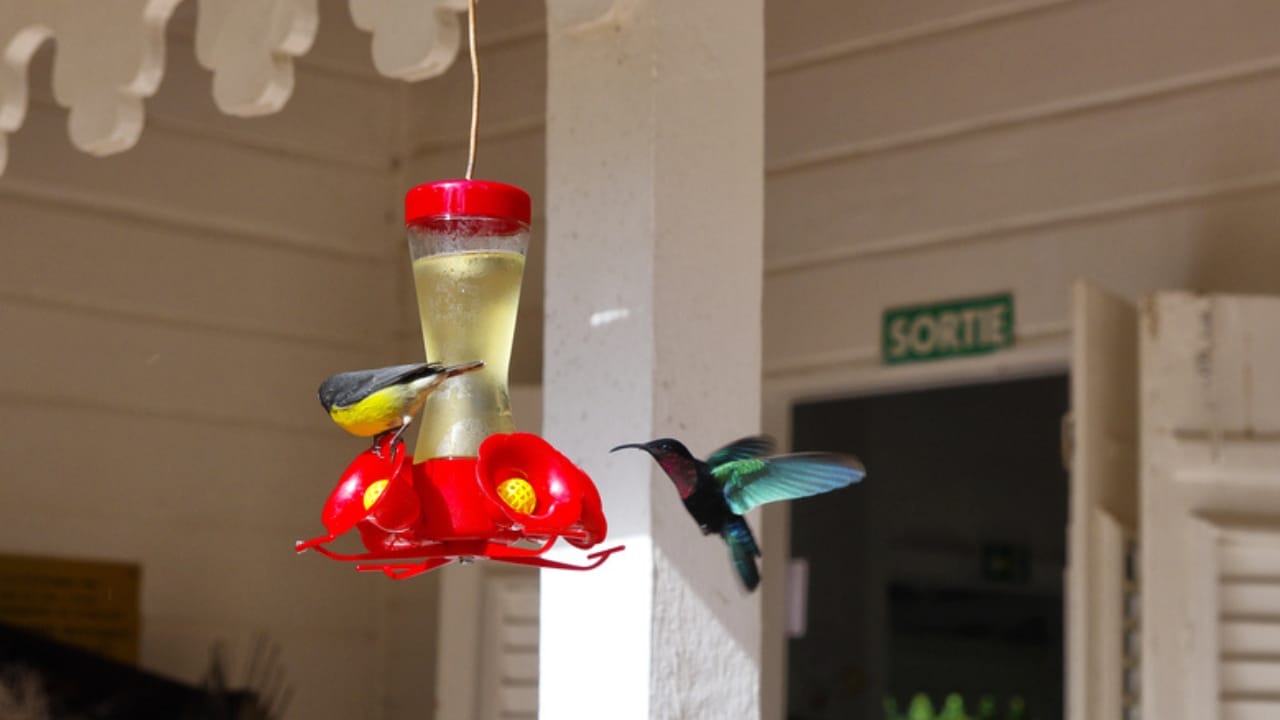
A small, washable feeder you’ll actually clean beats a beautiful glass feeder you won’t. Dishwasher-safe is worth the upgrade.
Two small feeders in different spots draw more birds than one big feeder. Hummingbirds are aggressively territorial; if one bird can guard the whole supply, the rest get pushed out.
Ants are the second biggest enemy after mold. An ant moat (the little water-filled cup that hangs above the feeder) solves it permanently.
Bees and wasps can be reduced with bee guards on the feeding ports.
Don’t take the feeder down in fall to “make them migrate.” That’s a myth. Hummingbirds migrate on day length, not food availability — and leaving your feeder up an extra week or two in autumn helps any late stragglers fuel up for the trip.
For more detailed guidance, check out my “4 Simple Tips & Tricks” for making hummingbird food.
The Whole Thing, One More Time
4 parts water. 1 part plain white sugar. Boil if you want. No dye. Change it before it spoils. Hang the feeder somewhere visible. Plant a few nectar flowers if you can.
That’s the entire job. The hummingbirds will handle the rest.

Davin is a jack-of-all-trades but has professional training and experience in various home and garden subjects. He leans on other experts when needed and edits and fact-checks all articles. Also an aspiring cook we he researches and tries all kinds of different food recipes and shares what works best.