
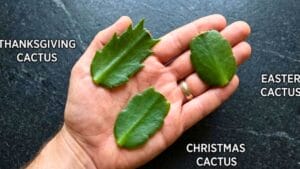
That “Christmas cactus” you bought at Home Depot in November? It’s probably a Thanksgiving cactus. And no, that’s not the same thing.
Most people don’t know there are three different holiday cacti that look almost identical until you know what to look for.
Stores label them all “Christmas cactus” because that’s what sells. But true Christmas cacti are rare heirloom plants usually passed down from grandmothers, not sold at big-box stores.
The good news? You can identify which one you have in about 10 seconds by looking at the edges of the leaves.
Once you know what you’re looking at, you’ll never confuse them again.
Why This Matters (Beyond Being Technically Correct)
Knowing which holiday cactus you have actually helps you care for it better. They bloom at different times. They have different growth habits.
And if you’re trying to make yours rebloom and it keeps failing, you might be following advice for the wrong plant.
Also, if someone tries to sell you a “rare Christmas cactus” for $50, you’ll know if it’s actually just a $12 Thanksgiving cactus with a fancy label.
The Three Holiday Cacti (And How to Tell Them Apart Instantly)
The secret is in the stem segments. Those flat green “leaves” aren’t actually leaves—they’re modified stems called phylloclades. And the shape of their edges tells you exactly which plant you have.
Thanksgiving Cactus (Schlumbergera truncata)
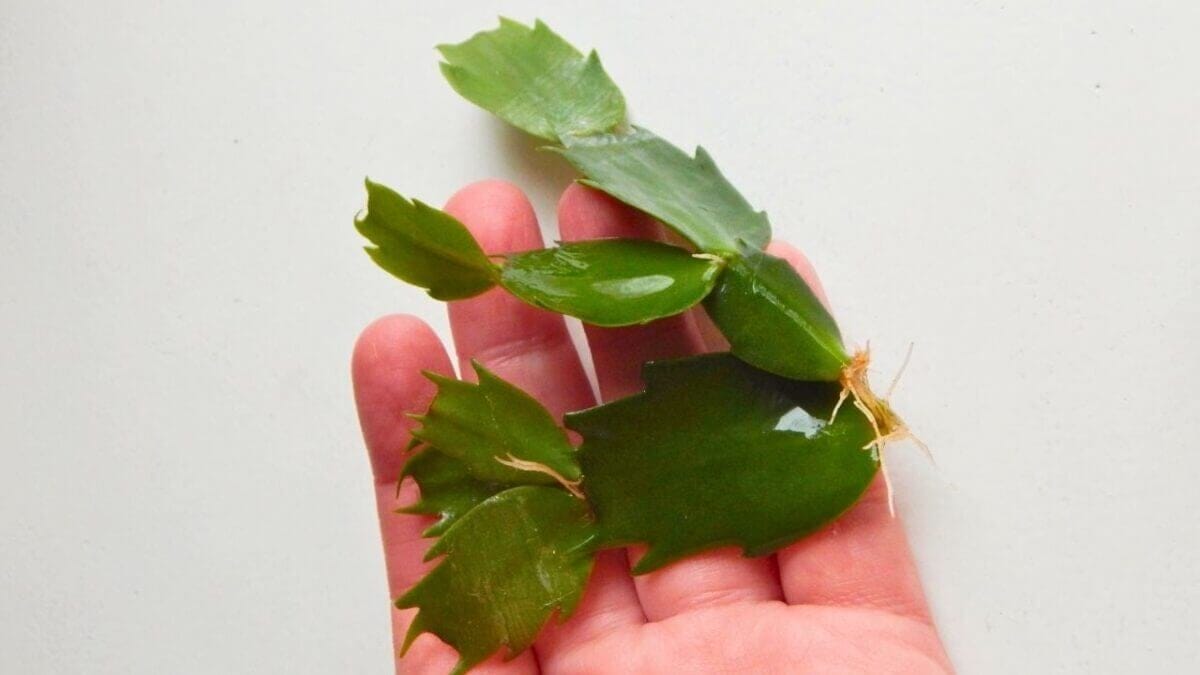
The leaf edges: Pointed and claw-like. Each segment has 2-4 sharp, jagged points on each side. They look aggressive. Like the plant could grab you. This is why some people call them “crab cactus.”
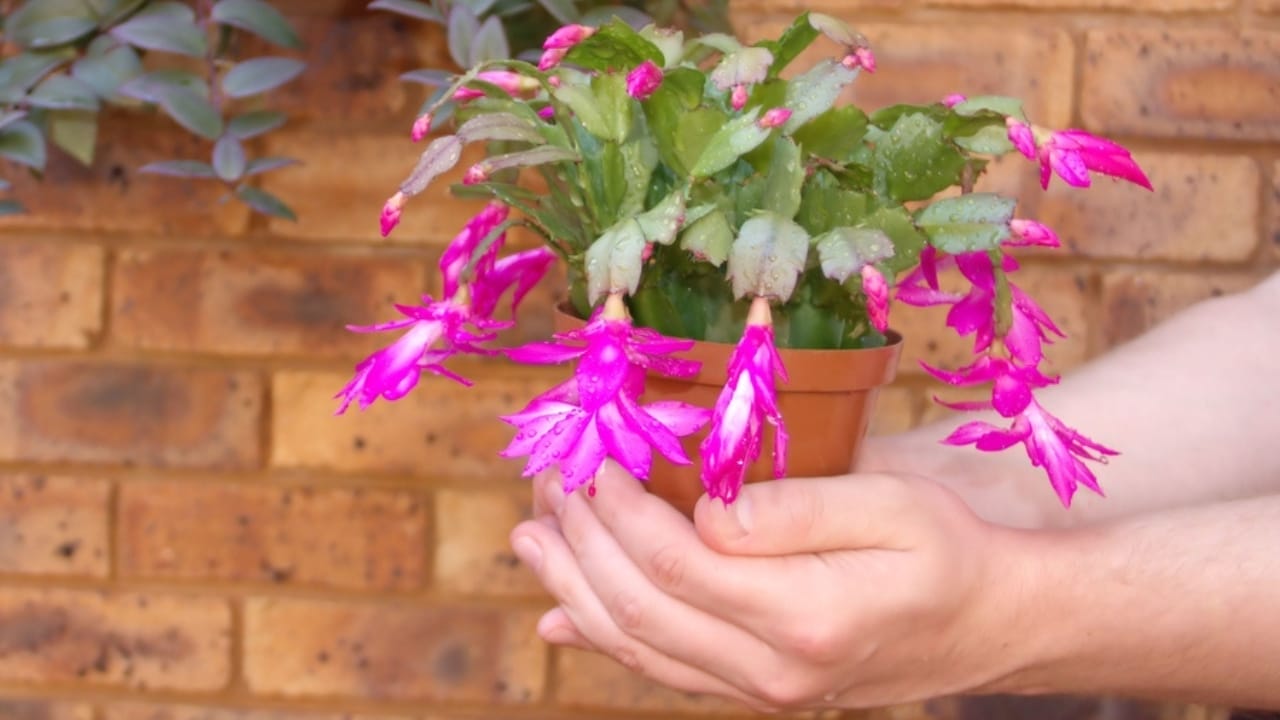
The flowers: Asymmetrical. The petals are arranged in a “tube-within-a-tube” shape. They arch forward instead of hanging straight down. The pollen is bright yellow.
When it blooms: Mid-November through late December. This is the one that conveniently blooms right in time for Thanksgiving through Christmas, which is why stores stock it for the holiday shopping season.
Growth habit: More upright. Grows bushier and more upright than the Christmas cactus. Still trails eventually but not as dramatically.
Where you find it: Everywhere. This is the commercially dominant variety. If you bought a “Christmas cactus” at a big-box store, grocery store, or garden center in the last 20 years, this is almost certainly what you have.
Pro tip: If the pollen is yellow, it’s a Thanksgiving cactus or a hybrid close to it. This is the fastest way to confirm.
Christmas Cactus (Schlumbergera x buckleyi)
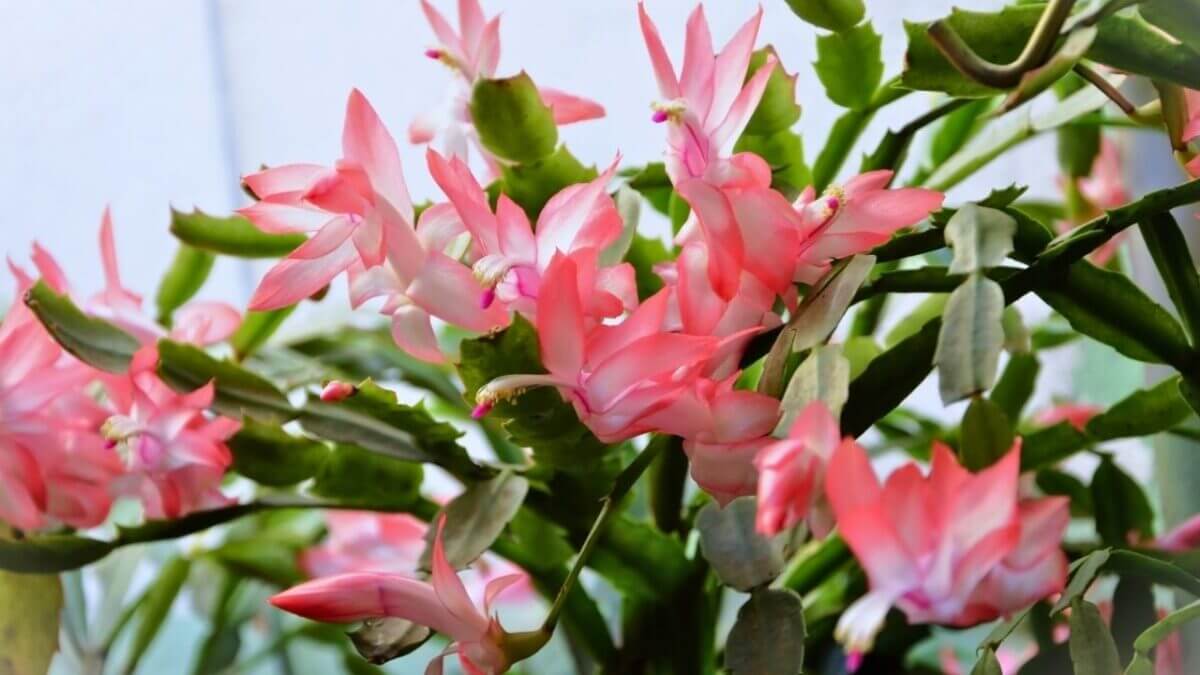
The leaf edges: Smooth and scalloped. The segments have rounded, gentle curves with no sharp points. They look soft and friendly. Like ocean waves.
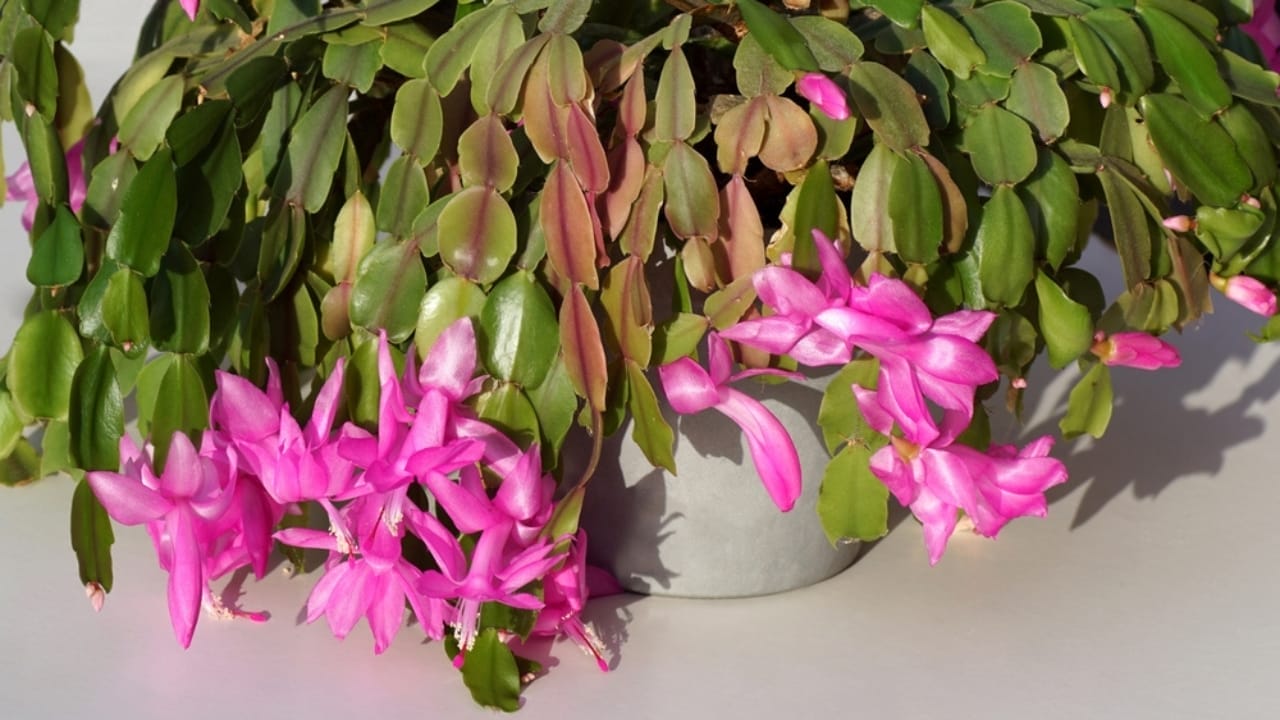
The flowers: Symmetrical. The petals hang straight down in a pendant shape. They’re more balanced and uniform than Thanksgiving cactus flowers. The pollen is pink or purple.
When it blooms: Late December through February. True to its name, it blooms around Christmas and into the new year.
Growth habit: Drooping and pendulous. These trail much more dramatically than Thanksgiving cacti. They look beautiful in hanging baskets where the stems can cascade down.
Where you find it: Your grandmother’s house. These are rare in stores. They’re usually propagated from cuttings passed down through families.
If your plant is an heirloom from an older relative, this might be what you have.
Why they’re rare: They’re harder to mass-produce commercially. They don’t bloom on the convenient retail schedule. And frankly, most nurseries just grow Thanksgiving cacti because they’re easier to sell.
Easter Cactus (Rhipsalidopsis gaertneri or Hatiora gaertneri)
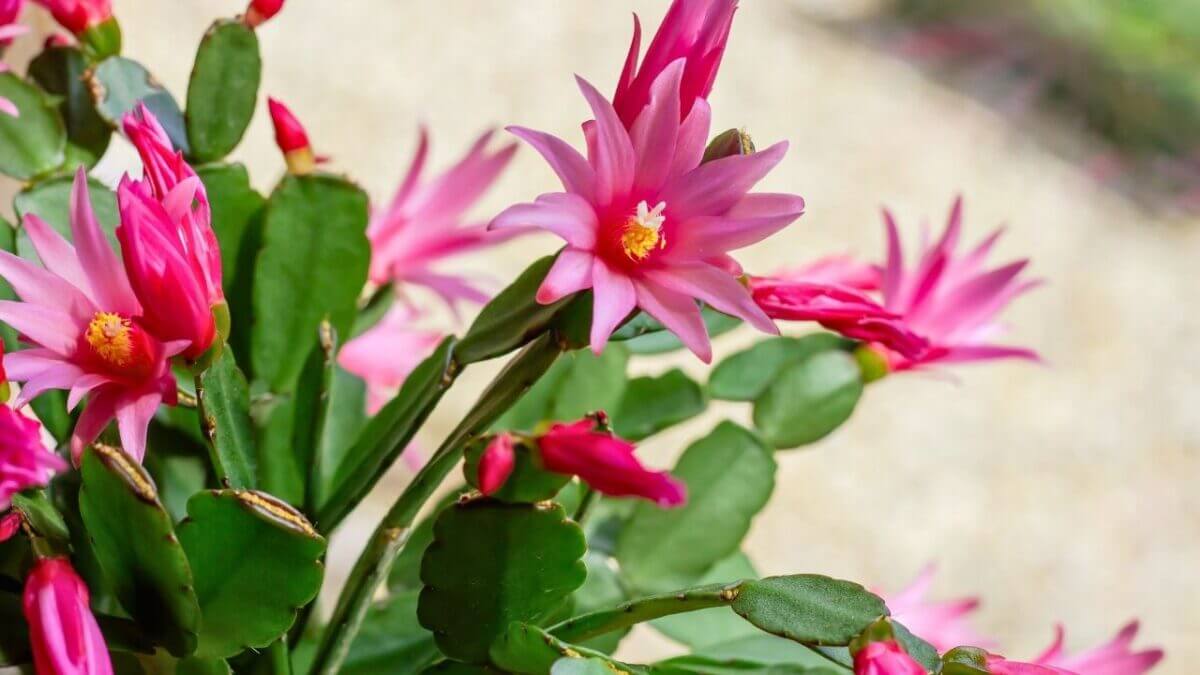
The leaf edges: Very rounded with tiny bristles. The segments are smooth and rounded like the Christmas cactus, but they often have small bristly hairs at the tips of each segment. If you look close, you’ll see little whiskers.
The flowers: Star-shaped and upward-facing. This is the biggest difference. Easter cactus flowers don’t hang down—they face up or outward. They’re shaped like stars with pointed petals radiating out.
When it blooms: Spring (March through May). This one is completely off the winter holiday schedule. It blooms around Easter, hence the name.
Growth habit: Similar to Christmas cactus. Trails nicely. Good for hanging baskets.
Where you find it: Garden centers in spring. If you see “holiday cactus” or “spring cactus” for sale around Easter, this is probably it. Less common than Thanksgiving cactus but easier to find than true Christmas cactus.
Blooming requirements: Needs a longer period of cool temps and darkness to set buds than the winter bloomers. About 8-10 weeks of 12-14 hour nights in cool conditions (50-55°F).
Quick Visual Identification Guide
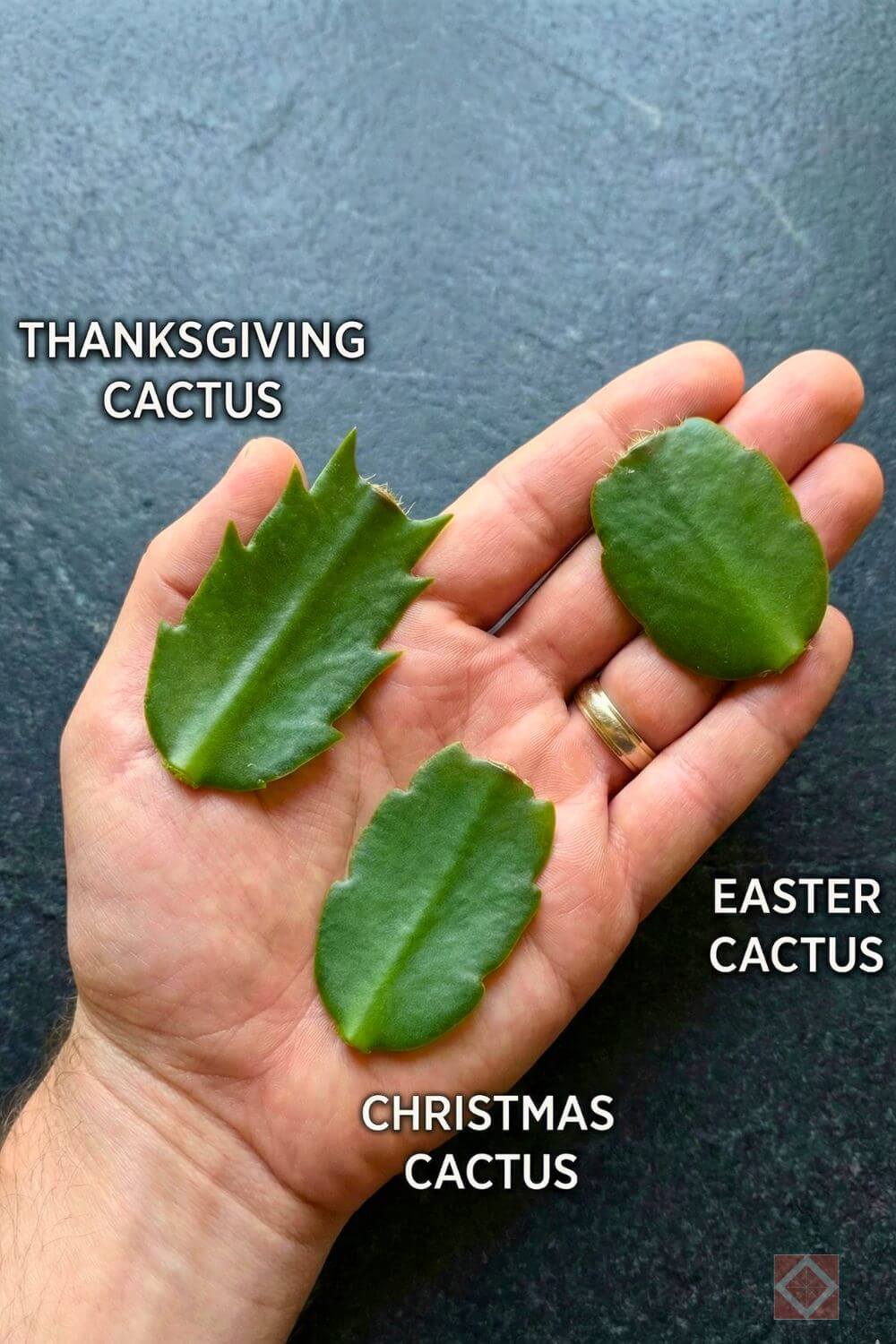
Look at the leaf edges:
- Sharp, jagged, claw-like points = Thanksgiving cactus
- Smooth, rounded, scalloped curves = Christmas cactus
- Rounded with tiny bristles/hairs = Easter cactus
Look at the flowers:
- Asymmetrical, tube-like, yellow pollen = Thanksgiving cactus
- Symmetrical, pendant-shaped, pink/purple pollen = Christmas cactus
- Star-shaped, upward-facing = Easter cactus
Look at when it blooms:
- November-December = Thanksgiving cactus
- Late December-February = Christmas cactus
- March-May = Easter cactus
Plant Care Tips (For All Three Types)
Here’s what most people get wrong: these are not desert cacti. They don’t want to be dry. They’re not from Arizona.
They’re rainforest plants. All three holiday cacti are epiphytes from the Brazilian rainforests. In nature, they grow on trees in humid, shady conditions. They’re used to moisture, indirect light, and organic matter—not sand and full sun.
Watering (More Than You Think)
Keep the soil slightly moist but not soggy. These need more water than a typical cactus. Don’t let them dry out completely like you would a desert cactus.
How to tell when to water: Stick your finger in the soil. If the top inch is dry, water it. If it’s still damp, wait.
Overwatering vs underwatering:
- Overwatered: Stems turn mushy and translucent. Root rot. Plant collapses.
- Underwatered: Stems shrivel and look wrinkled. Buds drop off before opening.
Use well-draining soil. A cactus/succulent mix is fine but add some peat moss or orchid bark to retain a bit more moisture. Or use a general potting mix with perlite added.
Water less during rest period. After blooming, they go semi-dormant. Water less frequently (let soil dry out more between waterings) until new growth starts.
Light (Bright But Not Direct)
Bright indirect light is ideal. A few feet back from an east or west-facing window. Or near a north-facing window.
No direct sun. Direct sunlight burns the leaves. They turn reddish or purple (this is stress, not a good thing). The edges get crispy.
Too little light: Stems get leggy and pale. Plant won’t bloom.
They can handle lower light than most flowering plants. But they bloom better with adequate brightness.
Temperature and Humidity
Prefer cool to moderate temps. 60-70°F is ideal during active growth. They can tolerate down to 50°F (which is actually good for bud setting).
Don’t put them near heating vents or radiators. Hot dry air makes buds drop.
They like humidity. These are rainforest plants. They appreciate 40-60% humidity. If your house is dry, mist them occasionally or put them on a pebble tray with water.
The Blooming Secret (How to Make Them Rebloom)
This is where most people struggle. Your cactus bloomed when you bought it. Then never again. Here’s why.
They need a rest period with specific conditions to set buds:
Cool temperatures: 50-60°F at night for 6-8 weeks before their natural bloom time.
Long nights: 12-14 hours of complete darkness every night. No streetlights. No lamps. No TV glow. Actual darkness.
Less water: During this rest period, water less frequently. Let soil dry out more between waterings.
When to start this:
- Thanksgiving cactus: Start in September
- Christmas cactus: Start in October
- Easter cactus: Start in January
After 6-8 weeks of this treatment, move the plant back to normal conditions. Increase water slightly. The buds should start forming. Once you see buds, don’t move the plant or change conditions or the buds will drop.
Why buds drop:
- Temperature swings
- Moving the plant
- Overwatering or underwatering
- Not enough light
- Drafts
Fertilizing
Feed during active growth only. Spring through fall for Thanksgiving and Christmas cacti. Late winter through summer for Easter cactus.
Use a balanced fertilizer diluted to half strength. Every 2-4 weeks during growing season.
Don’t fertilize during rest period (when you’re trying to set buds) or when the plant is blooming.
Common Problems and Solutions
Buds dropping before they open:
- Plant was moved or jostled
- Temperature fluctuated too much
- Watering changed suddenly (too much or too little)
- Not enough humidity
- Fix: Keep conditions stable once buds form
Stems turning red or purple:
- Too much direct sun
- Plant is stressed (usually from too much light or cold)
- Fix: Move to brighter indirect light, away from windows
Stems wrinkling and shriveling:
- Underwatered
- Root rot from overwatering (roots can’t take up water anymore)
- Fix: Check roots. If healthy, water more. If mushy, repot in fresh soil and cut back watering.
Not blooming:
- Didn’t get the rest period with cool temps and long nights
- Not enough light during growing season
- Over-fertilized (too much nitrogen makes leaves, not flowers)
- Fix: Give it proper rest period next year
Stems breaking off:
- Overwatered and rotting
- Underwatered and brittle
- Fix: Adjust watering. Broken pieces can be propagated as cuttings.
Propagation (How to Make More)
Holiday cacti are stupid easy to propagate. This is how they get passed down through families.
Take cuttings: Twist off a segment at a joint (where two segments connect). Let it dry for a few hours to callus over.
Plant it: Stick the cut end about 1/4 inch into moist potting soil. Or root it in water until roots form, then plant.
Keep it moist: Water lightly. Keep soil moist but not soggy.
Wait: Roots form in 2-4 weeks. New growth appears in 4-8 weeks.
Best time: Spring after blooming is done.
FAQ (Frequently Asked Questions)
Can I put my holiday cactus outside in summer?
Yes. Put it in a shaded spot with indirect light. Bring it inside before temps drop below 50°F.
Why are the stems turning yellow?
Usually overwatering or root rot. Check the roots. If they’re mushy, repot in fresh soil and cut back on water.
How old do they need to be before they bloom?
They usually start blooming around 2-3 years old.
How long do they live?
Decades. 20-30 years is common. Some family heirlooms are 50+ years old.
Do I need to repot them?
Only every 2-3 years. They actually bloom better when slightly rootbound. Repot in spring after blooming.
What size pot should I use?
Keep them slightly potbound. Only go up one pot size when repotting.
Can I keep all three types together?
Sure, but their bloom times won’t sync up. They have the same care requirements so they can share space.
Mine blooms twice a year. Is that normal?
Sometimes they bloom in spring and fall if conditions are right. It’s not harmful, just a bonus.

Davin is a jack-of-all-trades but has professional training and experience in various home and garden subjects. He leans on other experts when needed and edits and fact-checks all articles. Also an aspiring cook we he researches and tries all kinds of different food recipes and shares what works best.