
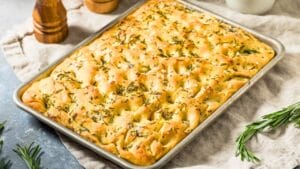
your focaccia dough is supposed to look like a sticky mess. if it doesn’t, you’re doing it wrong.
that wet gloppy dough that makes you panic and reach for more flour? that’s what creates those big airy holes and crispy golden crust. adding flour to make it “manageable” gives you dense flat bread that tastes like disappointment.
this recipe fixes the confusing water measurements that have been circulating. it teaches you how to handle wet dough without freaking out. and it shows you how to infuse your oil so every bite tastes like garlic and rosemary instead of just bread with stuff on top.
no kneading. barely any work. just trust that sticky is correct and let time do the rest.
why your dough should be sticky (and why that’s good)
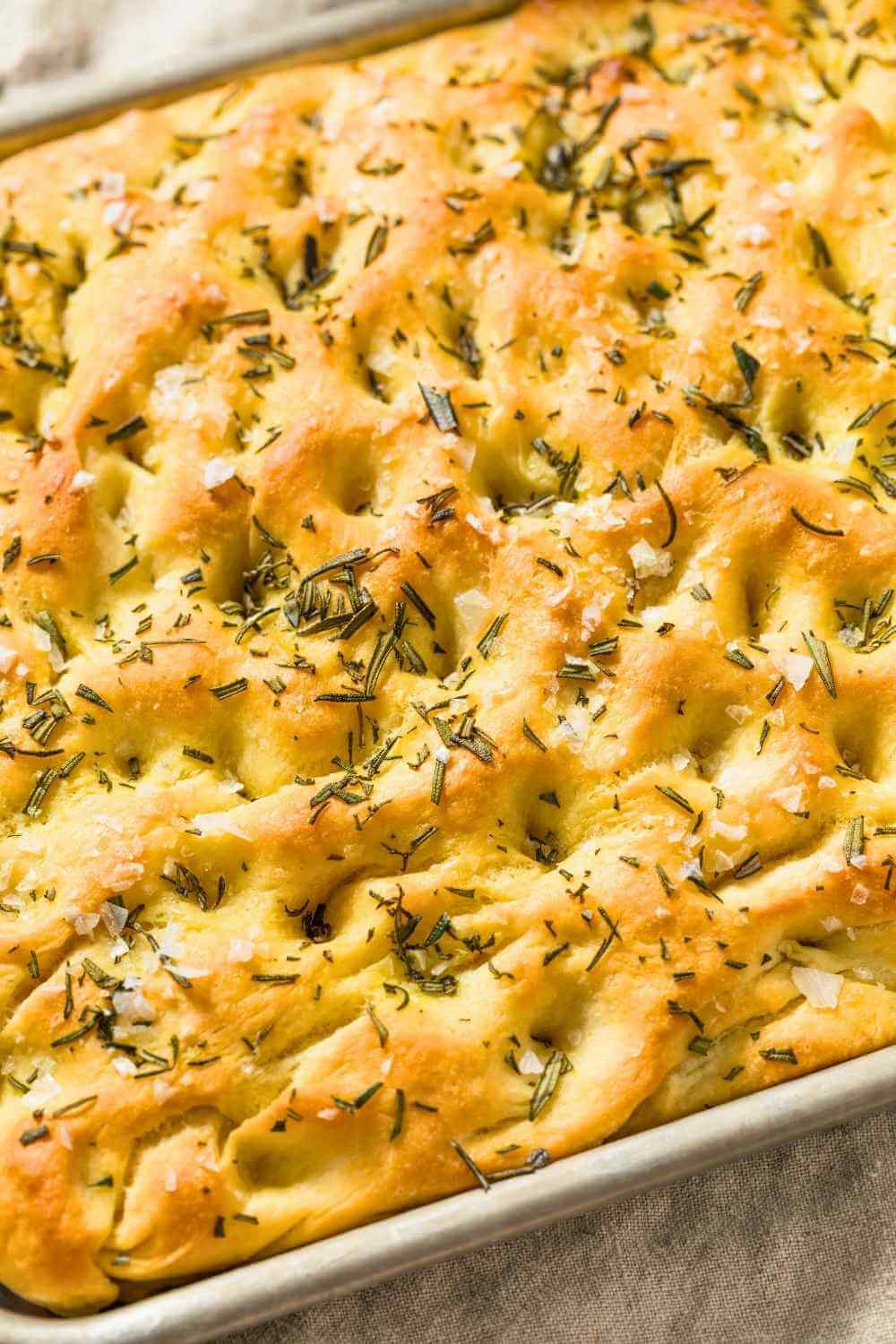
here’s the thing nobody tells beginner bakers. wet dough makes better bread.
when dough has a lot of water—what bakers call “high hydration”—it creates steam as it bakes. that steam makes big irregular air pockets. those holes you see in bakery focaccia? that’s high hydration at work.
if you add extra flour to make the dough easier to handle, you end up with dense flat bread. it’ll be edible but it won’t have that light airy crumb with the crispy bottom. it’ll just be thick boring bread.
so when your dough looks like sticky mess, that’s correct. you didn’t mess up. you’re doing it right. the trick is learning to handle wet dough without adding more flour.
how to handle sticky dough without panicking
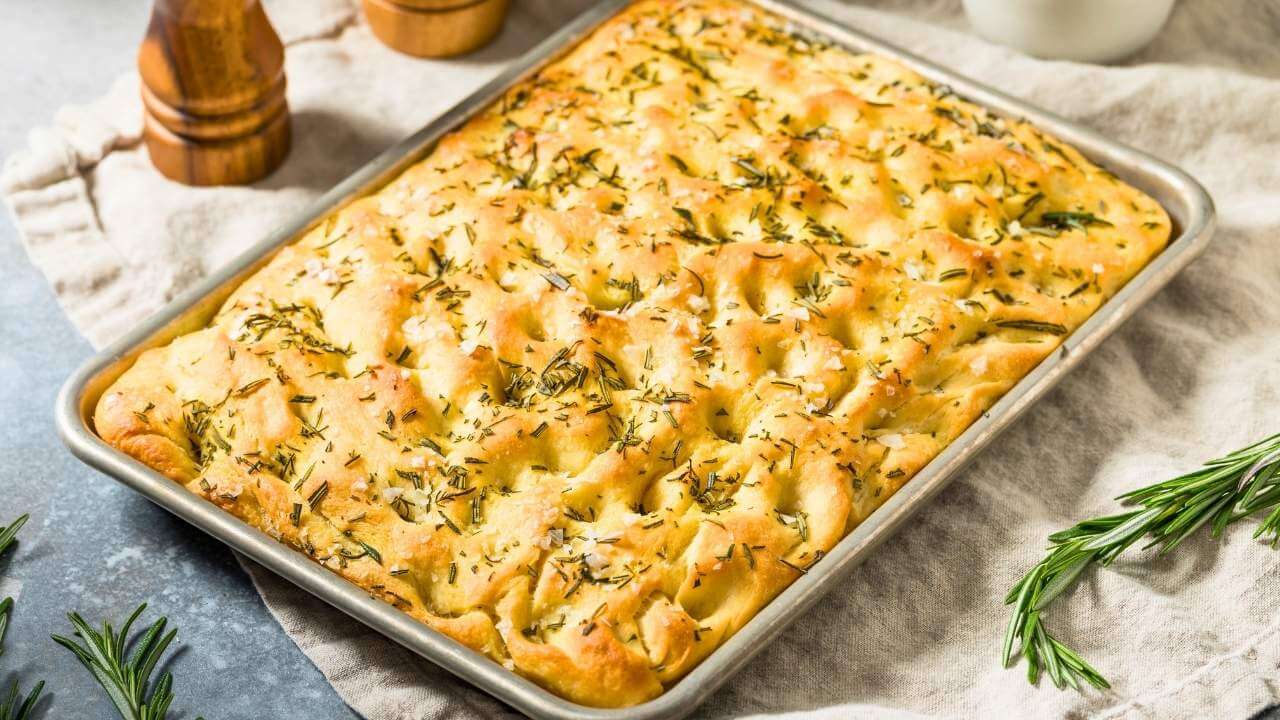
oil your hands. don’t flour them. oil stops the dough from sticking to you without changing the hydration. coat your hands in olive oil before touching the dough. problem solved.
use a bench scraper. when you need to move the dough, don’t pick it up with your hands. slide a bench scraper or spatula underneath and lift. way easier.
embrace the mess for like 30 seconds. it’s sticky for a brief moment while you’re shaping it into the pan. then you leave it alone for hours. the actual hands-on time with wet dough is minimal.
don’t add flour. i know it’s tempting. resist. more flour means dense bread. sticky dough means good bread. choose your hard.
active dry yeast vs instant yeast
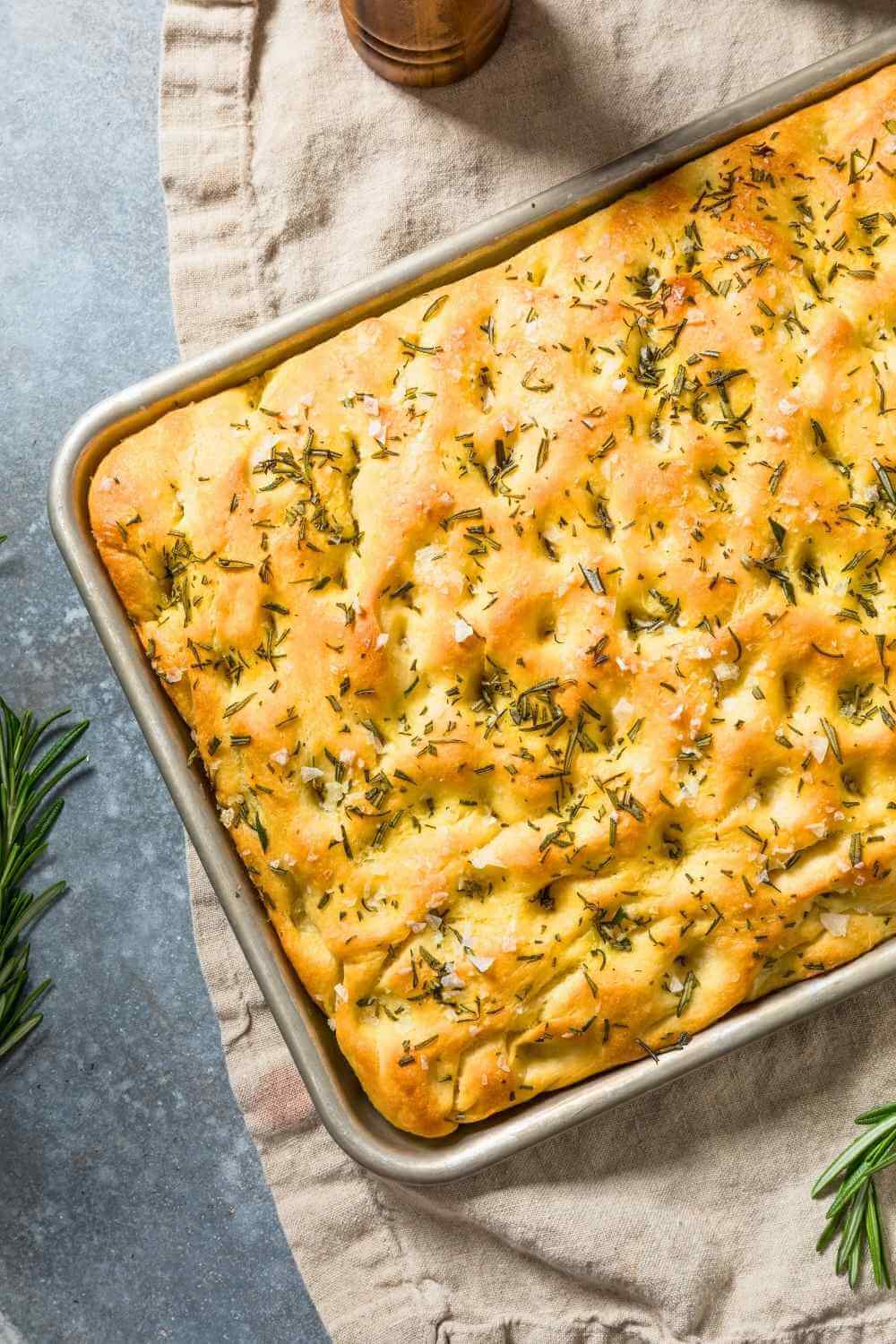
instant yeast (also called rapid rise or bread machine yeast) can be mixed directly into the flour. you don’t have to proof it first. this is what the recipe uses.
active dry yeast works too but you should bloom it first. mix it with the warm water and sugar, let it sit for 5 to 10 minutes until foamy, then add it to the flour. use the same amount.
both work. instant is easier. active dry requires one extra step but gives you confirmation that your yeast is alive before you commit.
how to make foolproof focaccia
mix the dough. in a large bowl, whisk together flour, yeast, salt, and sugar. add the warm water (should feel like bath water, around 100-110°F) and 1/4 cup olive oil.
stir with a wooden spoon or your hands until everything comes together into a shaggy sticky mass. it won’t look smooth. that’s fine.
first rise. drizzle a little olive oil over the dough and turn it to coat. cover the bowl with plastic wrap or a damp towel. let it rise at room temperature for 1 to 2 hours until doubled. if your kitchen is cold, this might take longer. be patient.
prep your pan. generously coat your baking pan with olive oil. like, use way more than you think. the oil on the bottom is what makes the crust crispy and golden.
shape the dough. oil your hands. gently deflate the dough and pour it into your oiled pan. it’ll be loose and floppy. use your oiled fingers to gently stretch it toward the corners.
it won’t reach all the way yet. that’s ok. let it rest for 15 minutes then stretch again. repeat until it fills the pan. don’t force it or you’ll tear it.
second rise. cover the pan and let the dough rise again for 30 to 60 minutes until puffy and nearly doubled. meanwhile, preheat your oven to 425°F.
make the infused oil. in a small saucepan, warm the olive oil over low heat. add smashed garlic, rosemary sprigs, and red pepper flakes if using. let it gently infuse for 5 to 10 minutes.
don’t let the garlic brown or it’ll taste bitter. strain out the solids or leave them in for rustic vibes.
dimple the dough. this is the fun part. oil your fingers again. press them straight down into the dough all over, making deep dimples.
you should hit the bottom of the pan. this creates those classic focaccia craters that hold oil and toppings.
add toppings. pour the infused garlic oil all over the top. it’ll pool in the dimples. sprinkle with flaky sea salt and fresh rosemary. add cherry tomatoes, olives, or whatever else you want.
press them in gently so they don’t fall off.
bake. bake for 20 to 25 minutes until the top is golden brown and the edges are crispy. the bottom should be deeply golden. if you lift a corner with a spatula it should look caramelized, not pale.
cool on a rack. this is critical. pull the focaccia out of the pan immediately and transfer to a wire cooling rack. if you leave it in the pan, the bottom gets soggy from trapped steam.
the infused oil hack (why it matters)
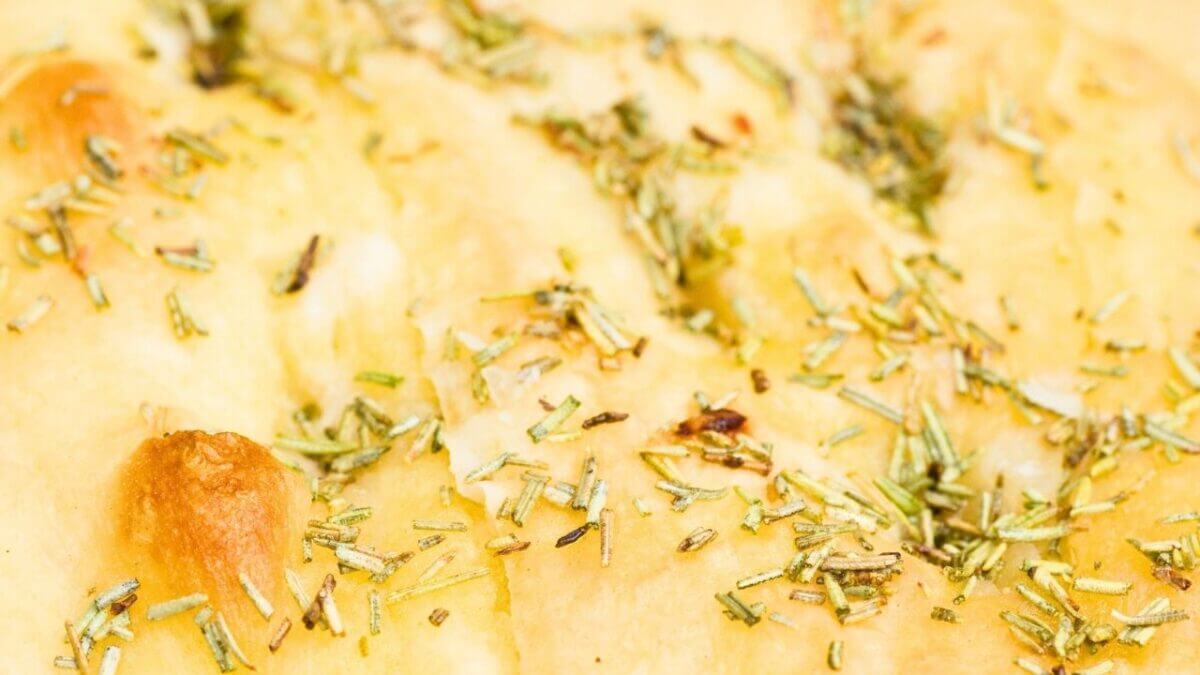
most focaccia recipes tell you to just drizzle plain olive oil on top and scatter raw garlic. that’s fine but the garlic often burns and tastes acrid.
infusing the oil first does two things. the garlic flavor gets into the oil so every bite tastes like garlic, not just the parts with burnt garlic on top. and the garlic cooks gently in the warm oil so it’s sweet and mellow instead of harsh.
same with rosemary. infusing it releases the oils and perfumes the whole bread.
you can infuse your oil with whatever you want. sage and brown butter. lemon zest and thyme. chili and oregano. the technique is the same. warm oil, add aromatics, let it hang out for 10 minutes, pour it on the dough.
cast iron skillet method (for extra crispy crust)
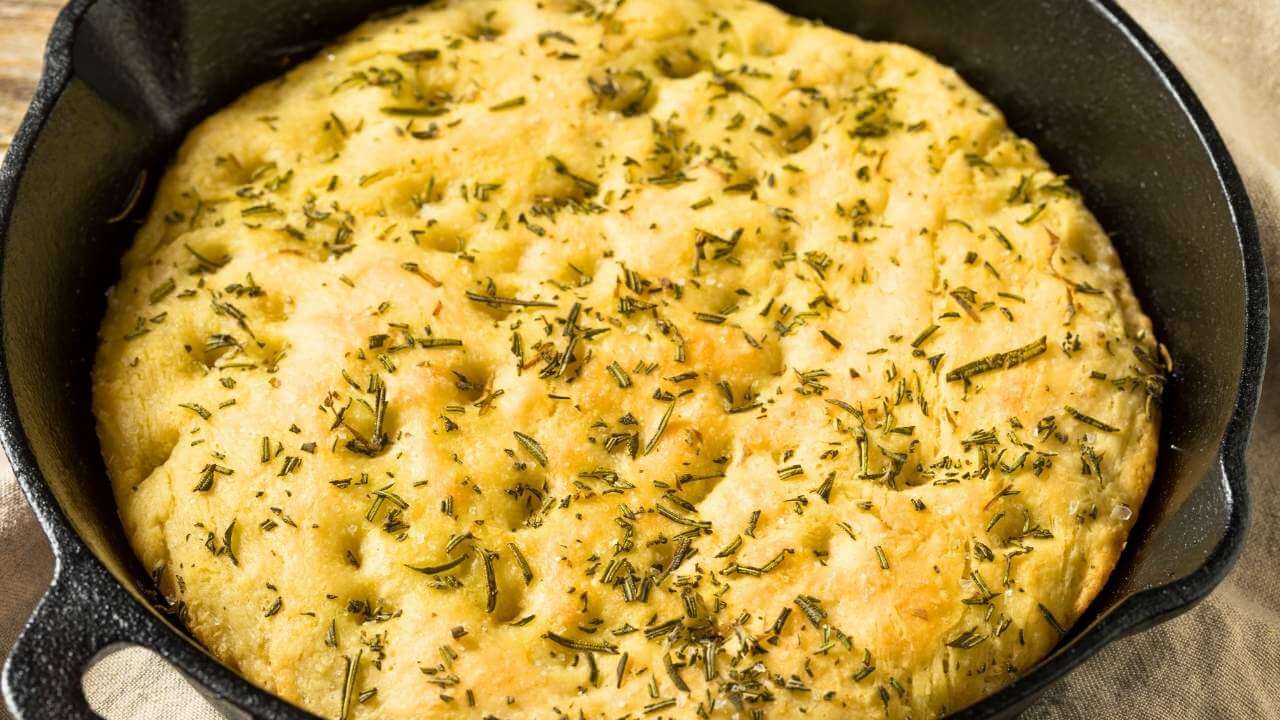
if you want an even crispier bottom crust, use a well-seasoned cast iron skillet instead of a baking pan.
why it works: cast iron conducts heat better than glass or metal pans. the dough gets direct contact with screaming hot iron which creates an almost fried crust on the bottom.
how to do it: oil your cast iron skillet generously. shape the dough to fit the skillet (use a 10 or 12 inch skillet). let it rise in the skillet. bake as directed. the edges might get extra dark and crispy. that’s a feature not a bug.
troubleshooting common problems
my bread came out dense and flat:
you either didn’t let it rise long enough or you knocked all the air out when shaping. focaccia needs two full rises. don’t skip the second one. and when you’re dimpling, press straight down, don’t deflate the whole thing by smooshing it.
my dough never rose:
your yeast was dead. check the expiration date. or your water was too hot and killed it. water should be warm, not hot. around 100-110°F. if you can’t comfortably hold your finger in it, it’s too hot.
the bottom is soggy:
you left it in the pan to cool. always move focaccia to a wire rack immediately so steam can escape from the bottom.
the top burned but the inside is raw:
your oven runs hot or you baked it too high in the oven. move the rack to the middle position and maybe drop temp to 400°F.
it’s too salty:
you used fine table salt instead of flaky sea salt for topping. flaky salt has bigger crystals so you get salty pops without the whole thing tasting like the ocean. or you added salt to the dough AND topped with a ton of salt. ease up.
it tastes bland:
you didn’t infuse your oil or you used cheap olive oil. good olive oil makes a difference. infusing it with garlic and herbs makes an even bigger difference.
flavor variations to try
classic rosemary garlic:
infused oil with garlic and rosemary, topped with flaky salt and more rosemary. this is the standard and it’s perfect.
tomato olive:
halved cherry tomatoes and kalamata olives pressed into the dough. drizzle with infused oil. sprinkle with oregano and parmesan.
caramelized onion and thyme:
caramelize onions low and slow until they’re sweet and jammy. spread them on top before baking. add fresh thyme.
everything bagel:
brush with oil and sprinkle with everything bagel seasoning. weird but it works.
grape and goat cheese:
halved red grapes, crumbled goat cheese, and honey drizzled on top after baking. sounds fancy, tastes fancy.
potato and rosemary:
thin sliced potatoes layered on top. drizzle with rosemary oil. this is basically a pizza at this point but nobody’s mad.
how to serve focaccia
as bread: slice it into squares. serve with olive oil and balsamic for dipping. or with soup. or just eat it warm standing in the kitchen.
as a sandwich: slice it horizontally. stuff with mozzarella, tomatoes, basil, and balsamic. grill it if you want. instant panini.
as a side: serve with pasta. or salad. or anything italian-ish.
for breakfast: reheat a slice and top with a fried egg and hot sauce. trust me.
storage and reheating
room temperature: keeps for 2 days wrapped in a towel or loosely covered. don’t seal it airtight or the crust gets soft.
fridge: up to 5 days wrapped well. the fridge dries it out a little but it’s still good toasted.
freezer: slice it first. freeze slices in a bag for up to 3 months. thaw and toast.
reheating: best reheated in the oven at 350°F for 5 to 10 minutes to crisp up the crust. microwave makes it chewy and sad.
the yeast anxiety thing
a lot of people are scared of yeast. they think it’s complicated or finicky. it’s really not.
yeast is a living thing that eats sugar and burps out carbon dioxide. that’s it. feed it (sugar in the dough), give it a warm place to live (room temp), and don’t kill it (don’t use boiling water), and it’ll do its job.
if your dough doesn’t rise, it’s almost always one of three things:
- dead yeast (check expiration date)
- water too hot (killed the yeast)
- too cold (yeast is hibernating, give it more time or move to a warmer spot)
that’s literally it. yeast wants to work for you. let it.
why this recipe works when others don’t
the water ratio is correct. 1.75 cups. not 3.5 cups which is a typo that keeps circulating and gives you soup instead of dough.
it validates the stickiness. instead of telling you to add flour when the dough is wet, it explains why wet is good and teaches you how to handle it.
the infused oil is built in. you’re not just dumping raw garlic on top and hoping for the best.
it has real troubleshooting. based on actual user feedback from people who made this and ran into problems.
it doesn’t assume you’re already a baker. it explains the why behind each step so you understand what you’re doing, not just following instructions blindly.
faq quick hits
can i use bread flour?
yeah but it’ll be chewier. all purpose gives you that light tender crumb.
what if i don’t have instant yeast?
use active dry. bloom it in the warm water with the sugar for 10 minutes first.
can i make this ahead?
yes. after the first rise, you can refrigerate the dough overnight. let it come to room temp before shaping. or bake it fully and reheat.
how do i know when it’s done?
the top should be golden brown. the bottom should be deeply golden and crispy, not pale. if you tap the bottom it should sound hollow.
can i halve this recipe?
yeah. use an 8×8 or 9×9 pan. everything else stays the same.
Best No-Knead Garlic Rosemary Focaccia
Equipment
- 9×13 Baking Pan (Metal is best for crispiness) OR 2 Cast Iron Skillets.
- Kitchen Scale (Highly recommended for accuracy).
- Wire Cooling Rack (Essential to prevent soggy bottoms).
Ingredients
The Dough:
- 4 cups 500g Bread Flour (All-purpose works, but Bread Flour gives better chew).
- 2 ¼ tsp 1 packet Instant Yeast.
- 2 tsp Kosher Salt.
- 1 ¾ cups 415ml Warm Water (100°F-110°F). Do NOT use 3.5 cups!.
- 2 tbsp Extra Virgin Olive Oil for the dough.
The Topping (The Flavor Maker):
- 4 tbsp Extra Virgin Olive Oil.
- 2 cloves Garlic smashed (optional, but recommended for flavor).
- 1 tbsp Fresh Rosemary chopped.
- Flaky Sea Salt Maldon for finishing.
Instructions
- Mix the Dough (No Kneading!): In a large bowl, whisk flour, yeast, and salt. Pour in the warm water and 2 tbsp olive oil. Mix with a spatula just until the flour disappears.
- Pro Tip: The dough will be a sticky, shaggy mess. This is normal! Do not add more flour, or your bread will be dense.
- The Long Rise: Drizzle the dough ball with a little oil to coat it. Cover with plastic wrap and place in a warm spot for 1.5 to 2 hours. It should double in size and become jiggly.
- Fridge Option: For deeper flavor, let it rise in the fridge overnight (8-24 hours).
- Pan & Second Rise: Generously oil your 9×13 pan (or skillets). Pour the dough in. Oil your hands (do not use flour!) and gently stretch the dough to fill the corners. Cover and let rise again for 30-45 minutes until it looks puffy and marshmallow-soft.
- The “Dimple” & Flavor Infusion: Preheat oven to 425°F (220°C).
- The Hack: Microwave the 4 tbsp topping oil with the smashed garlic and rosemary for 30 seconds to infuse the flavor. Remove garlic chunks if you don’t want them to brown too much.
- Dimple: With oiled fingers, poke deep holes all over the dough (touch the bottom of the pan!). Pour the herb oil into the holes and sprinkle with flaky salt.
- Bake: Bake for 20-25 minutes until deep golden brown.
- Crispiness Check: If using a glass pan, check the bottom to ensure it is browned; it may need 5 extra minutes.
- Cool: Remove from pan immediately and cool on a wire rack to keep the crust crispy.
Notes

Davin is a jack-of-all-trades but has professional training and experience in various home and garden subjects. He leans on other experts when needed and edits and fact-checks all articles. Also an aspiring cook we he researches and tries all kinds of different food recipes and shares what works best.