
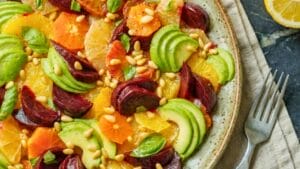
most salads just sit there looking boring. this one stops conversation when it hits the table.
deep crimson beets. blood orange slices so bright they don’t look real. creamy feta swooshed across the plate like you actually know what you’re doing. it tastes like winter but good winter—earthy, bright, rich, crunchy all at once.
and here’s the thing. it’s easier than it looks. roast some beets. slice some citrus. whip some cheese. layer it on a plate like you’re getting paid for it.
perfect for thanksgiving or christmas or any time you need something that makes people ask “wait you made this?” while you stand there trying not to look too smug about how easy it actually was.
why this upgraded salad actually works
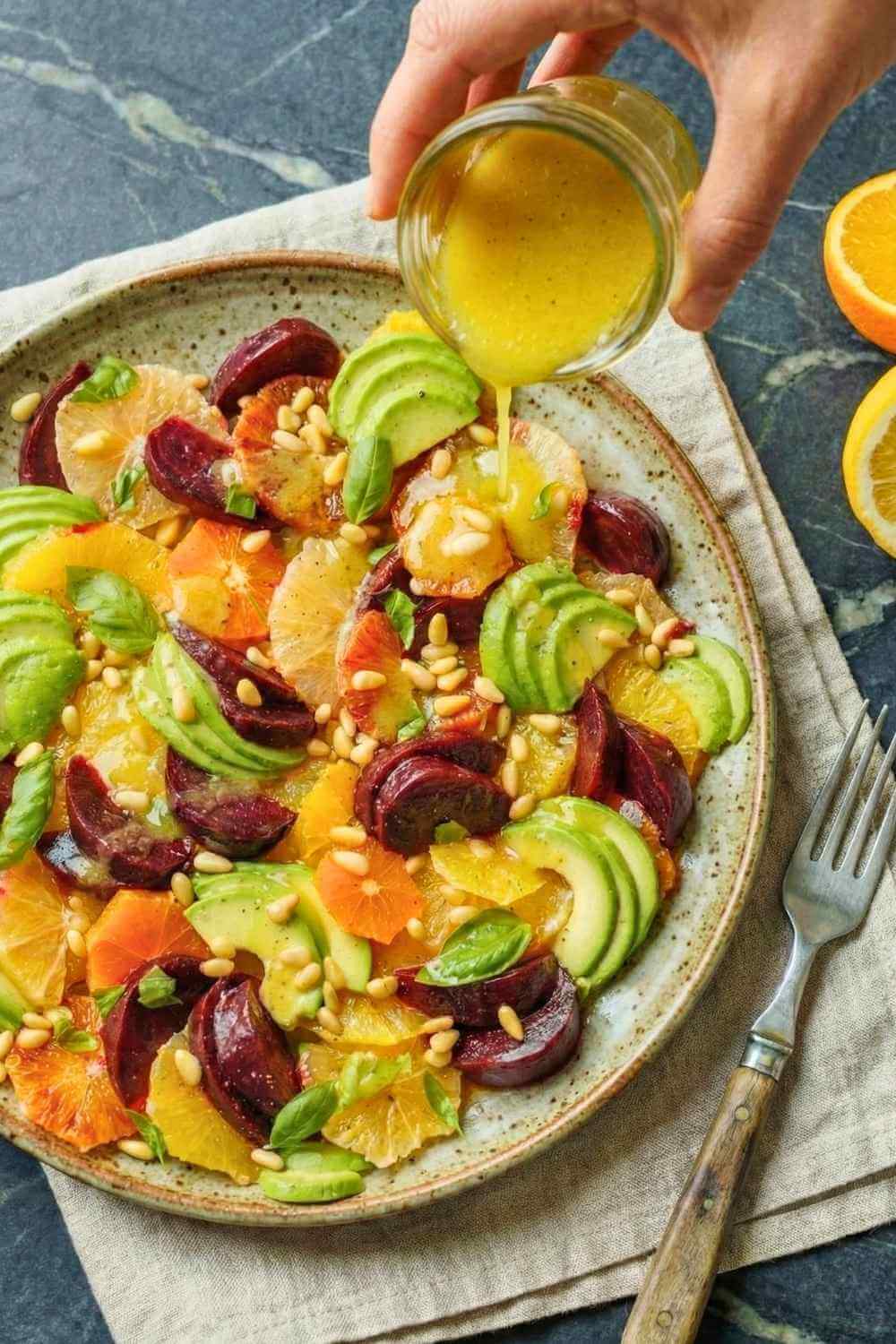
most citrus salads are beautiful for about 30 seconds and then everything slides around the plate and you’re chasing orange slices with your fork like you’re playing a weird game. this one stays put because of the whipped feta base.
it’s basically edible glue but in a good way.
creamy: whipped feta cuts through all that citrus acid and makes everything taste richer without being heavy. it’s tangy but not sour. thick but not gloopy. and it gives the salad an anchor so nothing’s skating around.
crunchy: toasted pistachios. not pine nuts which are fine but boring. pistachios have actual flavor and texture and they don’t cost $47 for a tiny bag.
earthy: roasted beets taste like sweet dirt in the best way possible. they ground all the bright citrus and keep this from being too acidic or one note.
acidic but complex: champagne vinaigrette with shallots. not just lemon juice dumped on top. actual depth.
the balance here is what makes it work. every bite has something creamy, something crunchy, something sweet, something tart. your mouth doesn’t get bored.
ingredients and swaps
the beets
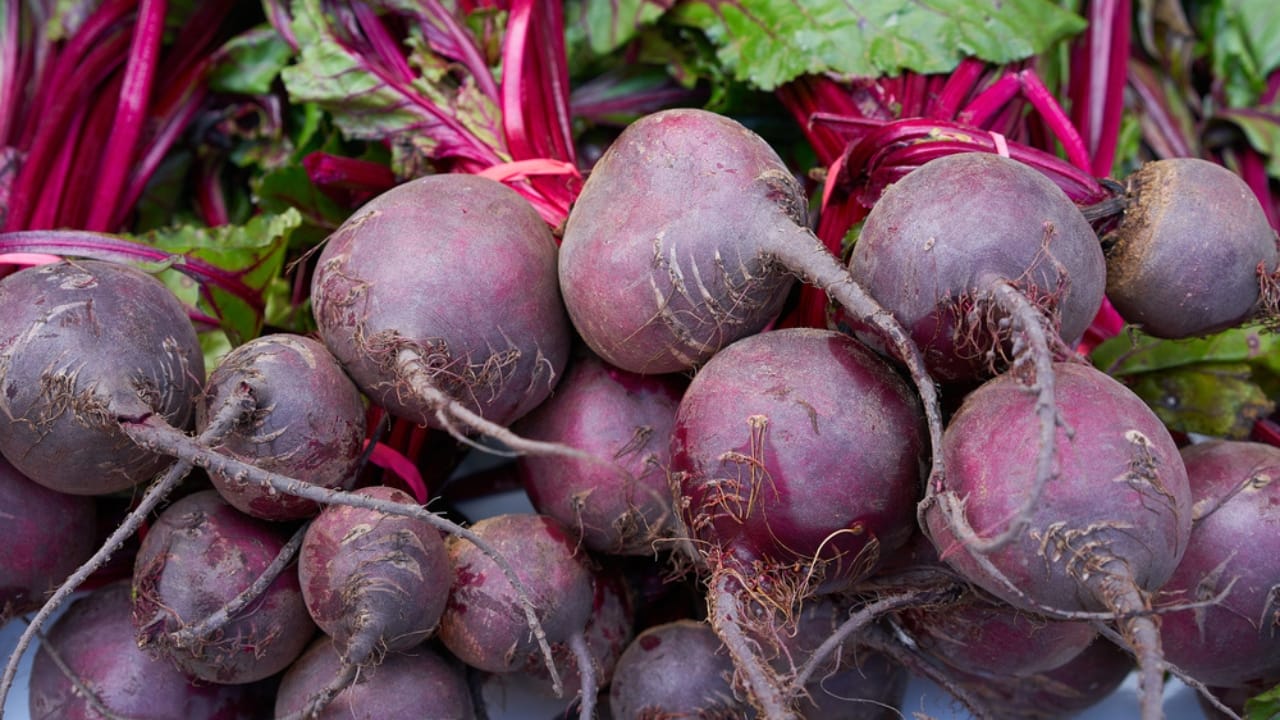
red beets are classic. deep earthy flavor, that gorgeous dark crimson color that stains everything including your cutting board and possibly your soul. they’re sweet when roasted and taste like actual vegetables not like health food.
golden beets are milder. less earthy, more sweet. and they don’t stain everything which is nice if you’re wearing white or have a security deposit to get back. the flavor is a little more subtle but some people prefer that.
you can use one or mix both. mixing them looks insane on the plate. like a sunset exploded.
the citrus
do not just use navel oranges. use a mix and it’ll change your life.
blood oranges if you can find them. they’re only around in winter and they taste like regular oranges but with a little raspberry thing happening. and they’re red inside which makes the whole plate look even more dramatic.
navel oranges are sweet and reliable. the workhorse orange. always good.
cara cara oranges are pink inside and taste like regular oranges mixed with berries. less acidic than navels.
grapefruit adds bitterness and tartness. use ruby red or pink. not the pale yellow ones unless you hate yourself. cut the bitterness by making sure you remove all the white pith.
mix at least two kinds. three is better. it adds complexity and makes every bite a little different.
the cheese
feta is salty and tangy and whips up like a dream. use block feta, not crumbled. the crumbled stuff has anti caking agents that make it weird.
goat cheese (chevre) works too. it’s creamier and less salty. whips up even easier than feta.
ricotta if you want something really mild and fluffy. it’s less tangy but still creamy enough to anchor everything.
the crunch
pistachios are the move. they’re green which looks good. they taste buttery and a little sweet. toast them first or they’re sad.
dukkah is an egyptian spice blend with nuts and seeds. it’s crunchy and has cumin and coriander and sesame. adds a whole other flavor dimension.
candied pecans if you want something sweeter. they’re good but they make the salad feel more thanksgiving-y and less fancy restaurant-y.
toasted hazelnuts or almonds work fine too. just toast them.
the avocado
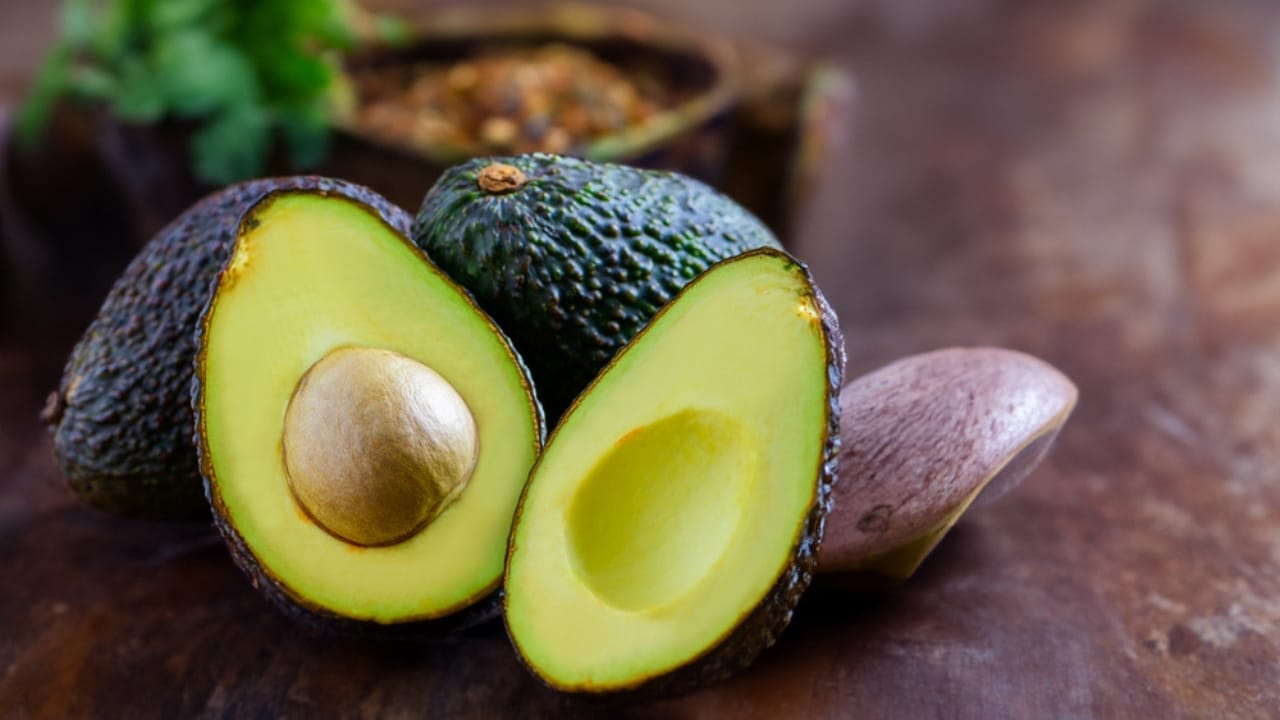
optional but recommended. adds creaminess and richness. use firm avocado not mushy. slice it thin so it looks pretty.
how to roast beets the right way
do not boil beets. boiling leaches out all the flavor and color into the water and you’re left with something that tastes like sadness.
roasting concentrates the sugars. makes them sweet and caramelized. this is non negotiable.
how to do it:
preheat oven to 400°F. scrub beets but don’t peel them yet. trim the stems down to about an inch. wrap each beet individually in foil. put them on a baking sheet in case they leak.
roast 45 to 60 minutes depending on size. they’re done when a fork slides in easy. let them cool enough to handle, then the skins will slip right off. if they don’t, you didn’t cook them long enough.
you can do this days ahead. roasted beets keep in the fridge for a week.
pro tip: wear gloves when handling red beets or your hands will look like you committed a crime. or don’t and just accept your fate.
technique tip: how to supreme citrus
supreming citrus means removing all the white pith and membrane so you’re left with just the juicy segments. it removes bitterness and makes everything taste cleaner.
how to do it:
slice off the top and bottom of the citrus so it sits flat on your cutting board. use a sharp knife to slice down the sides, following the curve of the fruit, removing all the peel and white pith. you want to see just the flesh.
then slice the citrus into rounds, like wheels. about 1/4 inch thick. this looks way prettier than supremed segments for this particular salad.
you get those beautiful circles with the star pattern in the middle.
pick out any seeds as you go.
you can do this an hour or two ahead. keep the slices in a container in the fridge. don’t do it the night before or they’ll dry out.
step by step assembly (layering guide)
this isn’t a toss-everything-in-a-bowl salad. this is a plated situation. you’re building it like you know what you’re doing.
1. swoosh the cheese
spread or swoosh about 1/3 cup whipped feta across the bottom of your serving plate or platter. use the back of a spoon to make it look swoopy and intentional. this is your base layer. everything sits on this.
2. layer the beets
slice your roasted beets into rounds or wedges. arrange them on top of the feta. overlap them a little. mix red and golden if you’re using both. don’t just pile them in the center, spread them out so every bite has some.
3. layer the citrus
tuck citrus rounds in between the beets. overlap them. make it look abundant. use different colors if you have them. this is where the jewel tone thing really happens.
4. tuck in avocado
if you’re using it, fan thin avocado slices in there. tuck them between beets and citrus. don’t cover everything, just add pops of green.
5. drizzle dressing and garnish
drizzle champagne shallot vinaigrette over the whole thing. not too much, you don’t want it pooling. sprinkle toasted pistachios over the top. finish with flaky salt, cracked black pepper, maybe some fresh herbs like dill or mint if you have them.
done. put it on the table and accept compliments.
the champagne shallot vinaigrette
this is what ties it all together. it’s tangy but not harsh. a little sweet. a little sharp from the shallots.
what you need:
1 small shallot, minced super fine
2 tablespoons champagne vinegar (or white wine vinegar)
1 teaspoon dijon mustard
1 teaspoon honey or maple syrup
1/3 cup good olive oil
salt and pepper
how to make it:
whisk shallot, vinegar, mustard, and honey together. let it sit for 5 minutes so the shallot mellows out. slowly whisk in olive oil until it’s emulsified. season with salt and pepper. taste it. it should be bright and balanced.
make this ahead. it keeps for a week in the fridge.
serving and storage faqs
can i make it ahead?
yes but not completely. roast the beets up to 4 days ahead. make the dressing up to a week ahead. whip the feta the morning of. slice the citrus an hour or two before. assemble everything right before serving.
if you build it ahead, the citrus will make everything soggy.
how long does it last?
best eaten same day because of the avocado. but the beets and feta hold up great. if you skip the avocado, leftovers keep for a day in the fridge. just store the dressing separate and re-drizzle when you’re ready.
can i serve this as a main?
add some protein. grilled chicken, seared salmon, or chickpeas. maybe some quinoa or farro underneath the feta. then it’s a meal.
what if i can’t find blood oranges?
use all navels or cara caras. it’ll still be beautiful and taste great. blood oranges are just for drama.
do i have to whip the feta?
no but it makes it creamier and easier to spread. you can just crumble regular feta on top but it won’t have that swoopy base layer effect.
why beets are actually good for you
beets are loaded with betalains which are antioxidants that give them that deep red color. they’re anti inflammatory, good for your liver, might lower blood pressure.
they also have nitrates that can improve athletic performance which is why serious runners drink beet juice and look miserable doing it.
roasting them is way better than drinking beet juice. just saying.
common mistakes to avoid
- boiling instead of roasting. flavor goes in the water. don’t do it.
- not removing the citrus pith. it’s bitter and makes everything taste wrong.
- assembling too far ahead. everything gets soggy. build it fresh.
- using pre crumbled feta. it doesn’t whip right. buy a block.
- skipping the toasting on nuts. raw nuts are boring. toasted nuts are everything.
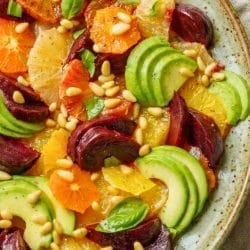
Roasted Beet & Citrus Salad
Equipment
- Food Processor or Mini Chopper: Essential for getting the whipped feta smooth and airy.
- Rimmed Baking Sheet: For roasting the beets without making a mess of the oven.
- Sharp Chef’s Knife: Crucial for slicing the citrus wheels cleanly and removing the pith without squishing the fruit.
- Small Mason Jar: The easiest way to emulsify the vinaigrette (shake method).
Ingredients
The Base:
- 4 oz feta cheese block
- 2 tbsp Greek yogurt or cream cheese
- 1 tsp lemon zest
- 1 tbsp olive oil
The Salad:
- 3 medium beets red or golden, roasted and peeled
- 2 navel oranges or Cara Cara
- 1 blood orange or grapefruit
- 1 large avocado sliced
- 1/3 cup shelled pistachios toasted and chopped
- 1/2 cup fresh herbs Mint, Basil, and Tarragon/Microgreens
The Vinaigrette:
- 3 tbsp extra virgin olive oil
- 1 tbsp champagne vinegar superior to plain lemon juice
- 1 tsp honey or maple syrup
- 1 small shallot minced very fine
- Salt and cracked black pepper
Instructions
- Roast Beets: Preheat oven to 400°F. Wrap washed beets in foil. Roast 45-60 mins until tender. Cool, peel skins, and slice into wedges.
- Whip the Feta: Pulse feta, yogurt, zest, and oil in a food processor until fluffy. Spread across the serving platter.
- Prep Fruit: Cut peel/pith off citrus. Slice into rounds. Slice avocado.
- Make Dressing: Whisk oil, vinegar, honey, shallot, S&P.
- Assemble: Arrange beets and citrus on the feta. Tuck in avocado.
- Finish: Drizzle with dressing. Top with pistachios and herbs.
Notes
- Handling Beets: Red beets are potent dyes! We recommend wearing kitchen gloves when peeling and slicing them to avoid staining your hands pink for days. If using red beets, place them carefully on the feta last to prevent the juice from bleeding into the white cheese immediately.
- Make-Ahead Tips: You can roast the beets and make the vinaigrette up to 3 days in advance. Store them in separate airtight containers in the fridge. The whipped feta can be made 1 day in advance. Assemble the salad just before serving to keep the avocado green and the nuts crunchy.
- Toasting Pistachios: Don’t skip this step! To toast, place nuts in a dry skillet over medium heat for 2-3 minutes, tossing frequently until fragrant. Watch them closely as they burn quickly.
- Dairy-Free Option: To make this vegan, replace the whipped feta with a layer of hummus or a dairy-free ricotta alternative. Swap the honey in the dressing for maple syrup.
- Serving Temperature: This salad tastes best when the beets and citrus are cool or room temperature, not ice cold. Pull the ingredients out of the fridge 15 minutes before assembling to let the flavors wake up.
Nutrition

Davin is a jack-of-all-trades but has professional training and experience in various home and garden subjects. He leans on other experts when needed and edits and fact-checks all articles. Also an aspiring cook we he researches and tries all kinds of different food recipes and shares what works best.