
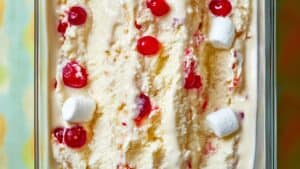
banana marlow isn’t ice cream. it’s older, stranger, lighter — a frozen mousse born in the 1930s, when marshmallows were new tech and freezers were barely household gadgets.
before blenders, before soft-serve, cooks figured out how to make a cloud hold its shape with nothing but sugar, milk, and nerve.
the result? a silky hybrid between a parfait and a frozen soufflé. banana brings the body. marshmallow brings the lift. whipped cream brings the sin. maraschino cherries add that flash of 1930s color — the kind of garnish that says “we might be broke, but we’re still fancy.”
a brief history of marlow
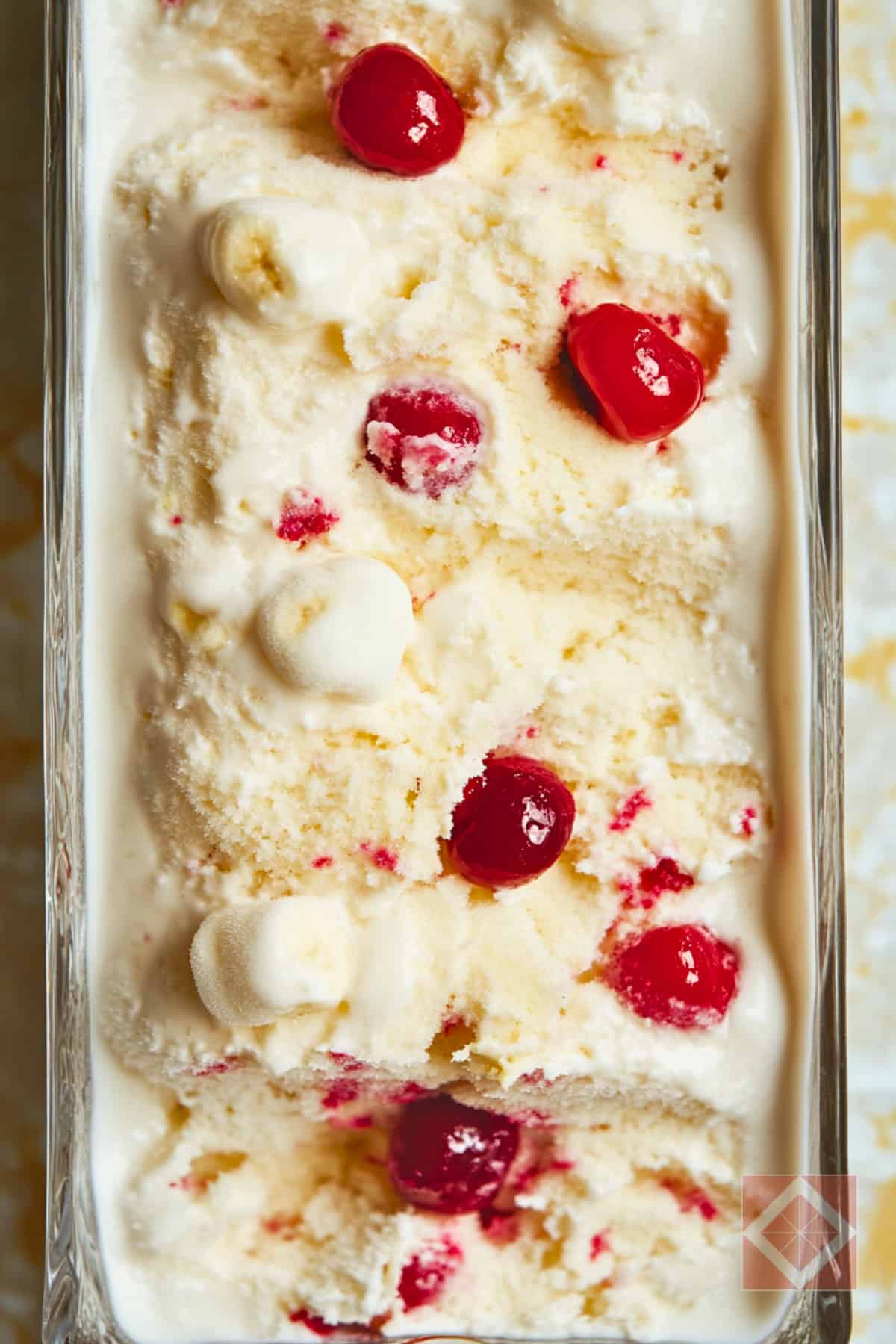
marlow (sometimes “mallow”) started turning up in american cookbooks around 1915–1935. think of it as the marshmallow era — when brands like campfire and kellogg’s pushed the candy as a miracle base for puddings, pies, and frozen desserts.
without reliable home refrigeration, classic custard ice creams were a risk — eggs spoiled, ice churners jammed. marshmallows solved the problem. they melted smooth, stabilized whipped cream, and froze with that mousse-like texture no machine could beat.
celebrity recipes sold the trend. clara bow’s vanilla marlow ran in Photoplay magazine in 1933 — a no-churn showpiece for anyone with a saucepan and a sense of glamour.
from there came chocolate marlow, grape marlow, and of course banana, the fruit that practically defined comfort during the great depression.
today, banana marlow sits in the same nostalgic corner as ambrosia and chiffon pie — retro, yes, but clever as hell once you understand the chemistry.
the science behind the softness
banana marlow works because it flips the usual frozen-dessert physics. no eggs. no custard. the structure comes from melted marshmallows, which are built on gelatin and sugar — natural emulsifiers and stabilizers.
when folded into whipped cream, the gelatin holds air bubbles in suspension, creating that ultra-light mouthfeel. sugar lowers the freezing point, preventing solid ice crystals from forming.
the result is scoopable even straight from the freezer.
this is vintage food engineering — early 20th-century texture optimization. no stand mixer, no liquid nitrogen. just controlled melting, timed folding, and a little faith in foam.
flavor balance & sensory play
good marlow is all about equilibrium — sweet, creamy, fruity, floral. the ripe banana adds natural sugars and depth, while maraschino cherries bring color contrast and that nostalgic pop of acidity.
from a neurogastronomy standpoint (yes, real term), it’s a “hedonic layering effect”: your palate reads cold first, then fat, then sugar, then fruit. that sequence keeps you going back for another bite.
the aroma matters too. ripe banana’s isoamyl acetate hits the brain fast, evoking warmth and comfort. combine that with vanilla’s calming scent, and you’ve got what food scientists call cross-modal harmony — taste and smell syncing perfectly.
making it modern
banana marlow doesn’t need to stay stuck in sepia tone. you can bring it forward with clean ingredients and modern nutrition tweaks:
- lower sugar: swap in reduced-sugar marshmallows or make your own with honey or maple syrup.
- non-dairy: coconut cream or oat cream whips beautifully; almond milk melts the mallows just fine.
- fresh fruit: skip maraschinos for diced fresh cherries or raspberries for color and bite.
- flavor expansions: banana-coffee marlow, peanut-banana, or cocoa-banana — each hits a different nostalgia nerve.
pro tips for perfect banana marlow
- melt slow. high heat scorches milk and breaks the marshmallow emulsion. low and steady wins.
- cool before folding. warm mixture deflates whipped cream. wait until it’s room temp and slightly thickened.
- fold, don’t stir. this is about trapping air, not stirring soup. think gentle figure-eights.
- freeze fast. metal loaf pans freeze quicker and minimize ice crystals.
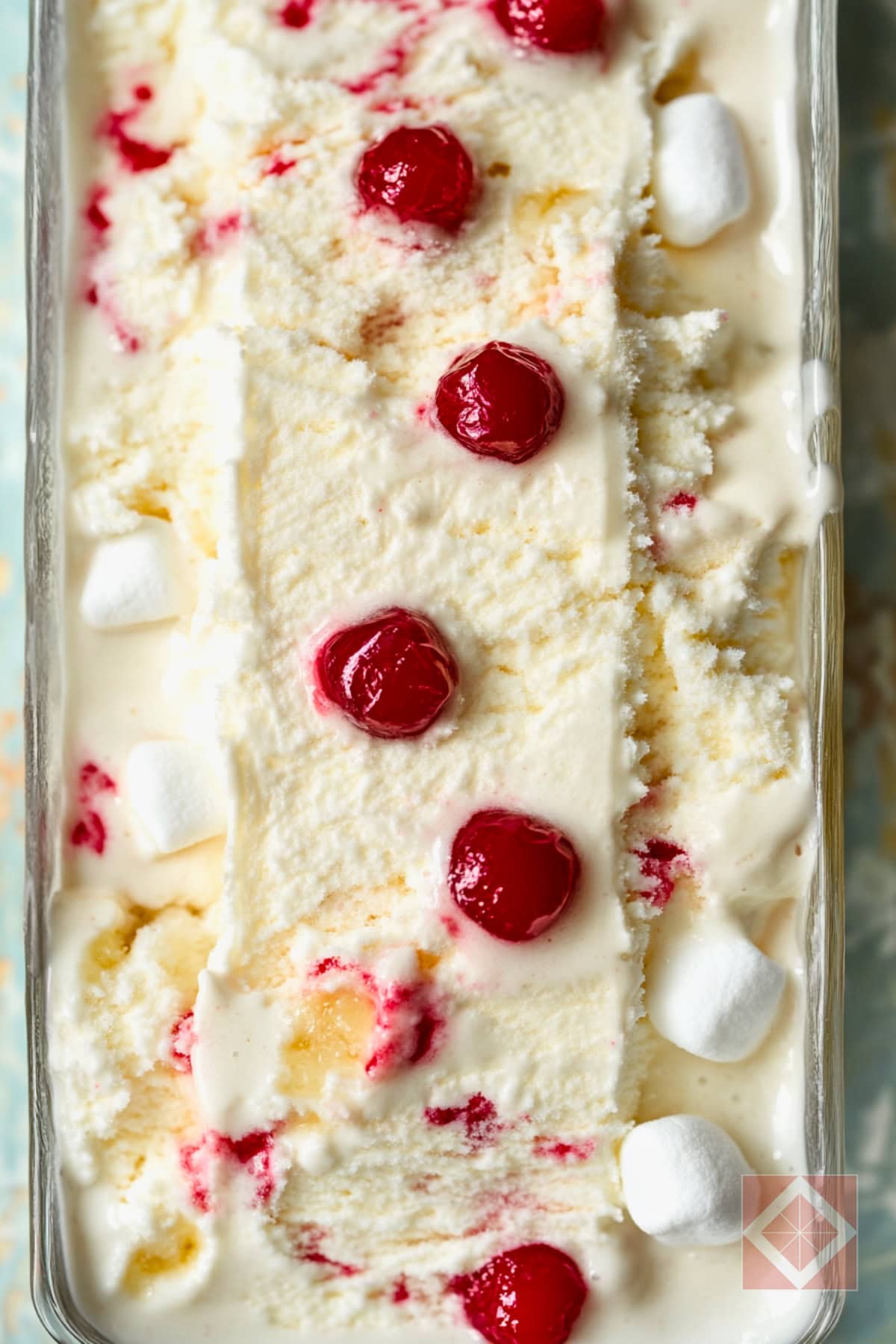
- don’t overfreeze. marlow’s texture sweet spot is semi-firm, not rock solid. 3–4 hours usually does it.
the cultural comeback
banana marlow deserves a revival. it’s low-effort, high-reward, and endlessly customizable — basically the 1930s version of a “hack dessert.” no churn, no custard, no special tools.
it fits the current nostalgia-driven food trend — vintage desserts reborn for modern kitchens. people are searching for old-fashioned no-churn desserts, banana cream recipes without eggs, and marshmallow mousse ice cream. banana marlow hits all three.
serve it in glass coupe dishes or mid-century dessert bowls. garnish with toasted coconut, dark chocolate drizzle, or crushed nuts for texture contrast.
old recipes remind us: dessert doesn’t need to be complex to be clever. banana marlow proves it — one saucepan, a few ripe bananas, and a century of quiet genius behind every bite.

Old-Fashioned Banana Marlow Recipe (1930s Classic Ice Cream)
Ingredients
- 32 regular marshmallows or 4 cups mini marshmallows
- ¾ cup whole milk
- Juice of 1 lemon
- 1 cup mashed bananas
- 1 teaspoon vanilla extract
- 1 ½ cups heavy cream
- ½ cup chopped maraschino cherries
Instructions
- In a saucepan over low heat, combine the marshmallows and milk, stirring occasionally until the mixture becomes smooth and uniform.
- Remove from heat and mix in the lemon juice and mashed bananas. Stir in the vanilla extract, then transfer the mixture to a heatproof bowl to cool completely.
- In a separate bowl, whip the heavy cream using a stand mixer or hand mixer until stiff peaks form, ensuring not to overwhip.
- Gently fold the whipped cream into the cooled marshmallow mixture in three separate additions, stirring lightly to maintain an airy texture.
- Carefully fold in the chopped maraschino cherries.
- Pour the mixture into a 9×13-inch shallow casserole dish, cover, and freeze.
- For a creamier consistency, stir the mixture every 40 minutes during the initial freezing stage, pulling in the frozen edges. Repeat 3-4 times. Before serving, let it sit at room temperature for at least 30 minutes to soften slightly.
Notes
- The occasional stirring during freezing prevents the texture from becoming overly firm, mimicking traditional ice cream makers.
- For a twist, try adding a dash of rum extract or chopped nuts for a richer, more indulgent flavor.

Davin is a jack-of-all-trades but has professional training and experience in various home and garden subjects. He leans on other experts when needed and edits and fact-checks all articles. Also an aspiring cook we he researches and tries all kinds of different food recipes and shares what works best.